 Travel in China
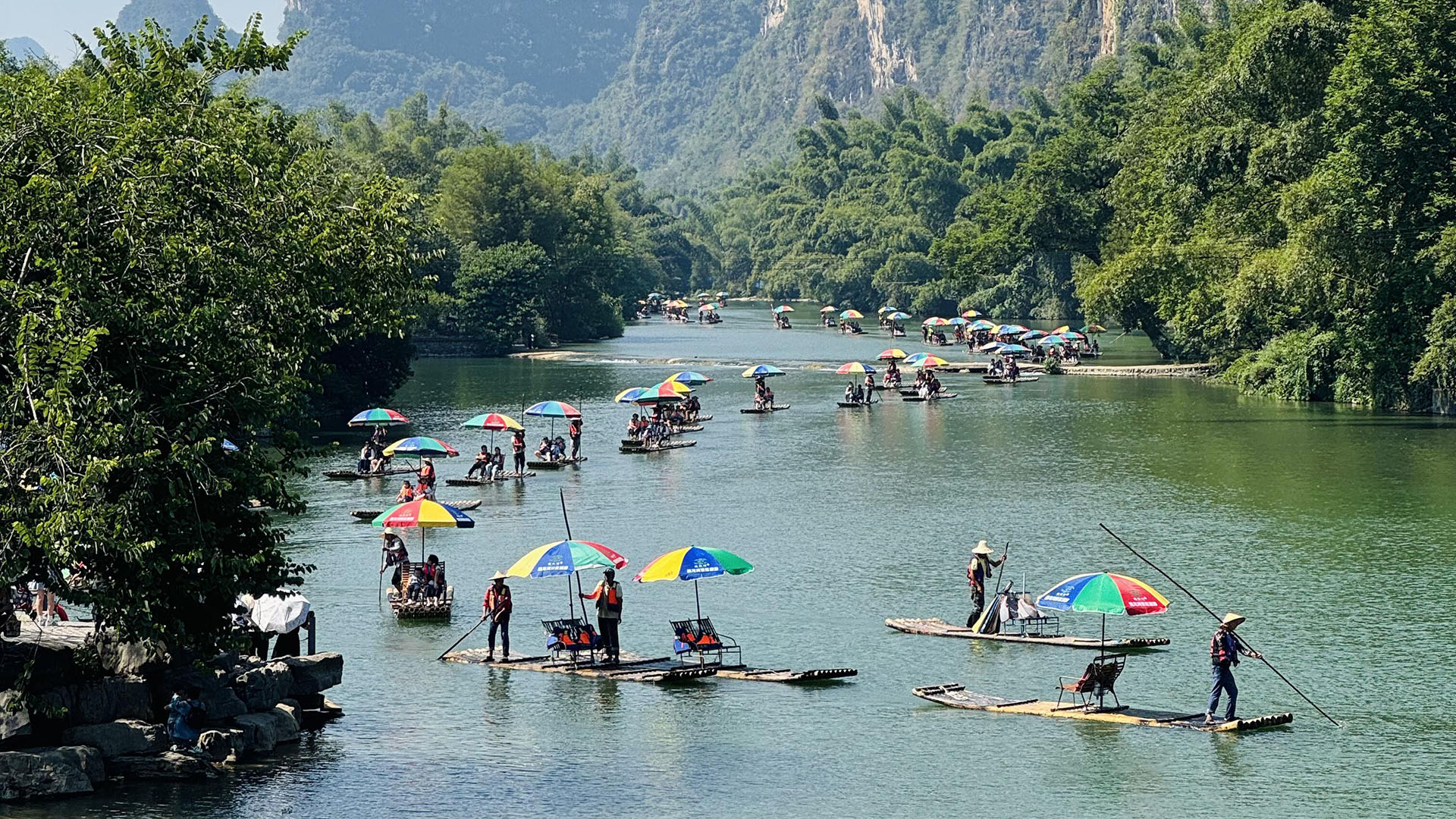
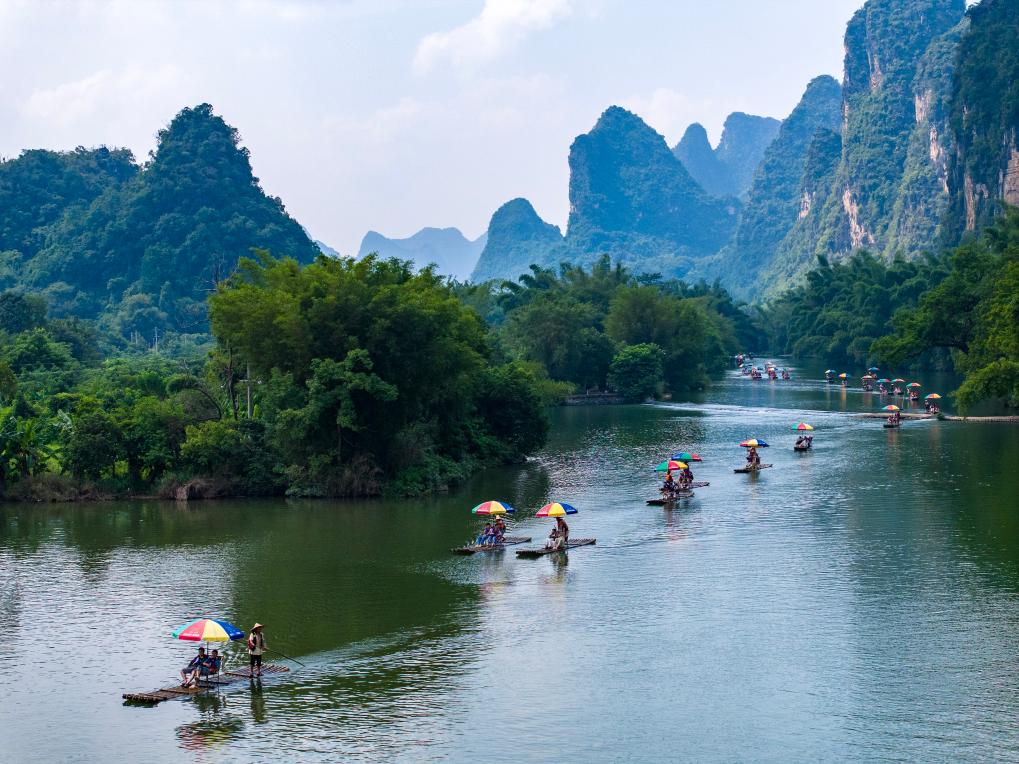
The Yulong River — Yangshuo's dam-free 'Little Li' — where hand-poled bamboo rafts slide over one-metre weirs past 600-year-old stone bridges, and flat farm lanes make the classic 'raft down, cycle back' day through the karst.
Dive deeper: full travel guide · transport & map · where to stay & book
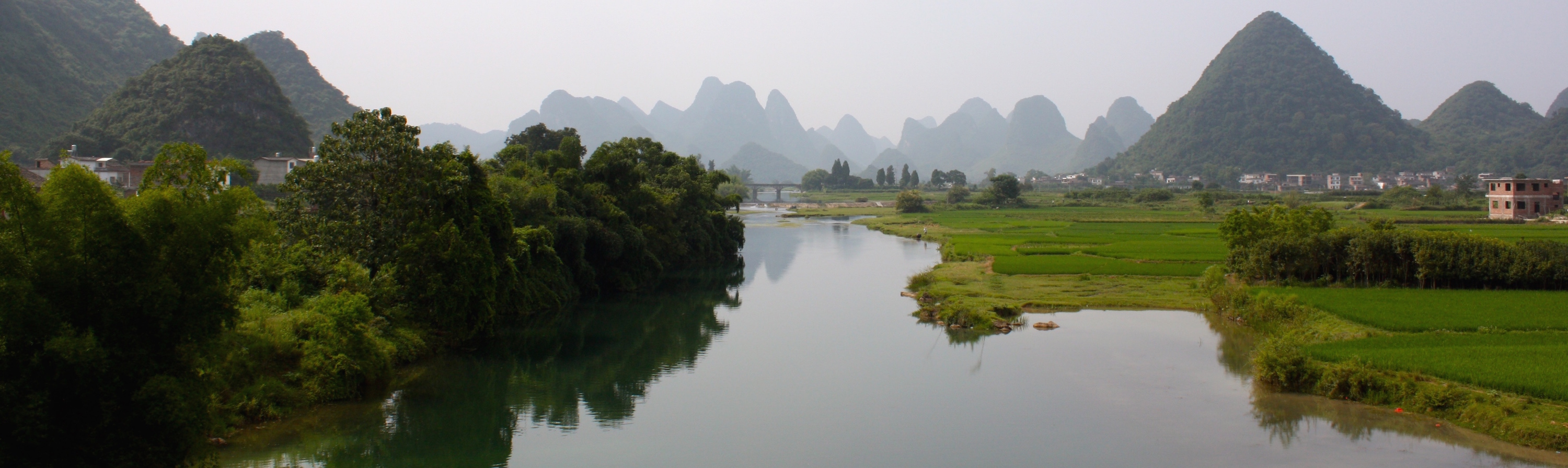
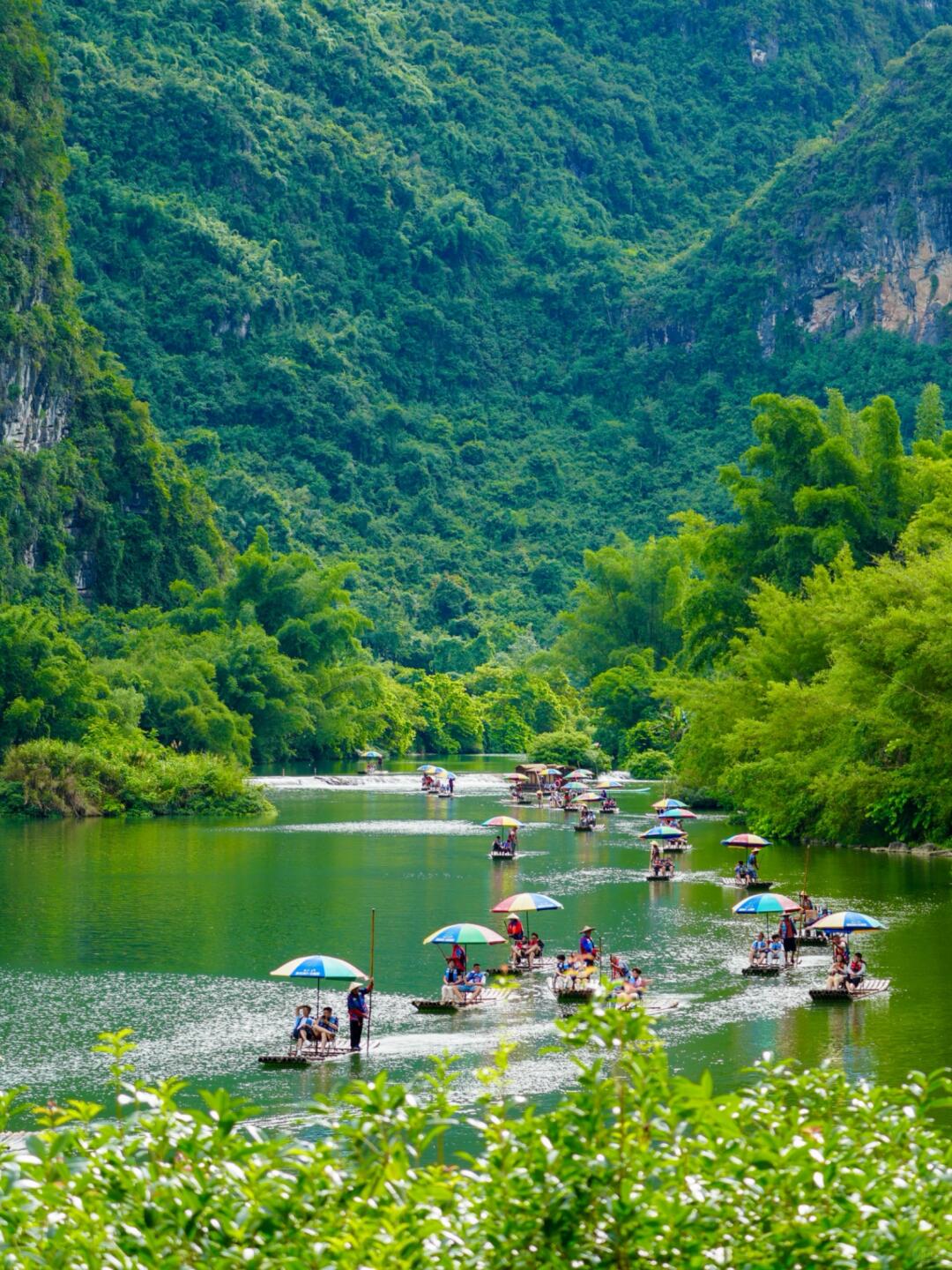
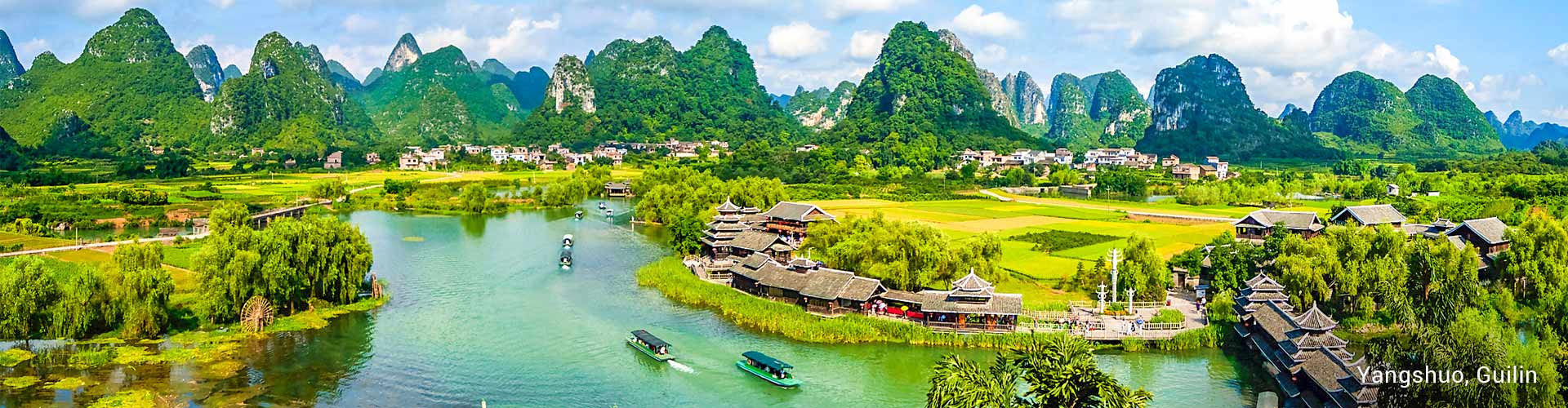
The Yulong River (Yulong He, the 'Little Li River') is a slow, dam-free tributary that winds roughly 43 kilometres through the rice fields, old stone bridges and karst pinnacles of Yangshuo's western countryside. Unlike the motorised pontoons on the Li River, drifting here still means a hand-poled bamboo raft — two plastic chairs, life jackets and a local boatman — sliding over shallow weirs with a one-metre drop each time, the classic 'nine weir' runs. The valley's landmarks are the 600-year-old Yulong Bridge near Baisha, the crescent-shaped Ming Fuli Bridge, the raft piers at Shu'edi and Jima, and Gongnong Bridge, where the Ten-Mile Gallery begins.
Rafting is now fully real-name reserved through the official channels — the 'Yulong River Scenic Area' (遇龙河景区) and 'i-Yangshuo' (i游阳朔) WeChat mini-programs — with next-day tickets released at 20:00 the night before and fourteen official routes priced per raft: the flagship Jinlong Bridge → Jiuxian run covers six kilometres and nine weirs in about ninety minutes at 320 yuan per raft for two, while shorter sections (Shu'edi → Zonghe 200 yuan, Yulong Bridge return 180) trade distance for convenience. Walk-up sales to individuals have been discontinued, and scalper tickets at the piers are a known scam. In spring, the valley's 'Golden Dragon' lantern parade has become a viral, sold-out spectacle.
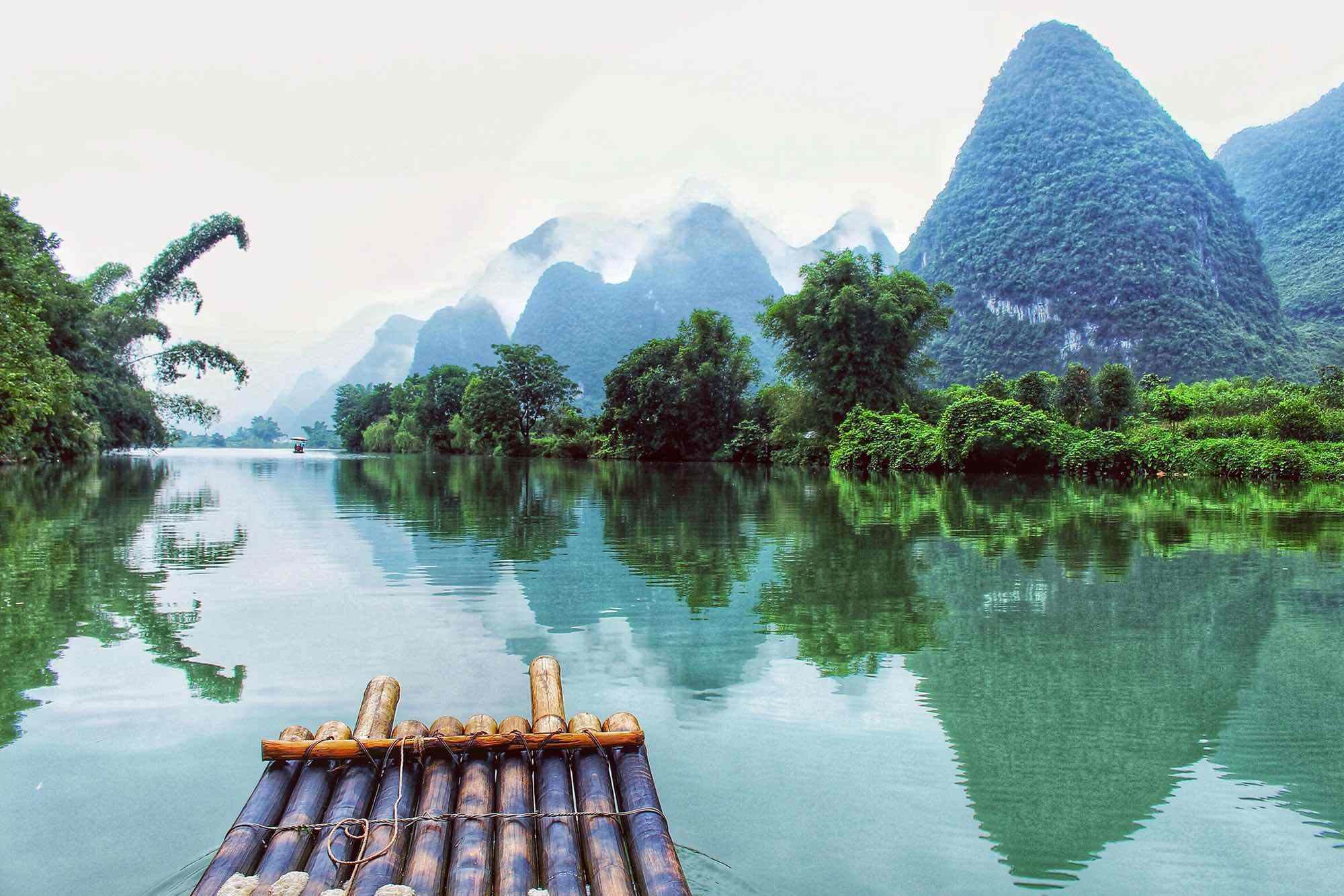
The valley is equally loved for cycling: flat farm lanes and riverside paths link the piers with villages such as Jiuxian and the Ten-Mile Gallery road — rent an e-bike in Yangshuo town (10–40 yuan a day) and the standard one-day combo writes itself: raft downstream in the morning, ride back past Big Banyan and Moon Hill in the afternoon, sunset at Gongnong Bridge. Allow half a day minimum for a single route; sunrise and late afternoon give the softest light, when the river runs glass-flat and the mist sits over the mirror sections — the signature photograph of the valley.
Highlights
Hand-poled bamboo rafting
Two-person bamboo rafts pushed by local boatmen — quiet, no engines, with small weir drops that splash but stay safe.
Jinlong Bridge → Jiuxian route
The classic 6 km / ~90-minute long run over nine weirs, 320 yuan per raft (2 pax), past old stone bridges and villages.
Yulong Bridge (遇龙桥)
A 600-year-old single-arch stone bridge, the river's namesake and most photographed span near Baisha.
Fuli Bridge (富里桥)
Crescent-shaped Ming stone arch reflected in green water — 180–200 yuan return-raft starting point.
Ten-Mile Gallery cycling link
From Gongnong Bridge the flat G321-side gallery road runs past Big Banyan and Moon Hill — rent an e-bike (~40 yuan/day) and loop back along the river.
Sunrise mist & water-mirror reflections
Dawn paddles near the 'mirror lake' sections catch mist over glass-flat water — the signature photo of the valley.
Photo Gallery
Comments