 Travel in China
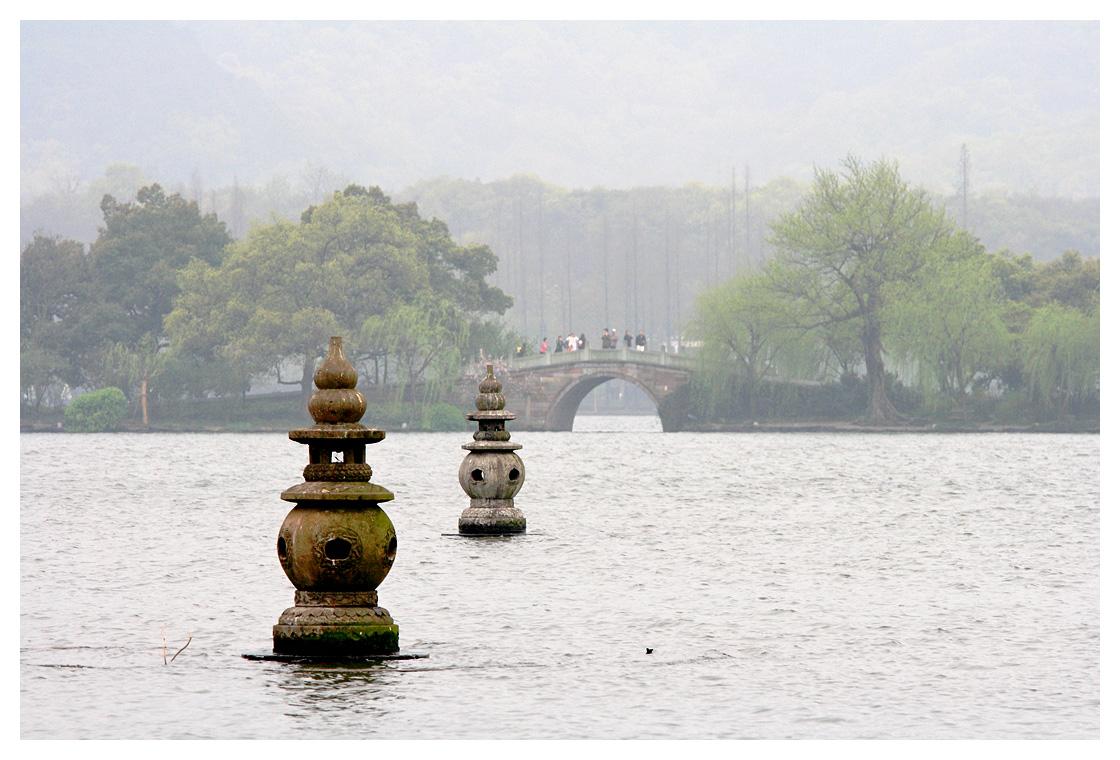
The poetic heart of West Lake and the only one of its three islets open to visitors: Xiaoyingzhou, a 7-hectare garden island shaped in 1607 like the character for 'field', where zigzag bridges cross inner lagoons in the celebrated 'lake within an island, island within a lake' composition. Off the southern shore float three Ming stone pagodas — Su Dongpo's 1090 water markers, rebuilt — that print on China's one-yuan banknote; the island itself is reached only by official cruise boats.
Dive deeper: full travel guide · transport & map · where to stay & book
Three Pools Mirroring the Moon began as engineering and turned into poetry. In 1090 the poet-governor Su Dongpo dredged the silting lake and set three stone markers in the water to fence off a no-planting zone; the islet followed in 1607, when mud from Ming dredging was piled into a platform laid out like the character tian, 'field'. Known as Xiaoyingzhou, 'Lesser Fairy Isle', it became the most beloved of the lake's three islets — and the only one visitors may land on. The offshore pagodas anchor 'Three Pools Mirroring the Moon', one of the Ten Scenes of West Lake named in the Southern Song, and Emperor Kangxi added his own brushwork in 1699.
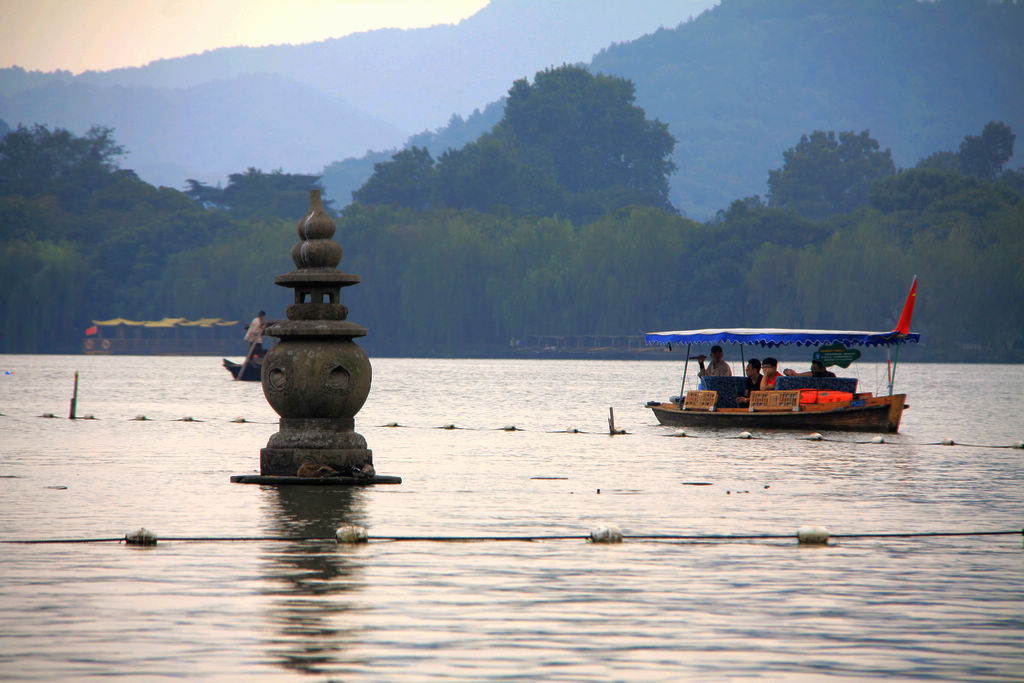
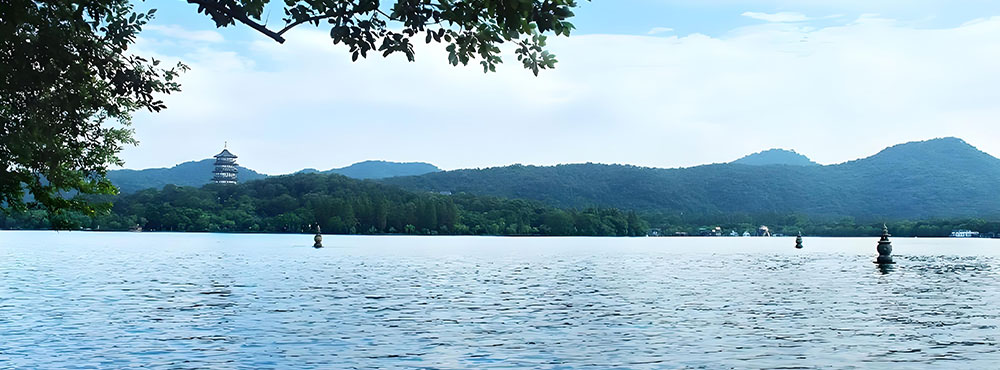
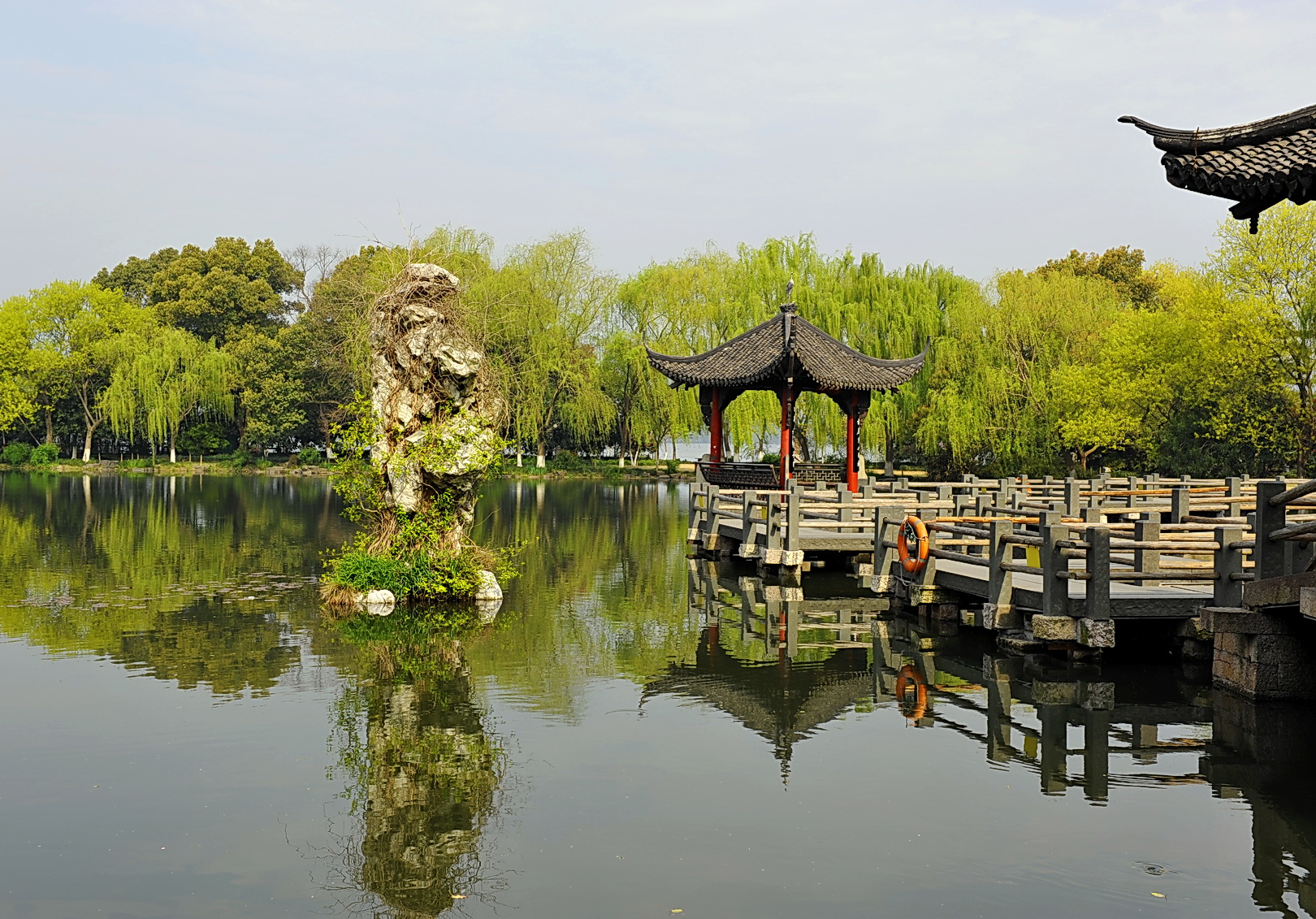
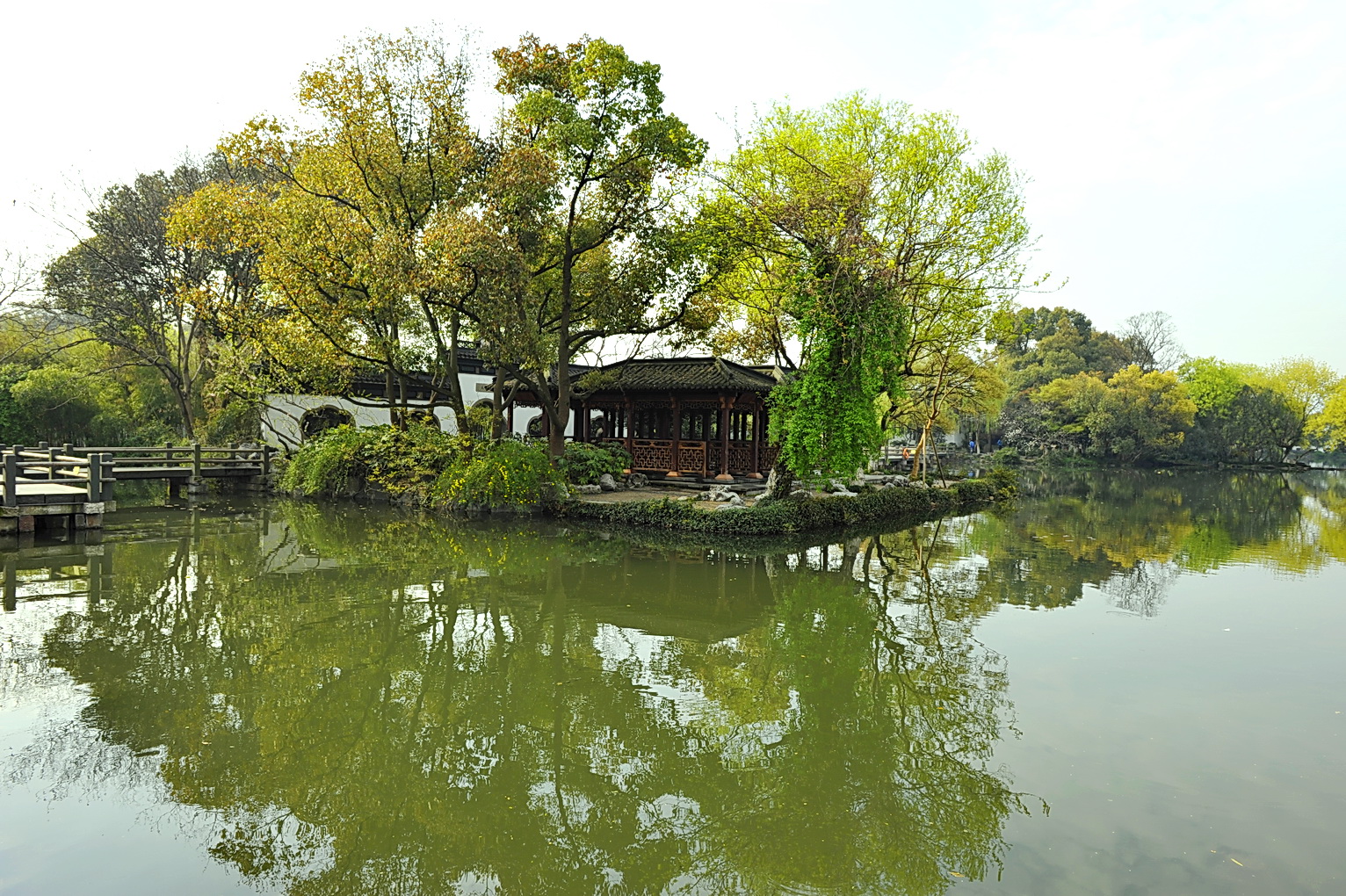
The garden is a riddle in water. A ring causeway encloses the 7-hectare island, and inside it the zigzag Nine-Bend Bridge threads the inner lagoons, opening a new frame of willow, lotus and pavilion every few steps — the classical 'lake within an island, island within a lake' composition of Jiangnan water gardening. South of the shore stand the three 2-metre stone pagodas, hollow towers with five round openings each, where candles lit on Mid-Autumn nights once multiplied the moon's reflection across the water. The Kangxi stele 'Three Pools Mirroring the Moon' anchors the island's central axis, and the half-wall, half-corridor My Heart Mirror Pavilion opens south toward the pagodas and Leifeng Pagoda on the far shore.
Arrival is by the lake's own rules: official cruise boats from nine piers, ¥55 for a standard leisure boat and ¥70 for the deluxe or electric craft, both fares including the ¥20 island admission. The island keeps 07:30-17:00 hours, with last boardings drifting between 16:00 and 17:00 by season and pier windows closing at 16:30 in winter; allow ninety minutes on the islet plus the crossing each way. The scene carries modern China's ultimate citation — the back of the one-yuan banknote — and visitors line up at My Heart Mirror Pavilion to match note to water, though the exact banknote angle lies offshore, reproducible only in part.
Highlights
Three Stone Pagodas
The trio of Ming-era stone towers floating south of the islet forms the classic West Lake tableau and the motif on the one-yuan banknote. Each hollow tower has five round openings that once held candlelight on Mid-Autumn nights.
Zigzag Nine-Bend Bridge
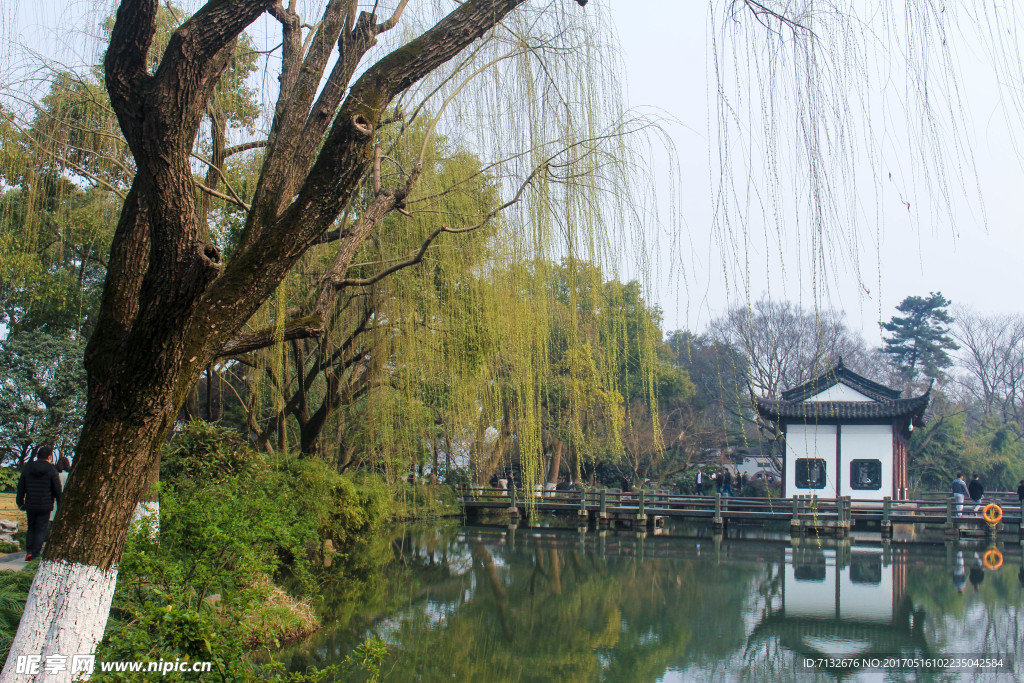
A winding stone bridge threads the island's inner lagoons, linking pavilions and revealing framed lake views with every turn. It is the backbone of the 'island within a lake' garden design.
Kangxi Imperial Stele Pavilion
The stone stele bearing Emperor Kangxi's 1699 calligraphy 'Three Pools Mirroring the Moon' anchors the island's central axis. It is the standard photo stop for visitors.
My Heart Mirror Pavilion
The southernmost pavilion opens onto open water facing the three pagodas and Leifeng Pagoda on the far shore. Its half-wall, half-corridor structure is unique in the West Lake area.
'Lake Within a Lake' Gardens
Willows, lotus, red maples and hibiscus ring the inner water gardens laid out since the Ming dynasty. The layered 'garden within garden' composition represents classical Jiangnan water gardening at its peak.
Su Dongpo's Legacy
The original three pagodas were set out by poet-governor Su Shi in 1090 to mark a no-planting zone while he dredged the silting lake. The current towers continue that thousand-year story.
Photo Gallery
Comments