 Travel in China
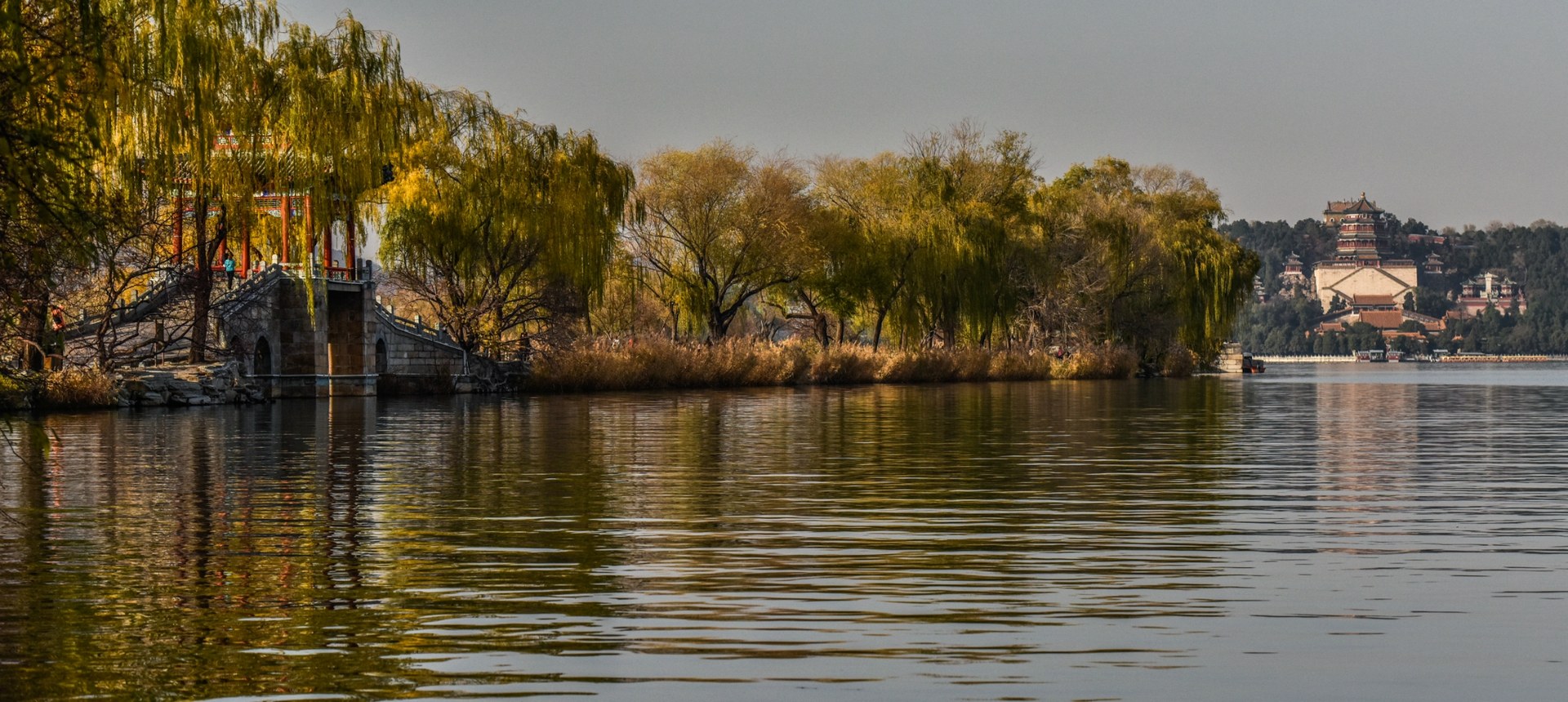
The grandest of China's classical gardens — a Qing-dynasty imperial playground where Longevity Hill rises over the willow-fringed Kunming Lake, all pavilions, painted corridors and the shimmering jade-and-gold Tower of Buddhist Incense.
Dive deeper: full travel guide · transport & map · where to stay & book
Laid out in 1750 as the Garden of Clear Ripples and rebuilt by Empress Dowager Cixi in the late 19th century, the Summer Palace is the largest and best-preserved imperial garden in China, inscribed by UNESCO in 1998. Its designers shaped Longevity Hill and Kunming Lake into a landscape homage to Hangzhou's West Lake, with the Western Hills borrowed as a natural backdrop — a technique Chinese garden masters call 'borrowing scenery'.
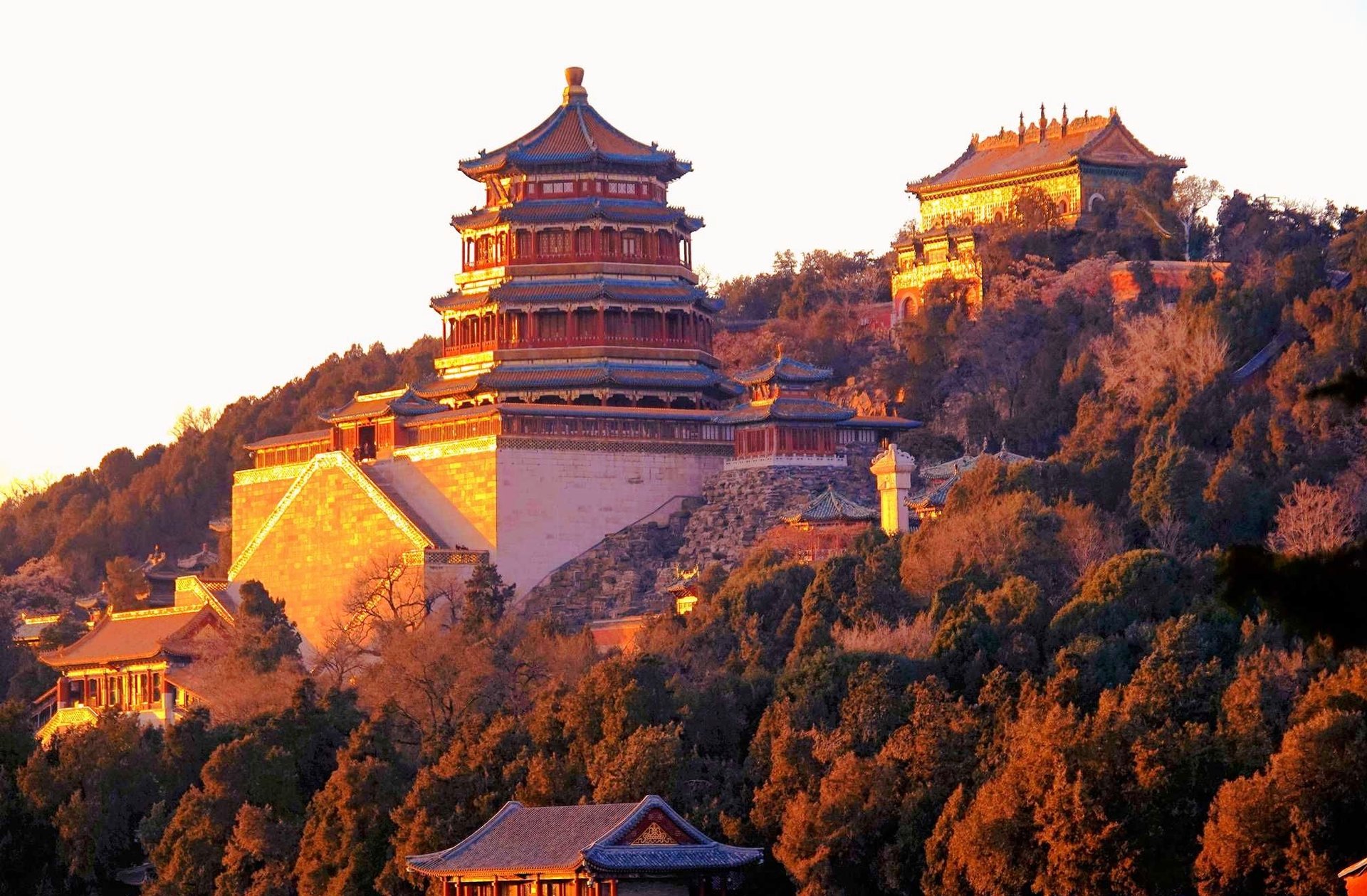
The 290-hectare park divides into three acts: the halls of state around the Hall of Benevolence and Longevity; the empress's waterside residences of the Yulan and Leshou Courts; and the great scenic belt of hill and lake, crowned by the Tower of Buddhist Incense on its mountainside terrace above the 728-metre Long Corridor.
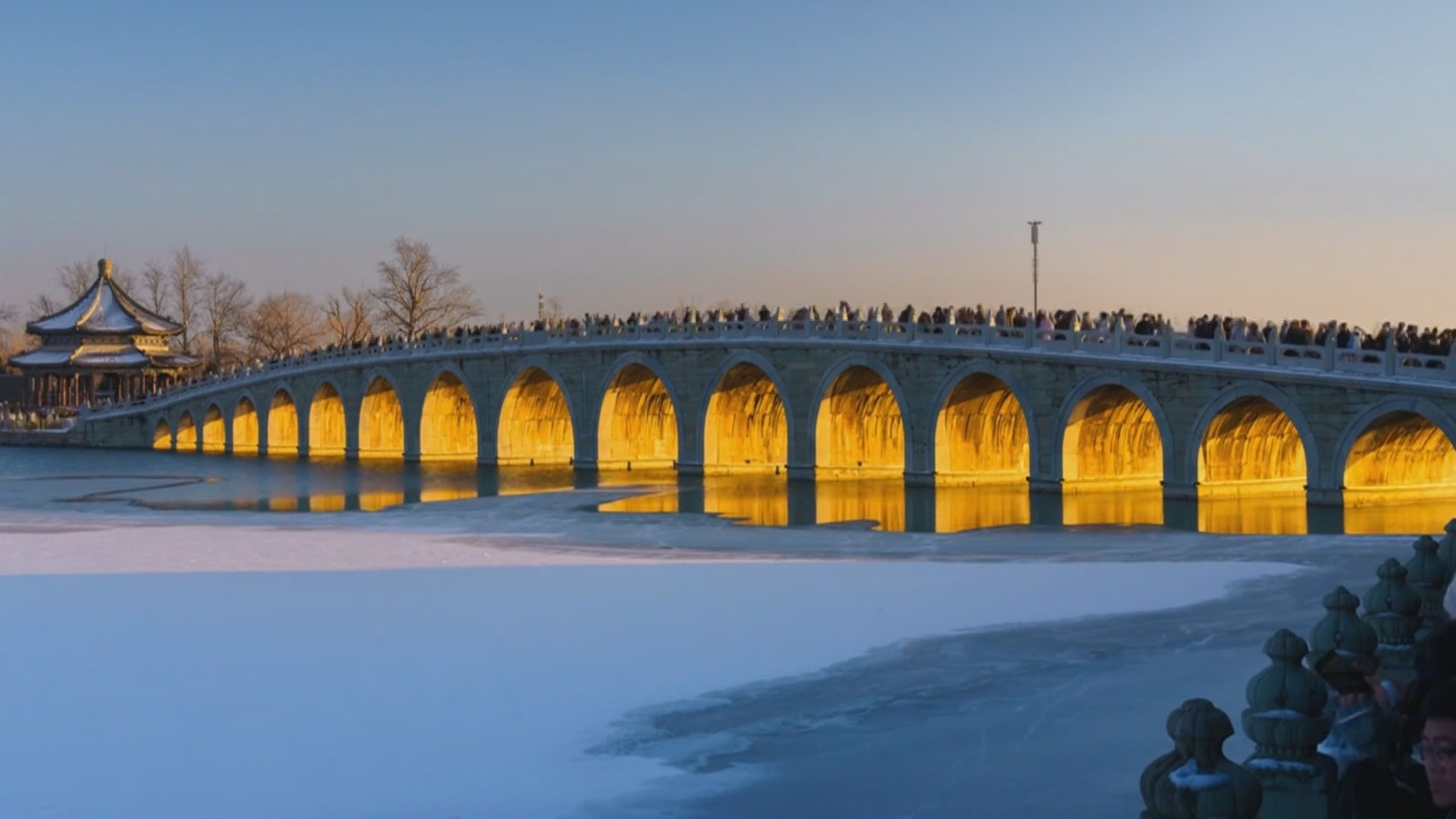
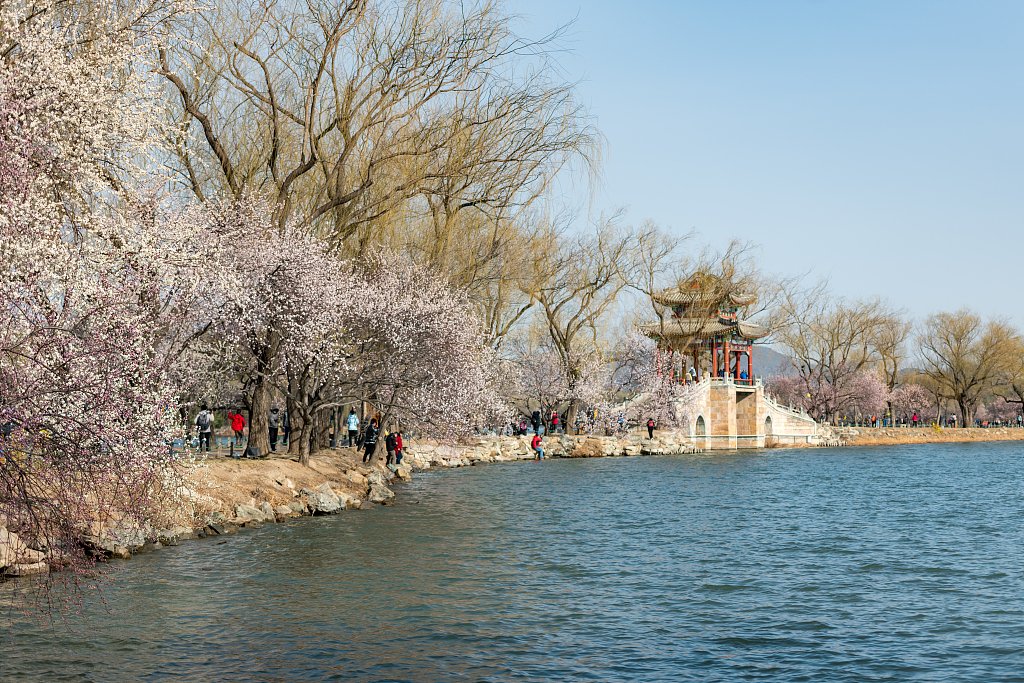
In spring, mountain peach and magnolia bloom against vermilion columns; in summer, lotus pads crowd the lake's bays; and on fine evenings the setting sun gilds the Seventeen-Arch Bridge stretching toward South Lake Island — the classic postcard that has introduced the garden to the world.
Highlights
Long Corridor
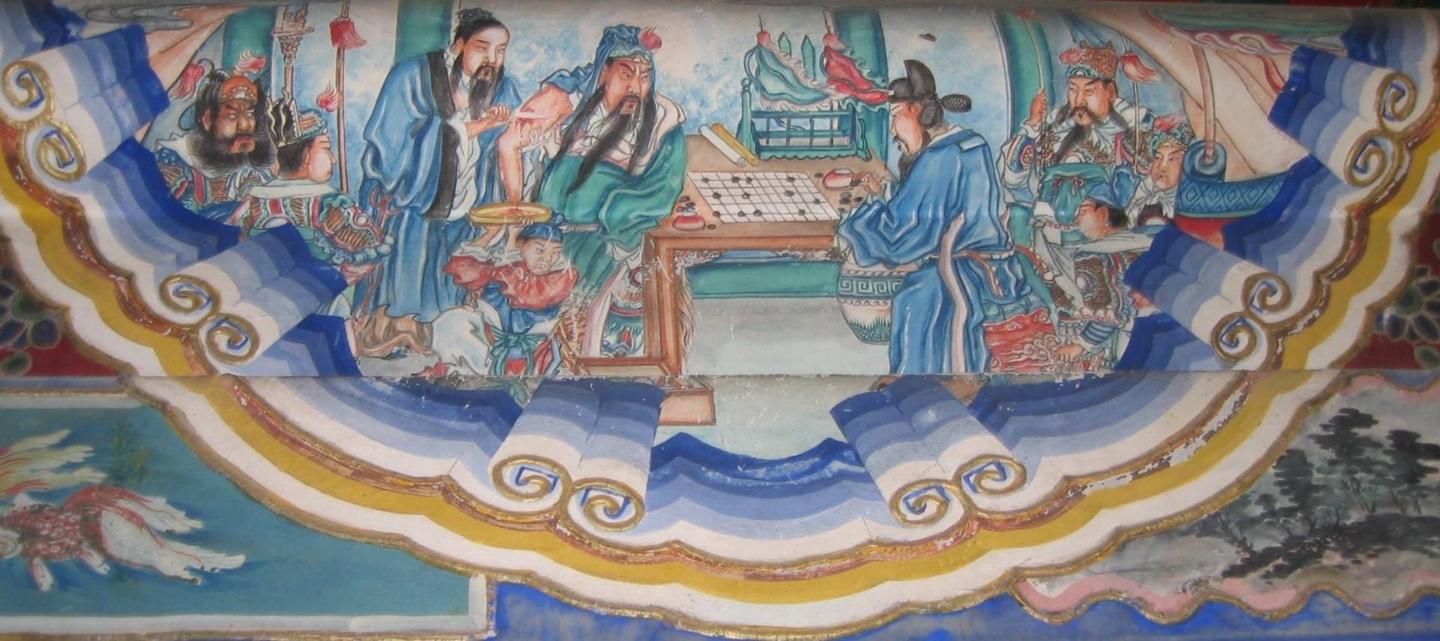
728 metres of painted beams and 14,000 Suzhou-style landscape panels — the longest decorated gallery in classical Chinese architecture.
Tower of Buddhist Incense
The three-tiered pagoda crowning Longevity Hill, with lake-and-city views from its terrace (¥10).
Kunming Lake Cruise
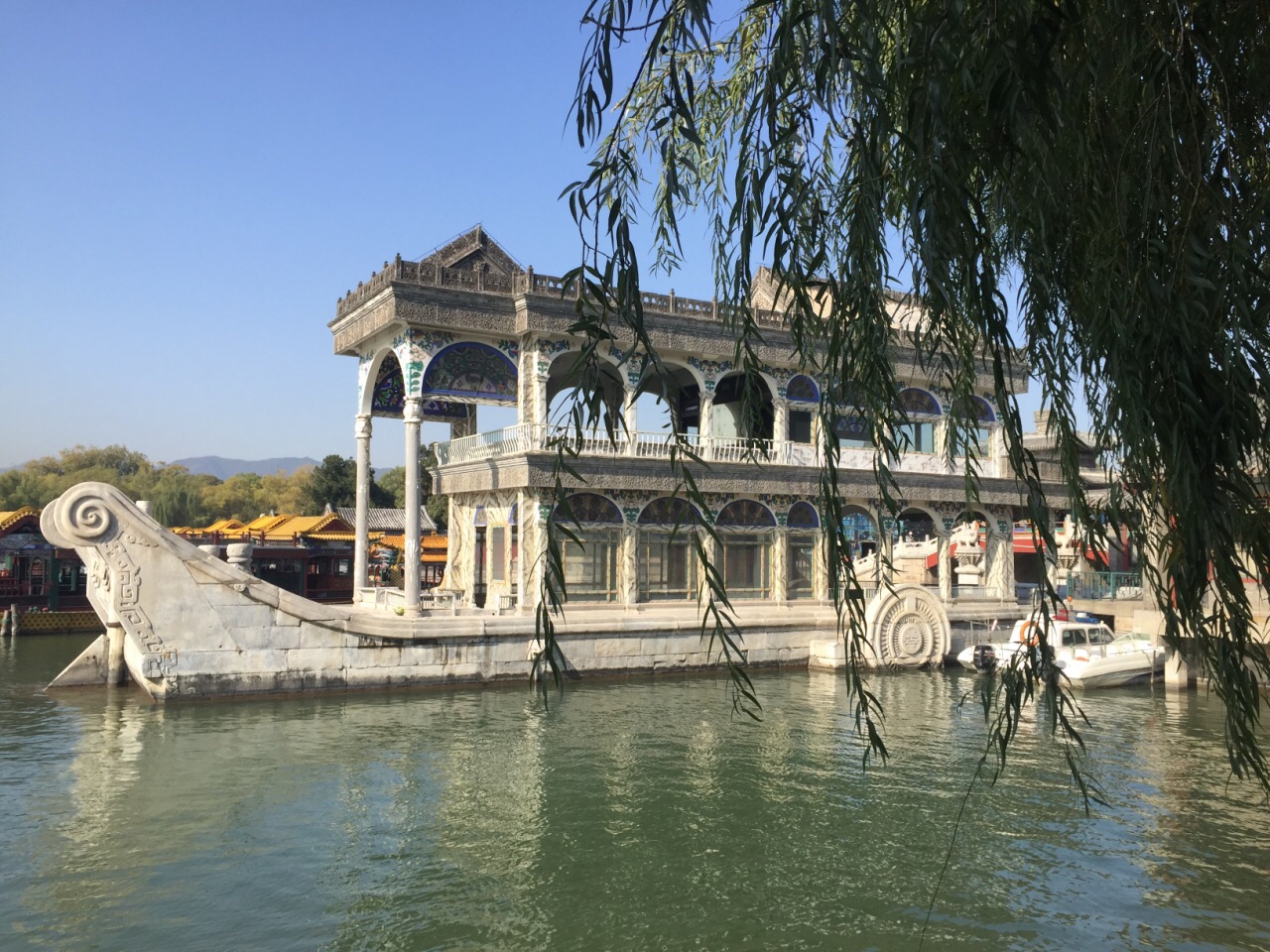
Ferry and dragon-boat crossings to South Lake Island drift past the Marble Boat and willow shores.
Seventeen-Arch Bridge
The 150-metre stone bridge whose 544 lions glow gold at sunset around the winter solstice.
Suzhou Market Street
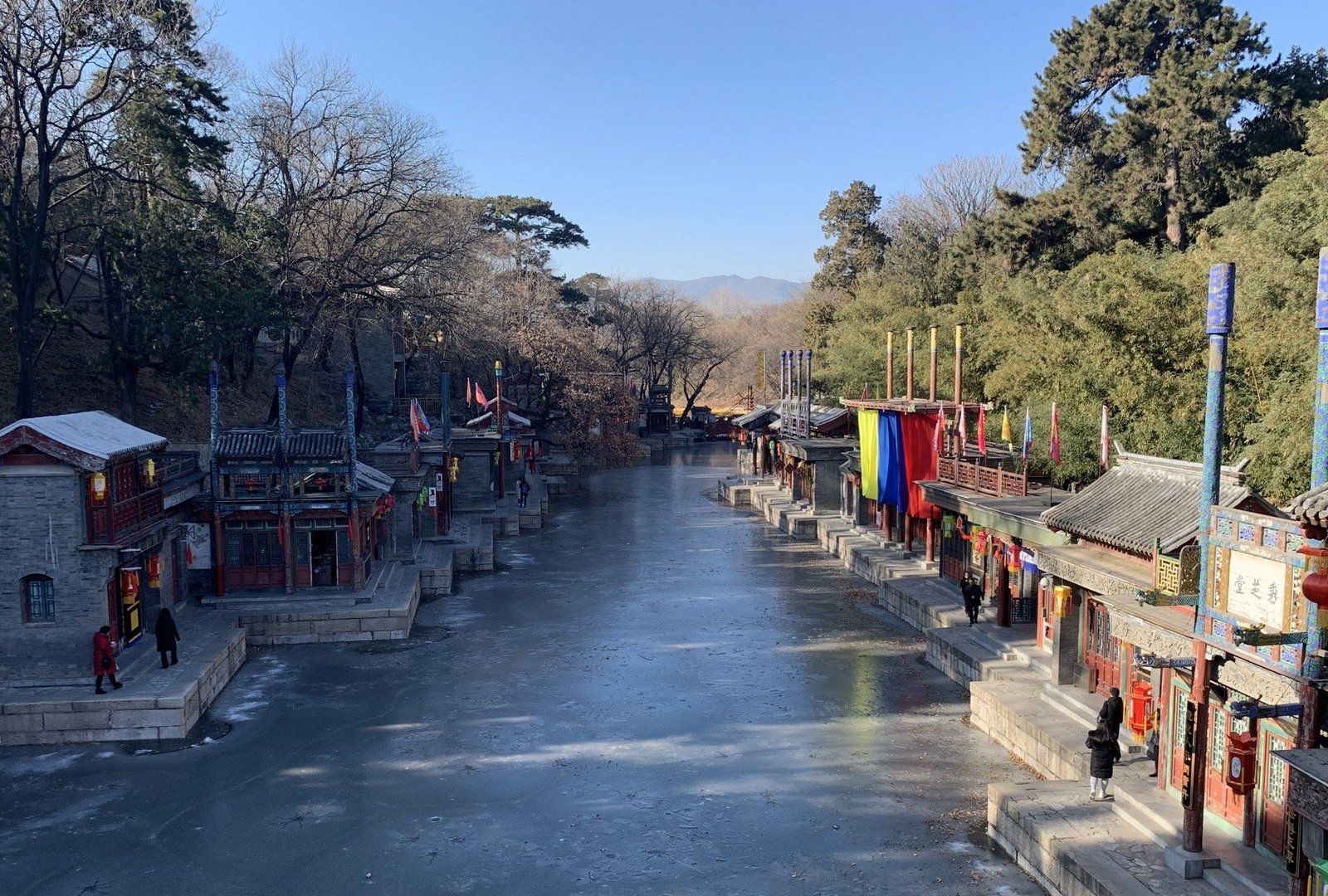
A recreated Jiangnan canal street of shopfronts along the back lake — the emperor's riverside shopping fantasy.
West Dike
A willow-and-peach causeway stitched with six Ming-style bridges, modelled on West Lake's Su Causeway.
Photo Gallery
Comments