 Travel in China
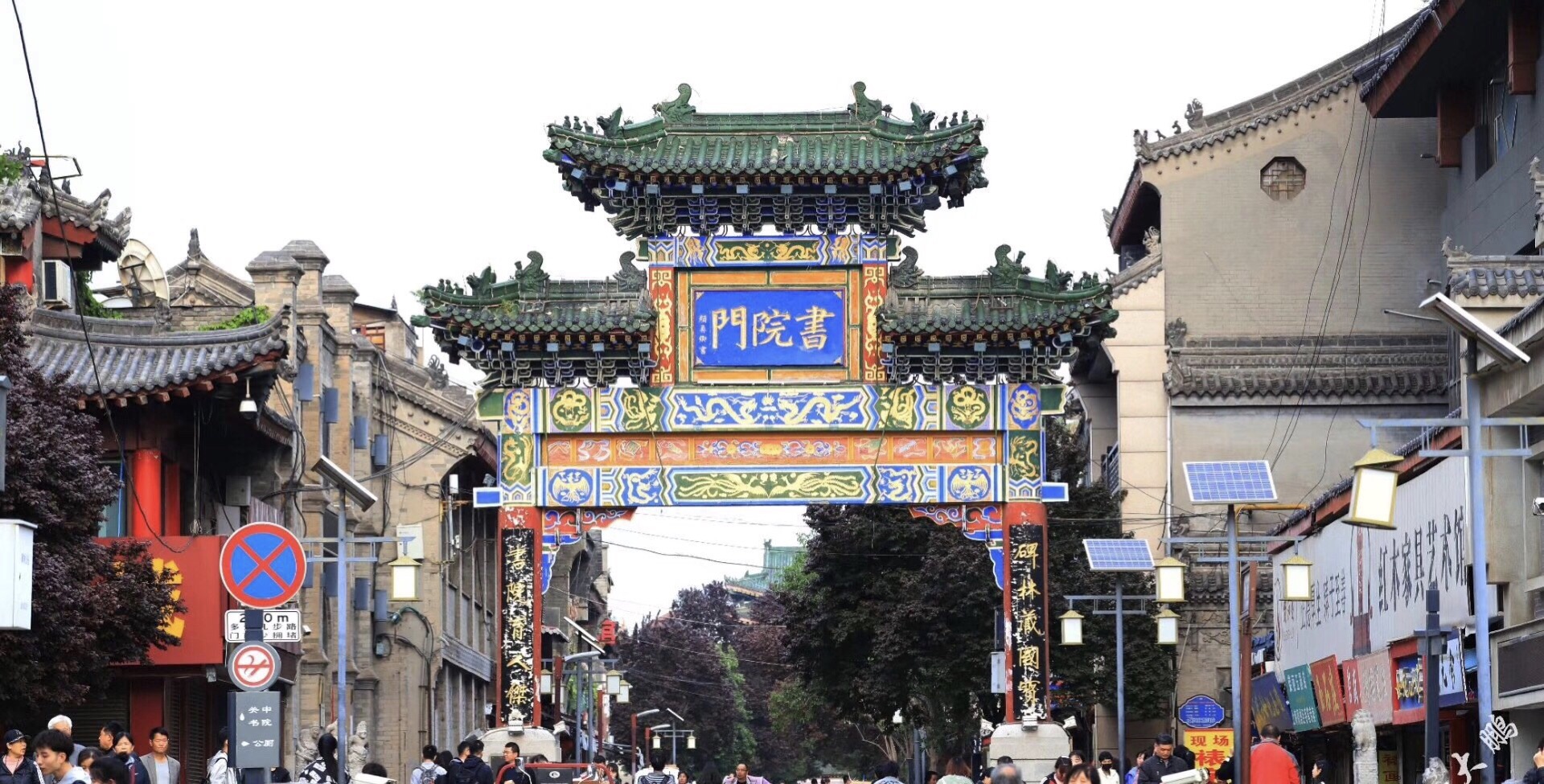
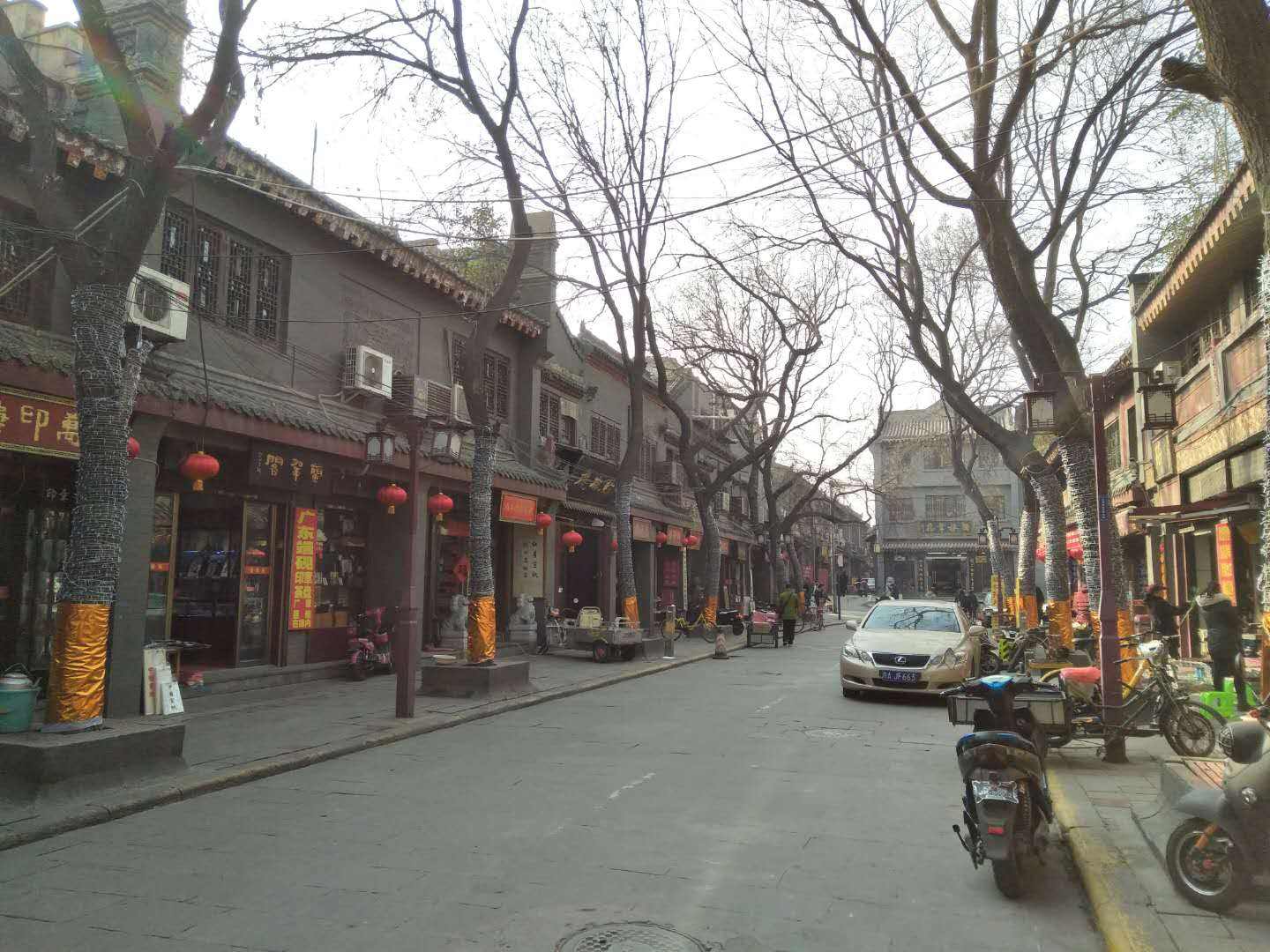
Running 325 metres from the South Gate toward the Beilin Museum, Shuyuanmen is Xi'an's street of the four treasures of the study — ink stones, brushes, paper and seals — laid over flagstones under grey-brick Ming-style facades, named for the Guanzhong Academy of 1609 hidden mid-street. Calligraphers dash off scrolls at street stalls, rubbing-printers beat out classic stele copies, and courtyard shops sell everything from pocket seals carved with your name to antique-instrument replicas. It is the calm, cultured counterweight to the food streets.
Dive deeper: full travel guide · transport & map · where to stay & book
Shuyuanmen traces its name and identity to the Guanzhong Academy, founded in 1609 during the late Ming dynasty by the philosopher Feng Congwu. Established as the highest seat of learning in Shaanxi province throughout the Ming and Qing eras, the academy ranked among China's four great classical academies and gave the street its enduring scholarly character. The road itself, running some 325 metres from the South Gate of the old city wall toward the Beilin Museum, sits on ground long associated with literati culture, its shops historically serving calligraphers, scholars and students. Even the street's oldest structure, the Baoqing Temple Pagoda at its western mouth, dates back to the Sui-Tang era, a seven-storey, six-sided brick pagoda that quietly predates everything around it by nearly a thousand years.
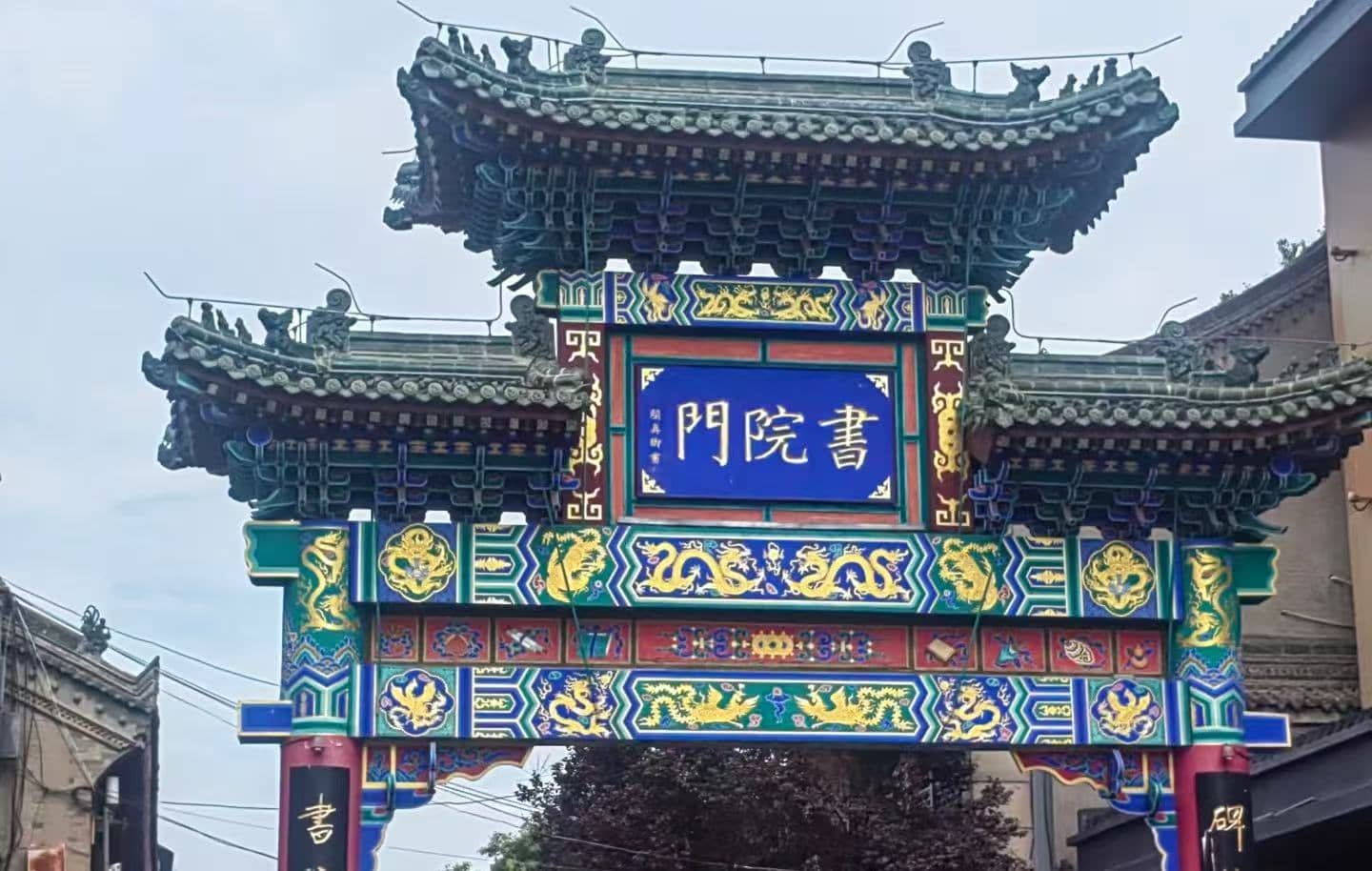
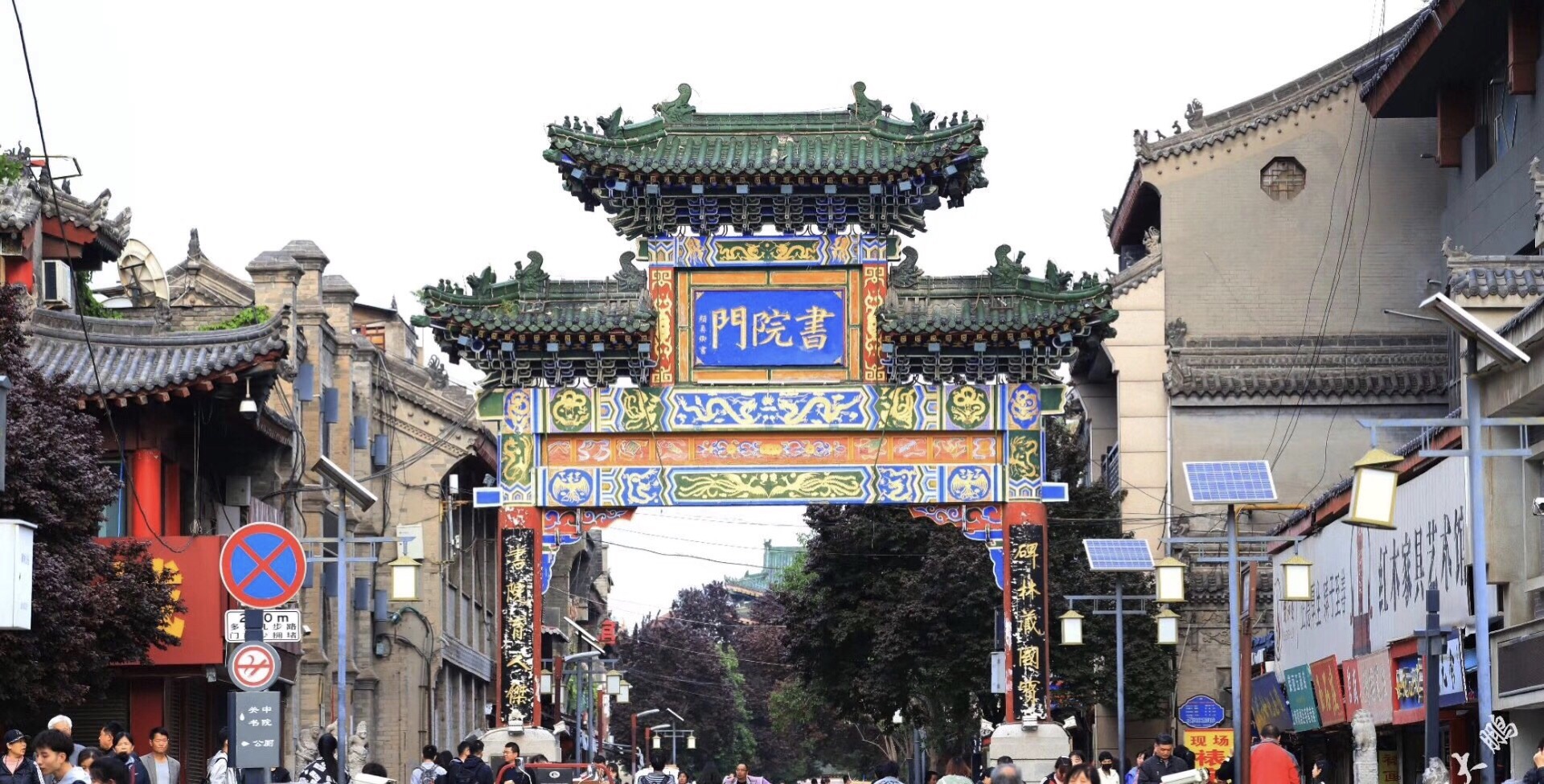
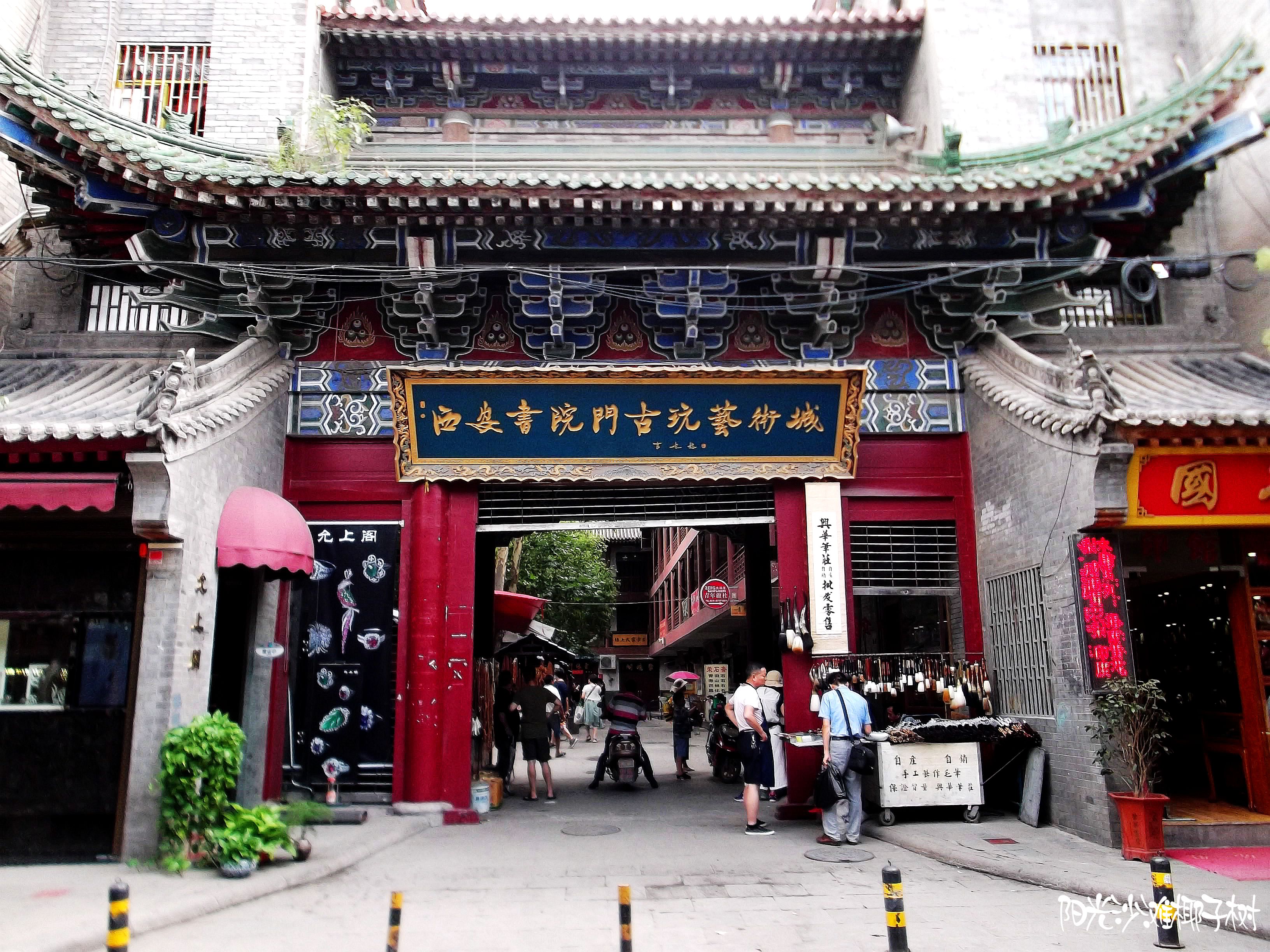
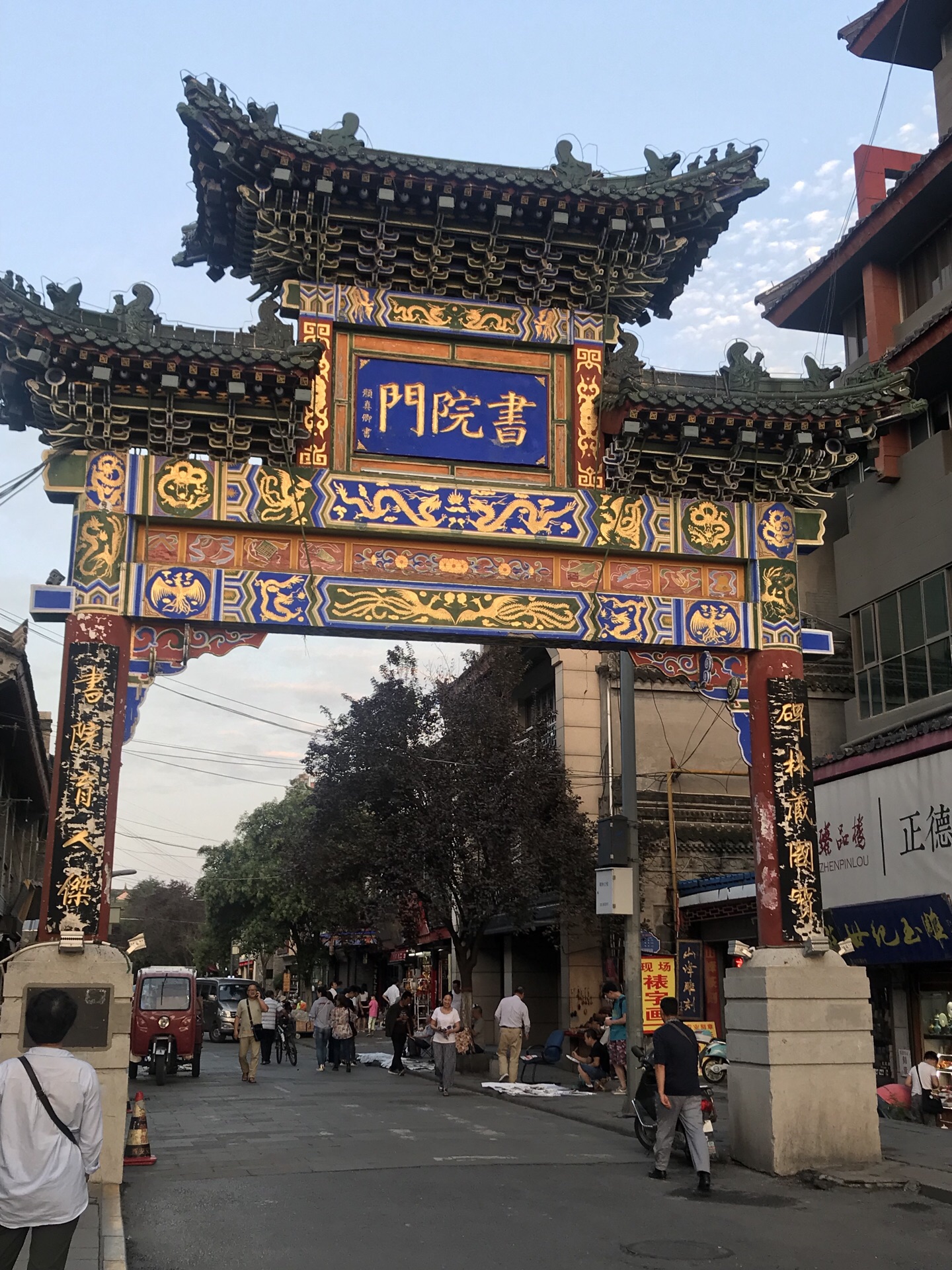
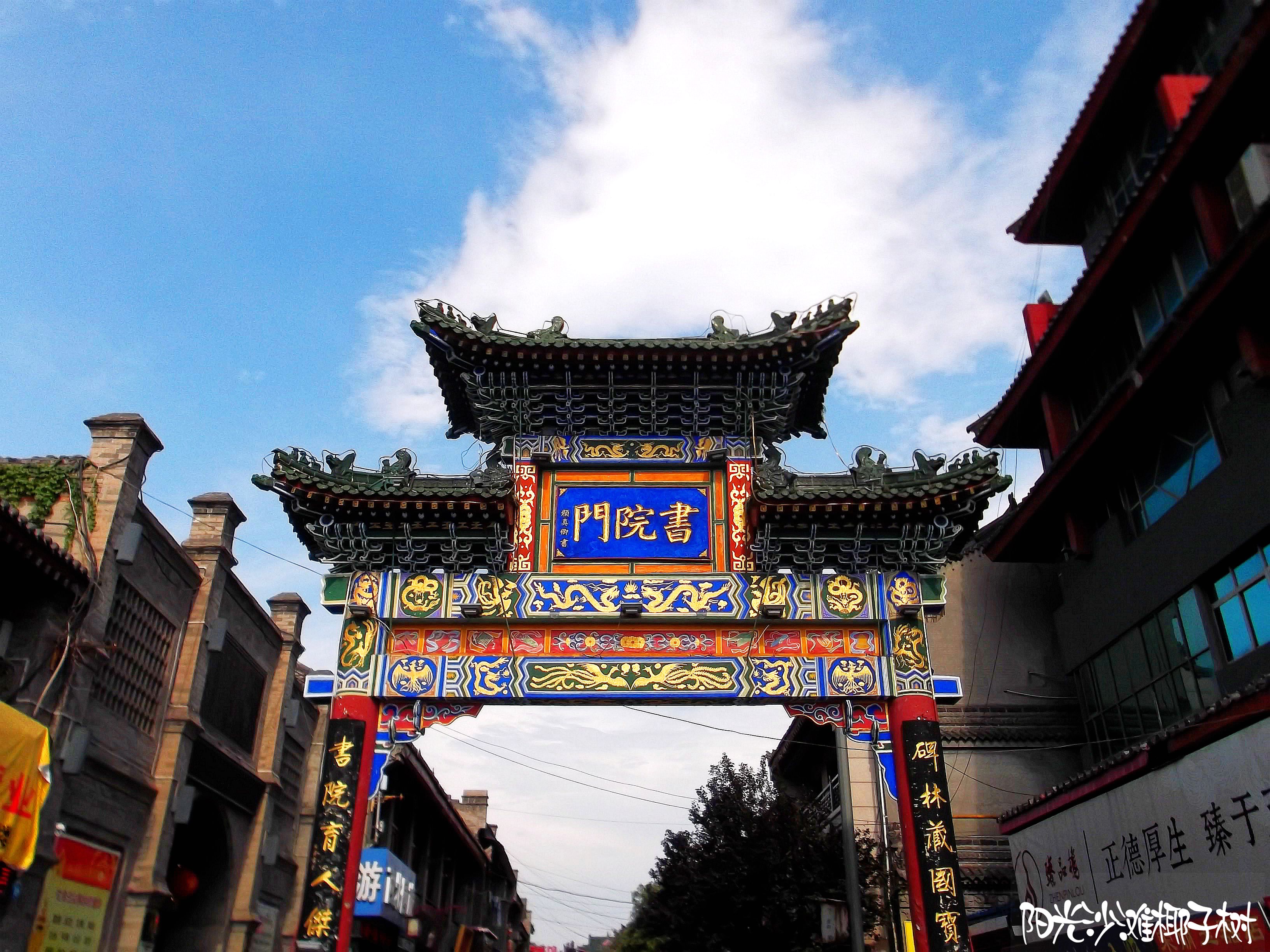
Today's Shuyuanmen is the street of the four treasures of the study — ink stones, brushes, paper and seals — laid over flagstones beneath grey-brick, Ming-style facades with upturned eaves and a towering inscribed archway. The atmosphere is cultured and unhurried: street calligraphers dash off complete scrolls in minutes at their stalls, while workshop shops beat inked paper onto copies of the famous Beilin stele, producing the traditional "photocopies" of Chinese classics sold as hangable art. Courtyard shops offer everything from antique-instrument replicas to pocket seals hand-carved with your name while you wait. Hidden mid-street, the preserved Guanzhong Academy campus of halls and courtyards rewards reserved visitors with its bamboo-shaded rear garden, a pocket of stillness at its best in afternoon light.
The street itself remains open around the clock, with most shops trading from 9:00 to 19:00 — earlier closing in winter, later in summer — while the Guanzhong Academy admits limited reserved visitors on weekday afternoons from 15:00 to 17:30, with holiday sessions also available. Shuyuanmen functions as Xi'an's calm, cultured counterweight to the city's famous food streets: a painterly stroll rather than a culinary rush, and a natural bridge between the monumental South Gate and the Beilin Museum's forest of stele, whose rubbing tradition spills directly onto the street. For visitors tracing Xi'an's layered past, it offers a rare continuity — a place where Ming scholarship, Tang-era brickwork and living crafts practise side by side within the old city walls.
Highlights
The Guanzhong Academy
Founded 1609 by philosopher Feng Congwu, the highest school of Ming-Qing Shaanxi and one of China's four great academies; a preserved campus of halls and courtyards, open for limited reserved visits.
Street Calligraphers
Watch artists brush out full scrolls in minutes; name chops (seal stones) hand-carved while you wait.
Stele Rubbings Workshops
Shops beating inked paper onto famous Beilin stele copies — the ancient 'photocopy' of Chinese classics, sold as hangable art.
Baoqing Temple Pagoda
A seven-story, six-sided brick pagoda from the Sui-Tang era at the street's west mouth — the oldest structure here, hiding in plain sight.
Ming-Style Streetscape
Flagstone paving, grey brick, upturned eaves and the towering inscribed archway — a painterly street to stroll.
Academy Bamboo Grove
The rear courtyard's quiet bamboo shade, a pocket of stillness beloved by photographers (afternoon light best).
Photo Gallery
Comments