 Travel in China
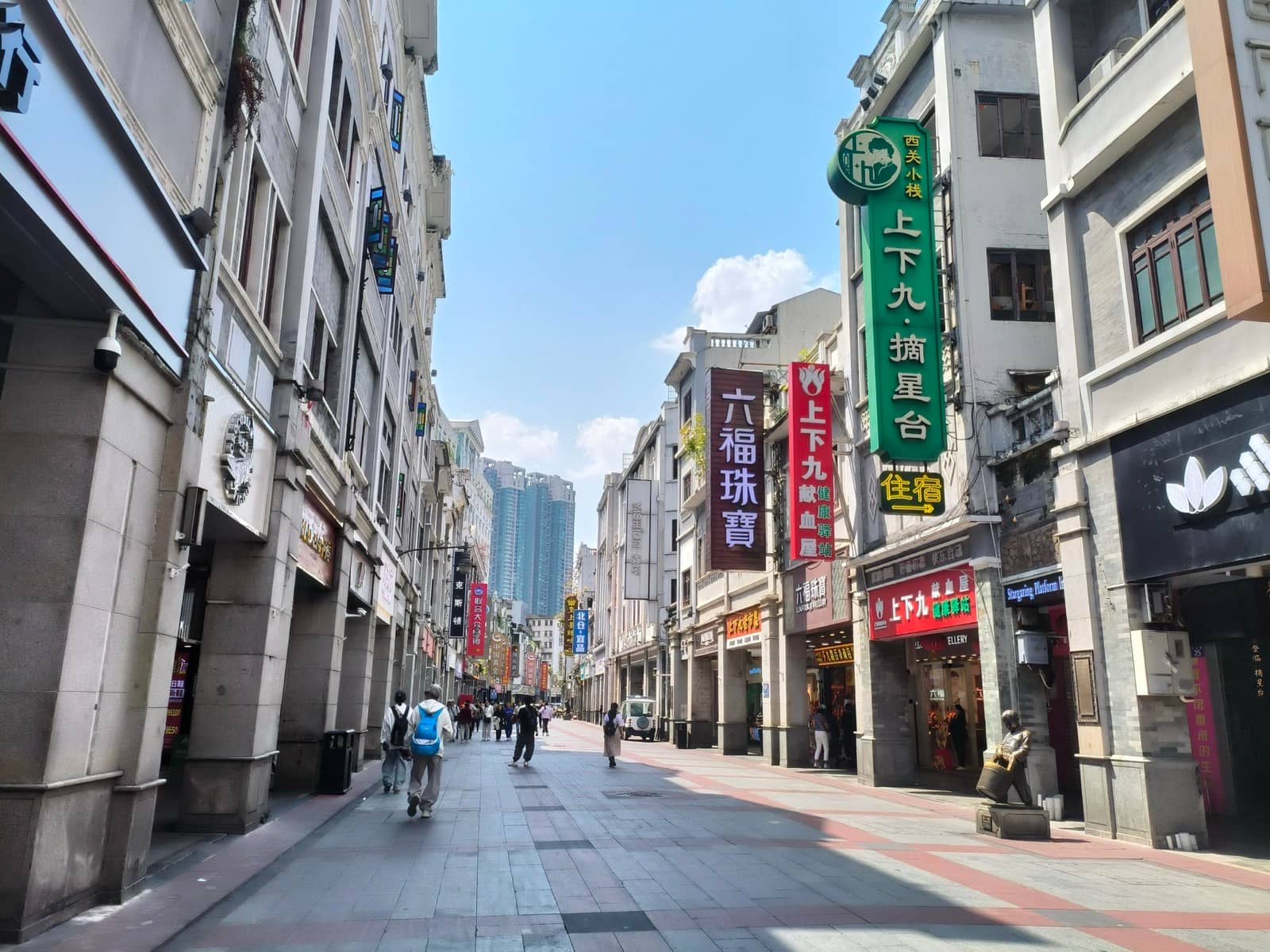
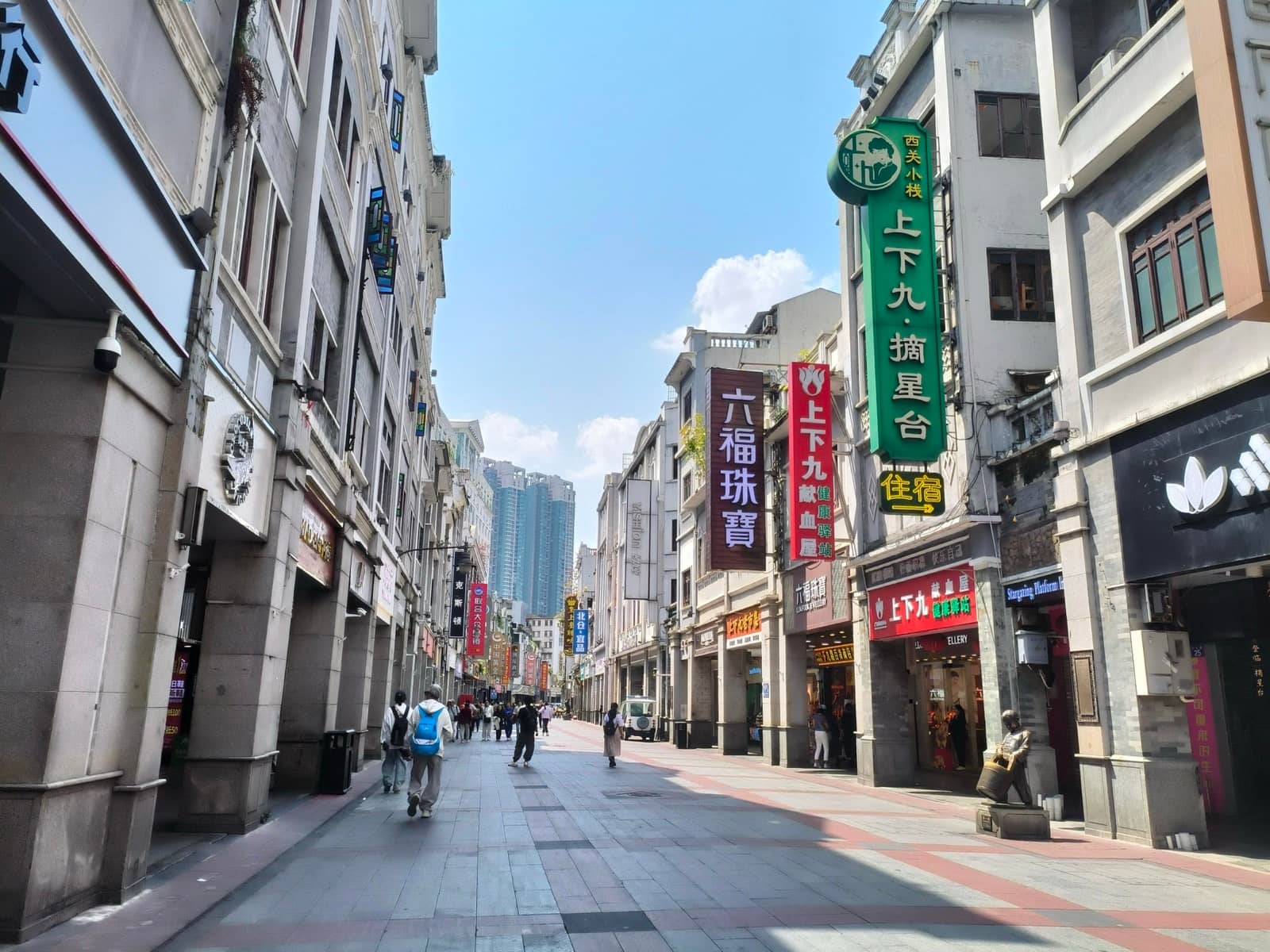
China's first commercial pedestrian street (opened 30 September 1995): a kilometre of Xiguan qilou arcades, neon signs from 18:30, bronze statues of old street life and the flagship of the 1880 Taotaoju teahouse. Free and open round the clock; shops 10:00-22:00. Eat where the queues are — Xihua and Beihua lanes beat the main strip — then walk 15 minutes to Yongqingfang or Shamian.
Dive deeper: full travel guide · transport & map · where to stay & book
The district's name goes back to a legend: here, the monk Bodhidharma is said to have first set foot in China from the west in the sixth century — the 'Xilai Chudi', the place of first arrival, still marked in the lanes north of the street. In the Ming and Qing eras the Huaiyuan posthouse nearby lodged foreign trade missions, and by the late nineteenth century Shangxiajiu's qilou shopfronts were the retail spine of Xiguan, the city's densest merchant quarter. On 30 September 1995 the street closed to traffic and became China's first commercial pedestrian street — the prototype for the pedestrian malls that every Chinese city has since copied.
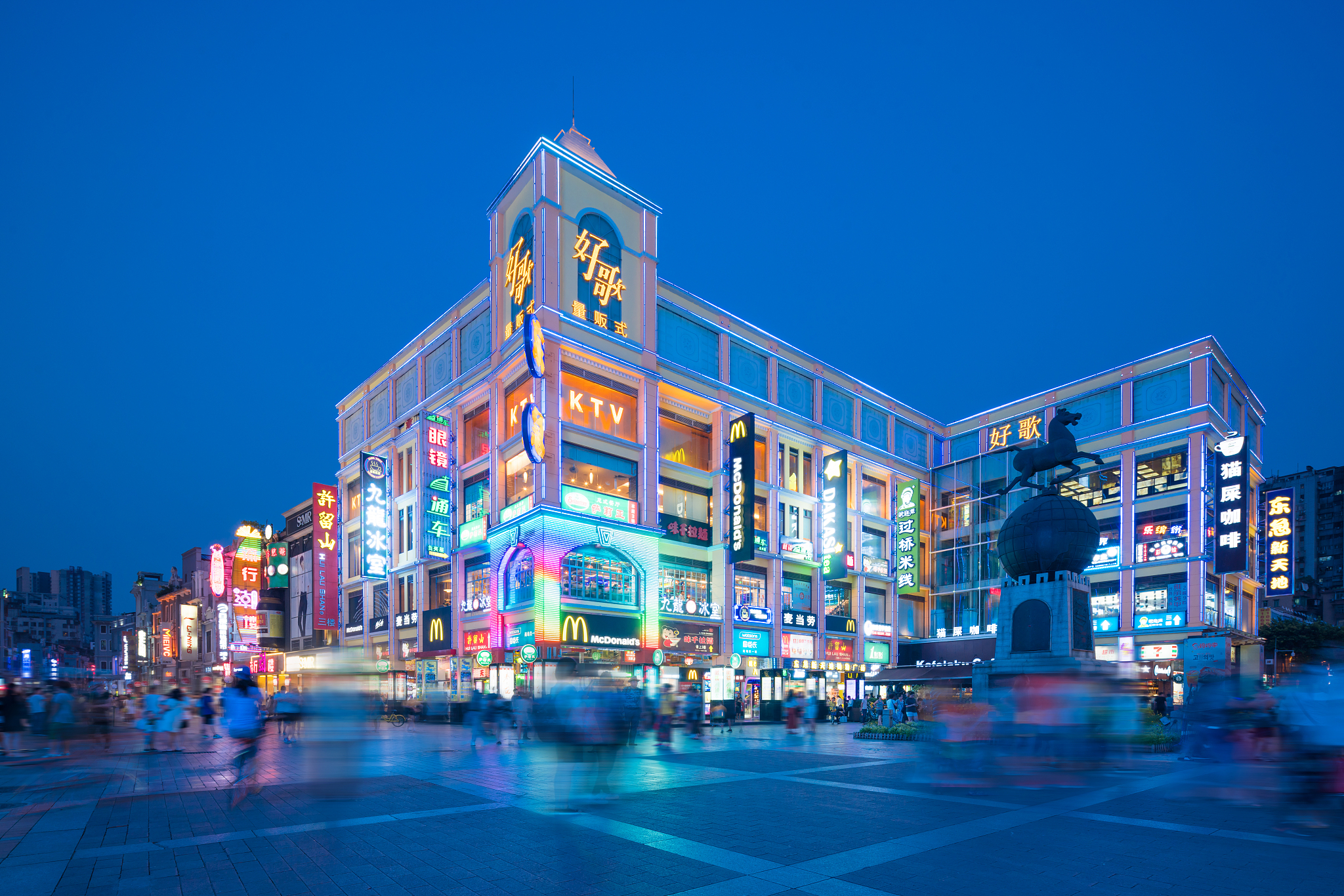
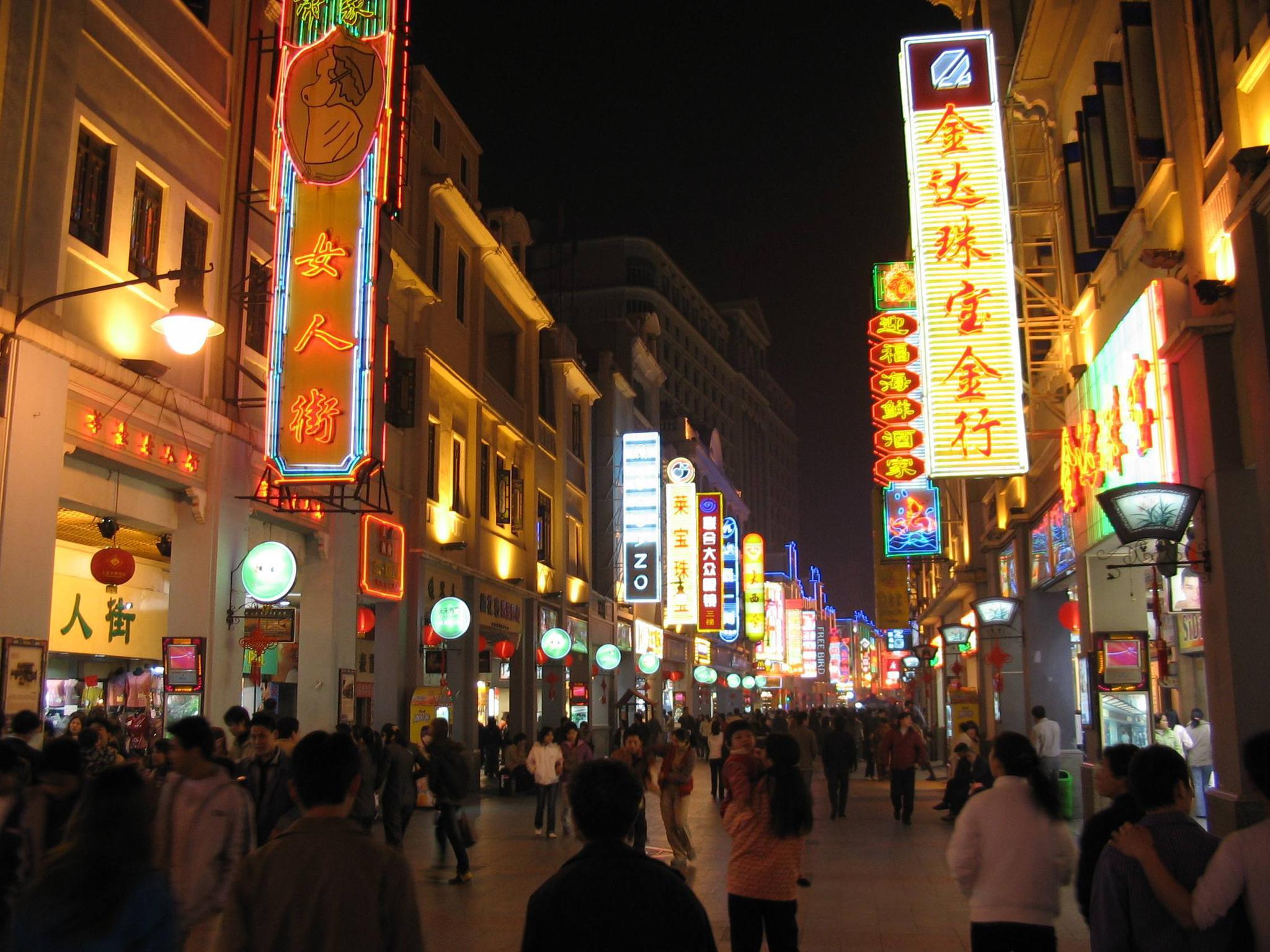
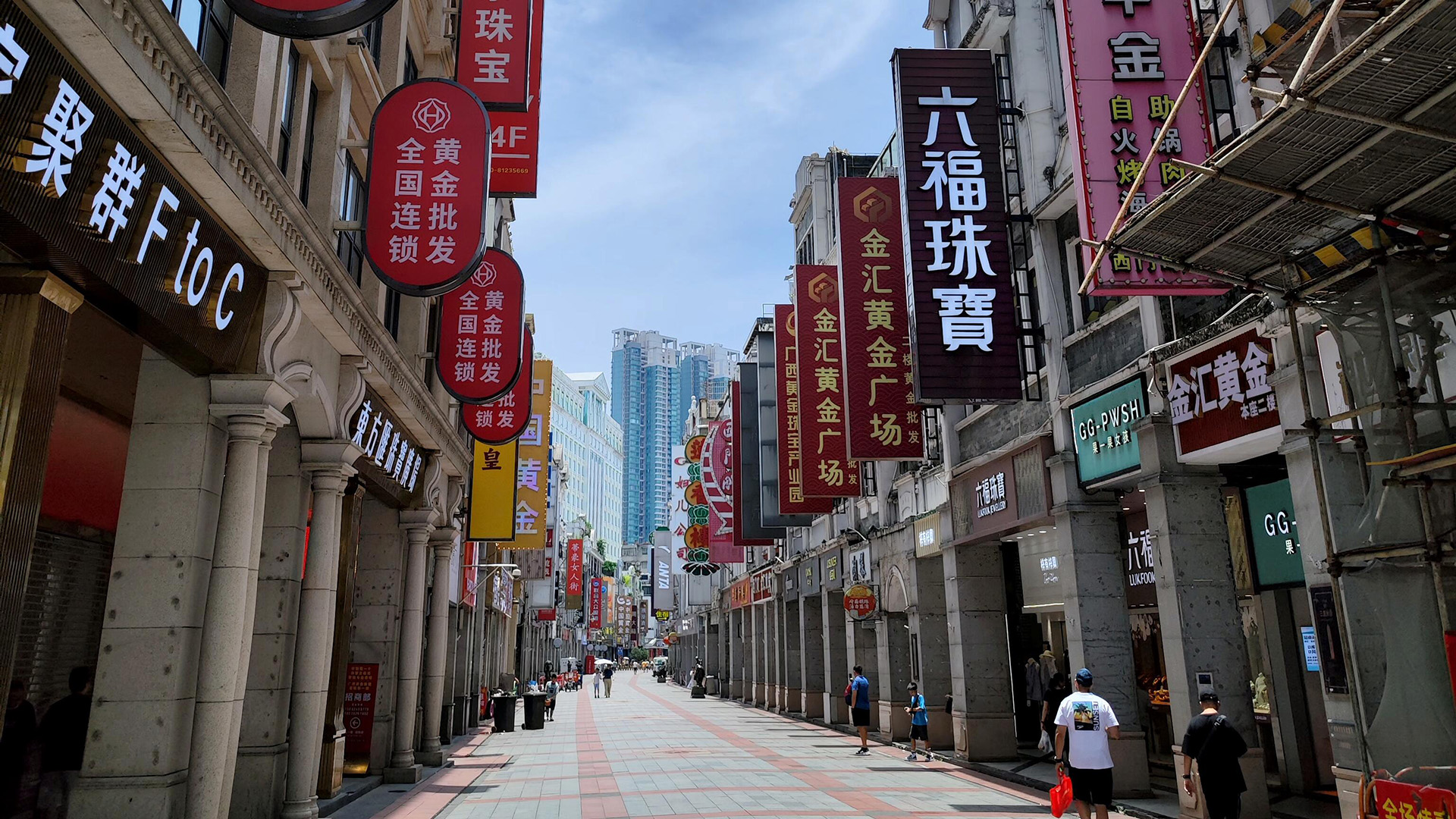
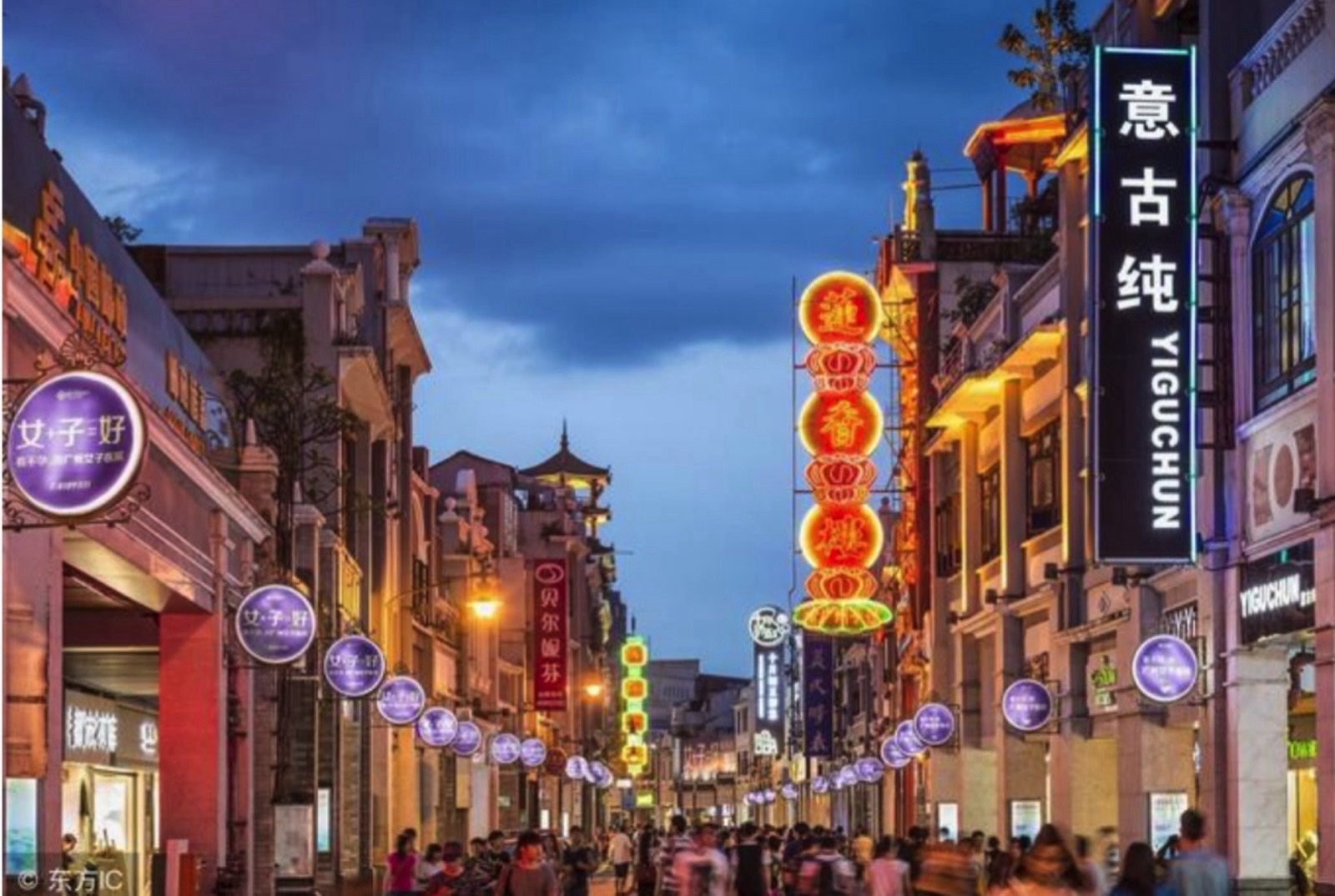
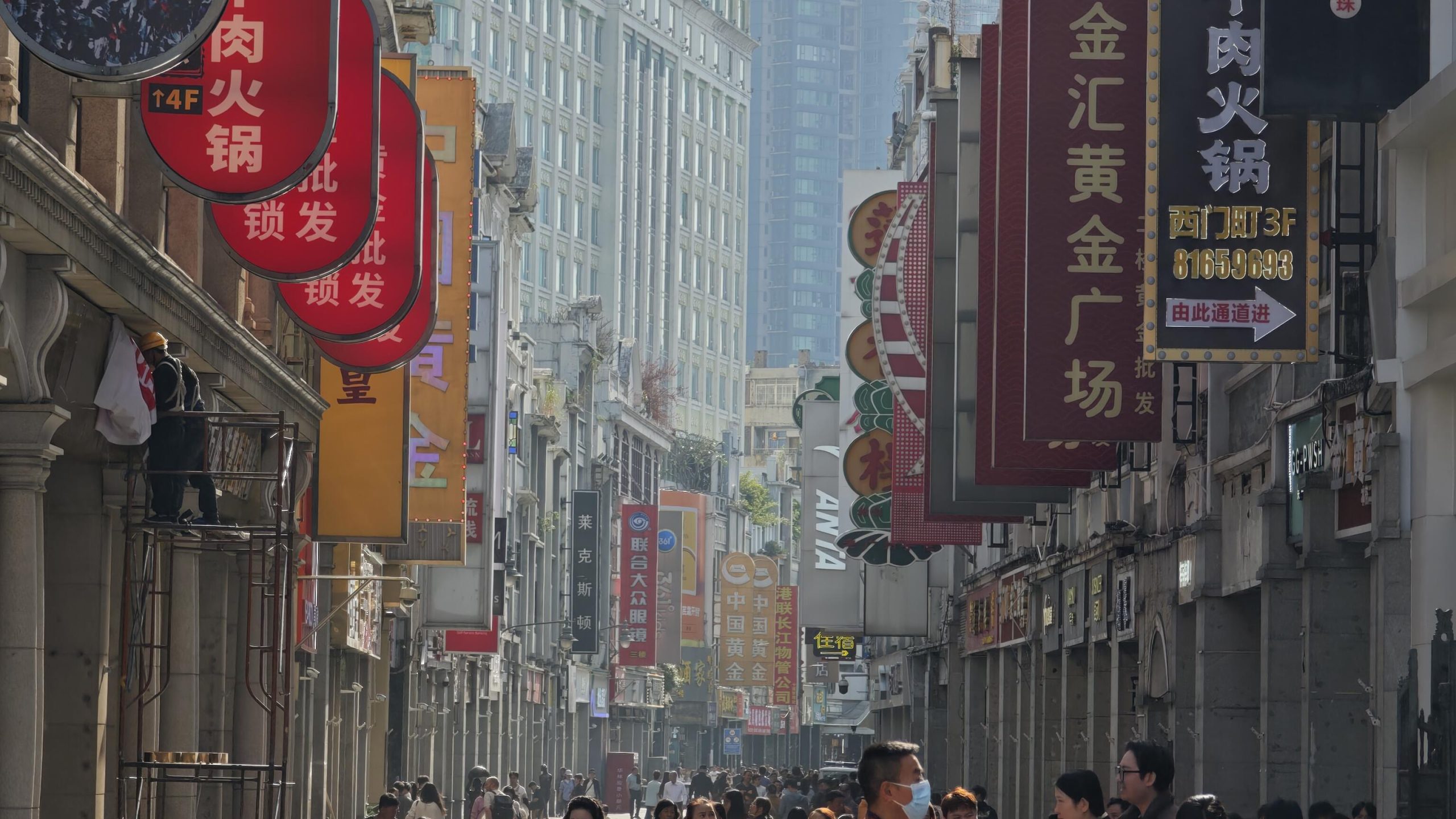
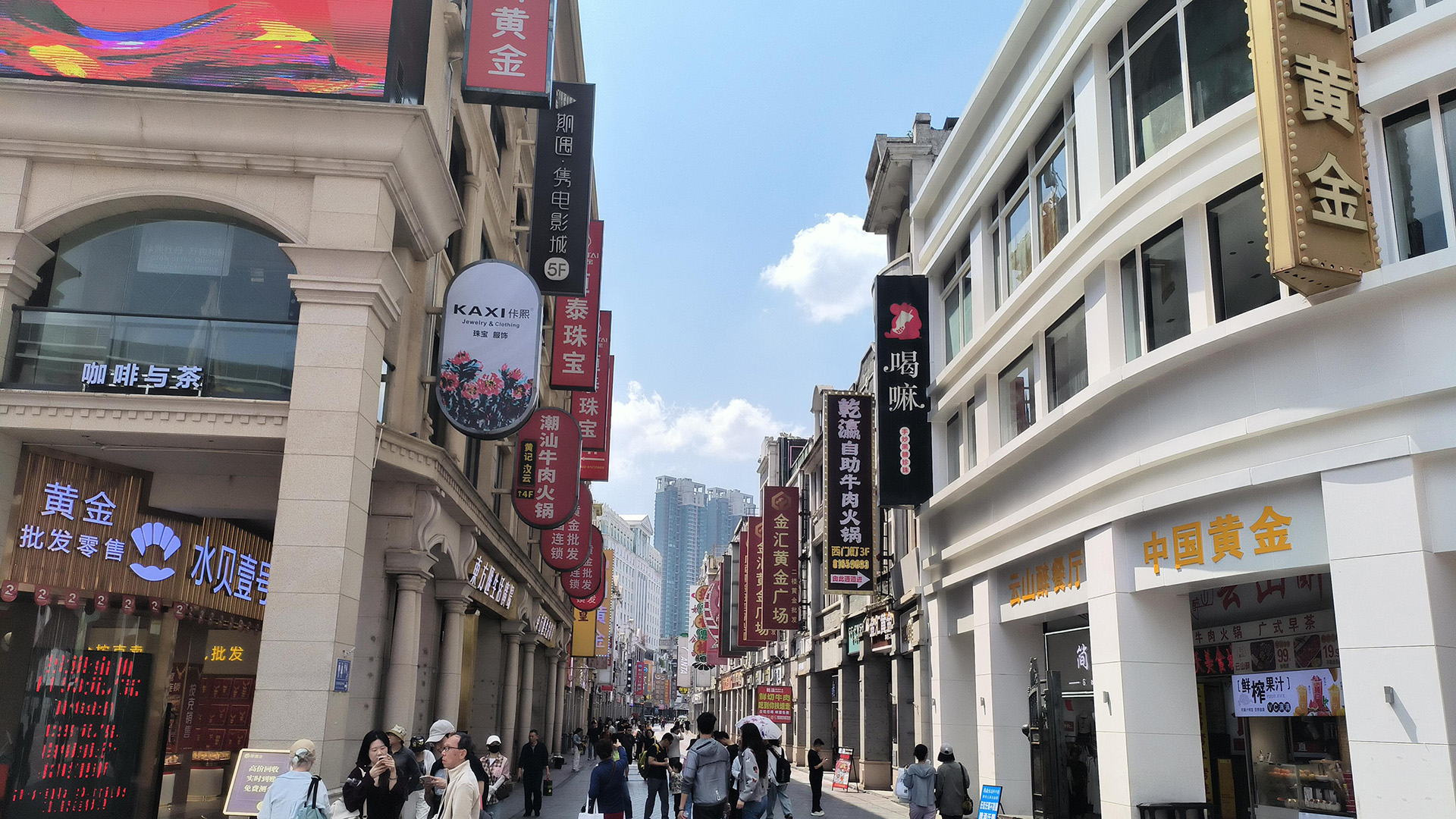
Nearly a kilometre of continuous qilou arcade wraps the street in a covered gallery — Chinese and Western ornament fused in pilasters, balustrades and shuttered balconies, shops running unbroken from the Shangxiajiu arch to the far gates. Lifesize bronzes of old Xiguan life dot the pavement, most beloved the rooster-costumed 'jigonglan' vendor who once threw packets of preserved olives up to balcony customers. At its peak the street has clocked 600,000 passings a day, an intensity of street life matched in few places on earth. Above it all the restored neon stacks: from 18:30 the signs wake, and the street turns from market corridor to neon canyon — the signature Guangzhou photograph.
The street logged 17.67 million visits in 2023 and anchors the 'Greater Xiguan' night-economy zone, one of Guangzhou's first-batch night-market pilot districts. Practicalities are easy: the pedestrian way is open around the clock, shops keep roughly 10:00-22:00, and two metro stations serve either end — Line 1's Changshou Road at the west end, Line 8's Hualinsi at the east. The eating strategy is street wisdom: the main strip skews tourist-priced, so locals slip into Xihua, Beihua and Wende lanes for the real thing, and the longest queue is the most reliable restaurant review. Yongqingfang and Shamian complete a fifteen-minute walking triangle.
Highlights
The kilometre of qilou
Continuous covered arcades fusing Chinese and Western ornament.
The neon signage
Restored sign-stacks that wake from about 18:30.
Taotaoju & Lianxianglou
Two century-old teahouses facing off along Dishifu Road.
The Shangxiajiu arch
The landmark gateway that fronts the street.
Xiguan bronze statues
Lifesize bronzes of old street life, including the rooster-costume olive vendor.
Hualin jade street
The jade and trinket market by the eastern end's temple lane.
Photo Gallery
Comments