 Travel in China
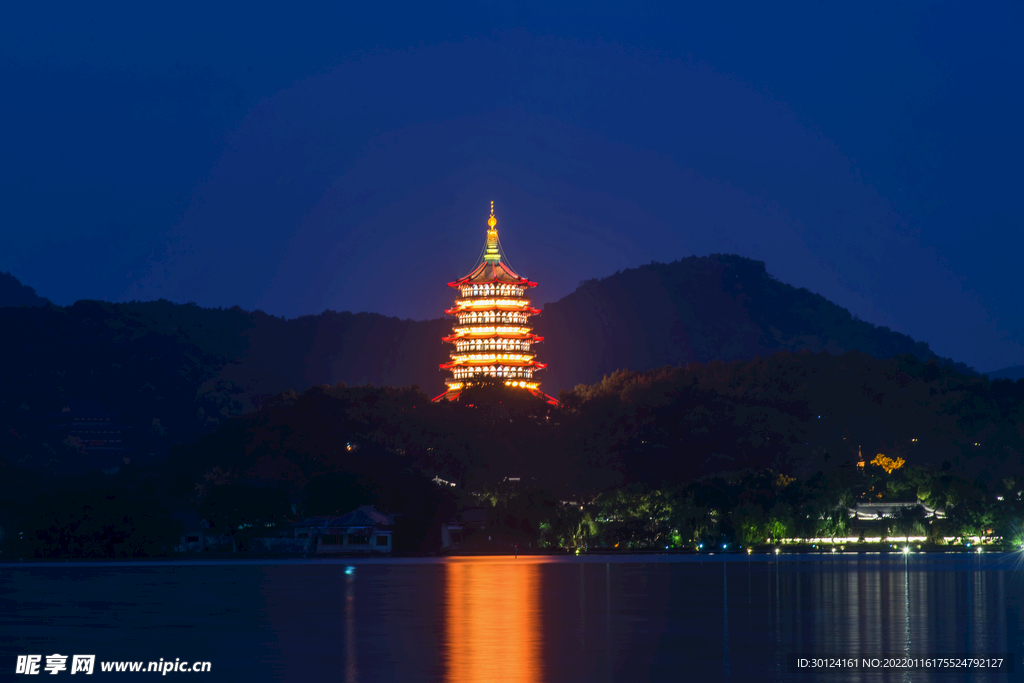
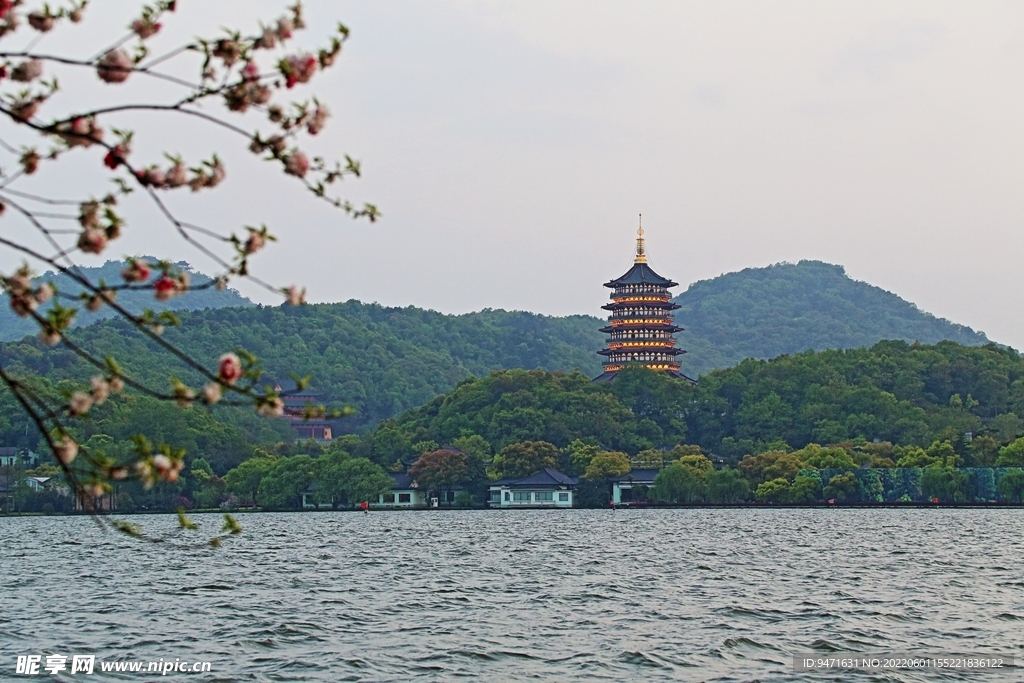
Leifeng Pagoda crowns Sunset Hill on West Lake's southern shore — the tower King Qian Chu raised in 977 to house a Buddha relic, felled in 1924, and rebuilt in 2002 as a 71.7-metre museum-tower wrapped around its own excavated brick ruins. The White Snake was imprisoned here in China's best-loved legend; today its fifth-floor gallery gives the single best panorama of the whole lake, and 'Leifeng Pagoda in Evening Glow' still earns its Ten Scenes name at dusk. Jingci Temple stands across the road.
Dive deeper: full travel guide · transport & map · where to stay & book
The tower on Sunset Hill has carried two identities for a thousand years. In 977 Qian Chu, last king of the Wuyue kingdom, raised the original pagoda to shelter a relic of the Buddha — part of his kingdom's fervent Buddhist legacy before it surrendered to the Song. Folk legend then locked its most famous prisoner inside: the White Snake, Bai Suzhen, buried under the tower by the monk Fahai, and freed only when the pagoda itself collapsed in 1924 — an event Hangzhou celebrated as romantic justice and Lu Xun turned into two famous essays on the ruin. That collapse scattered the bricks, and with them, supposedly, the spell.
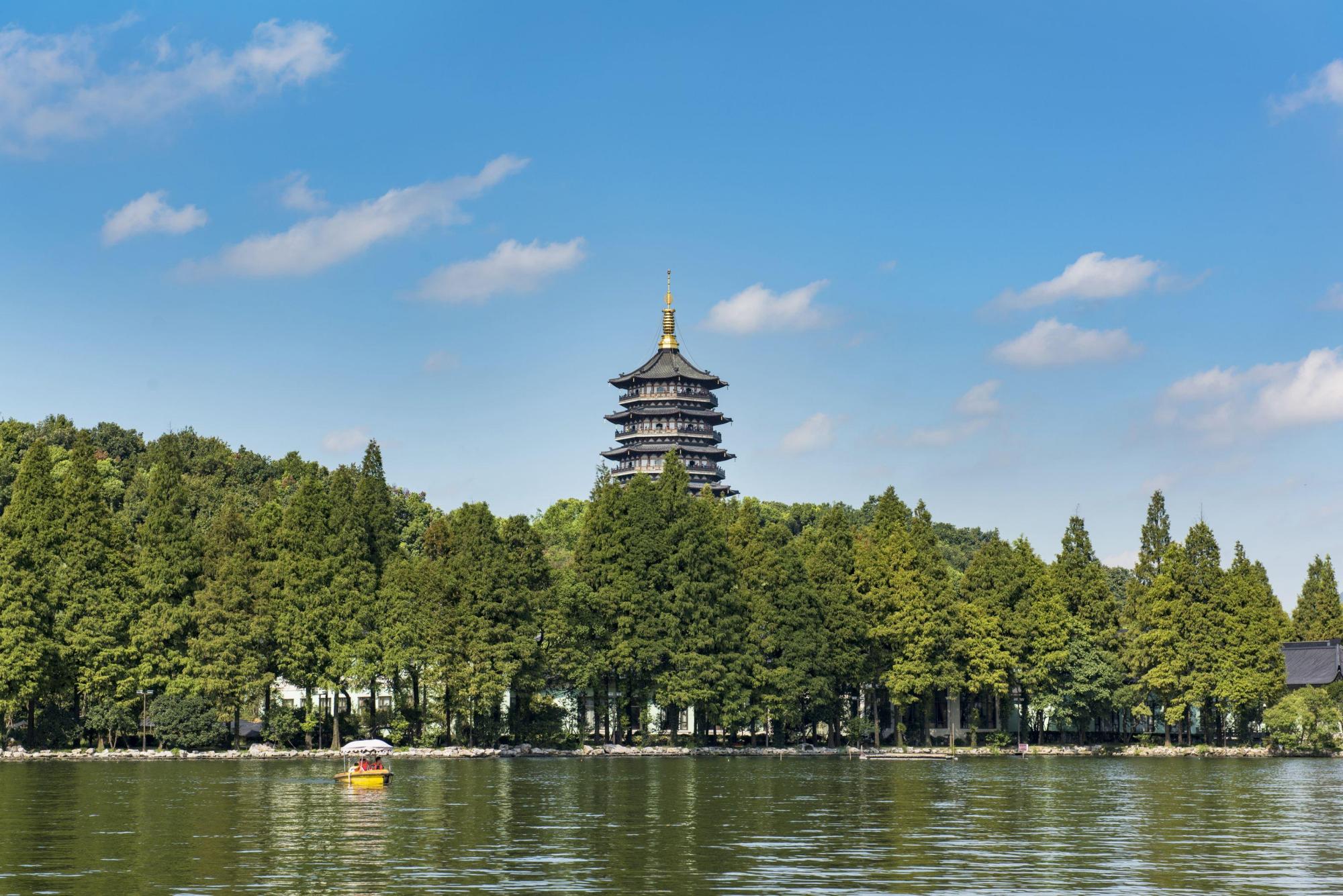
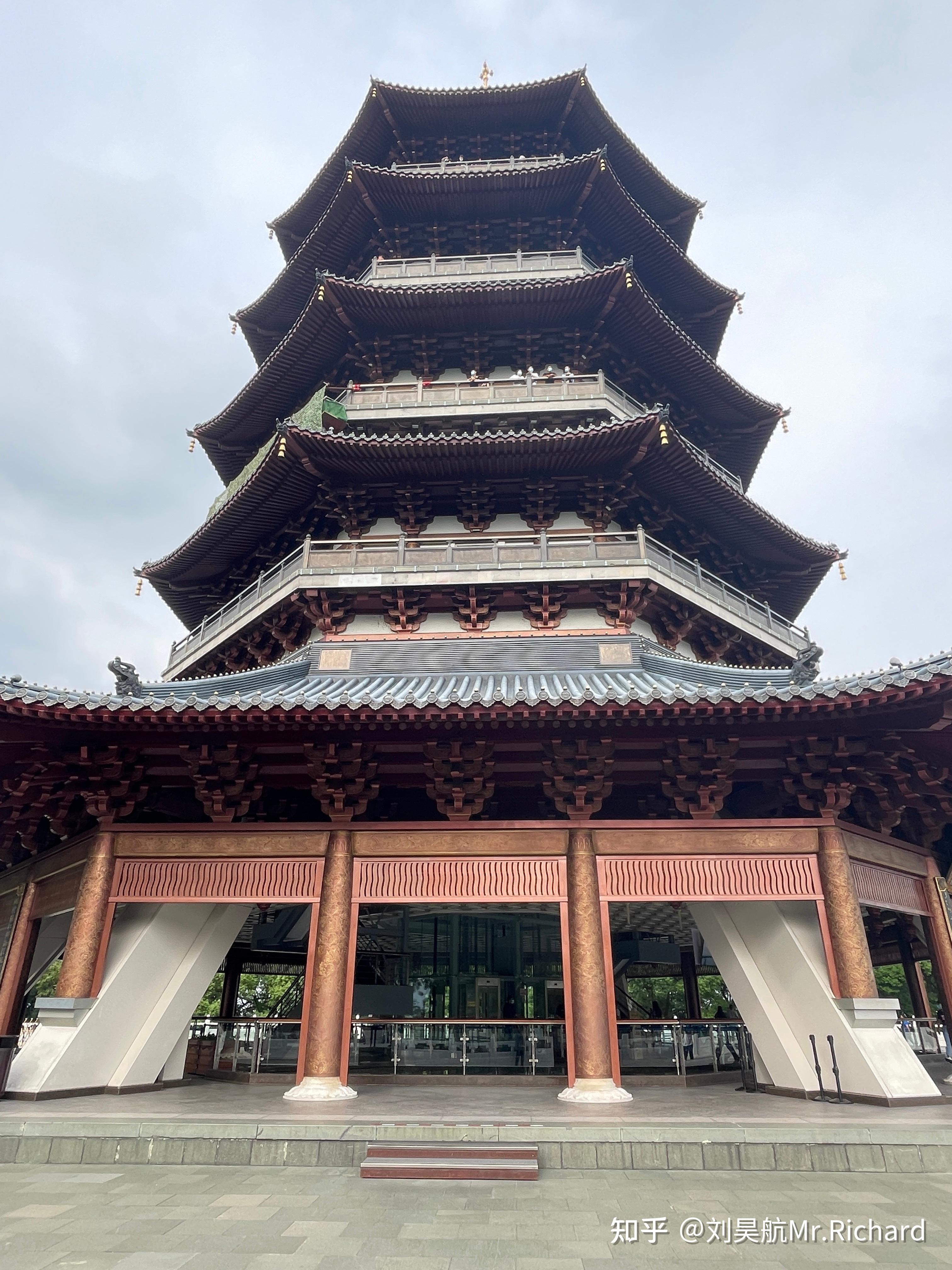
What stands now is a feat of modern reconstruction. The present 71.7-metre octagonal tower, reopened in 2002, is steel-and-museum-piece around the excavated 977 brick core, its glass-enclosed basement exposing the crumbling ruins where visitors toss wishing coins onto thousand-year-old masonry. Escalators rise to the base level and a lift serves the display floors, whose ground level holds Dongyang wood-carving panels telling the White Snake story; the crypt artifacts, including a gilt silver Asoka stupa once holding the Buddha hair relic, anchor the Wuyue history. Thirteen eaves ring the exterior, and the fifth-floor gallery opens onto the highest public viewpoint on the lake — the full sweep from Bai Causeway to Solitary Hill in one frame, gold at sunset.
Visiting in 2026 is a rarity among West Lake sights: an evening option. From May through October the tower admits until 19:30 and closes at 20:00, making it one of the few lakeside attractions that works after dinner; winter tightens to 17:30. Tickets cost ¥40 with real-name booking seven days ahead via the official WeChat channels — foreigners without a second-generation ID should buy at Window 1 in person or via booking platforms — and the tower pairs naturally with Jingci Temple across Nanshan Road for a three-hour south-shore circuit. Weekend queues for the escalators and lift are the tax; the evening-glow view is the reward.
Highlights
Best Panorama of West Lake
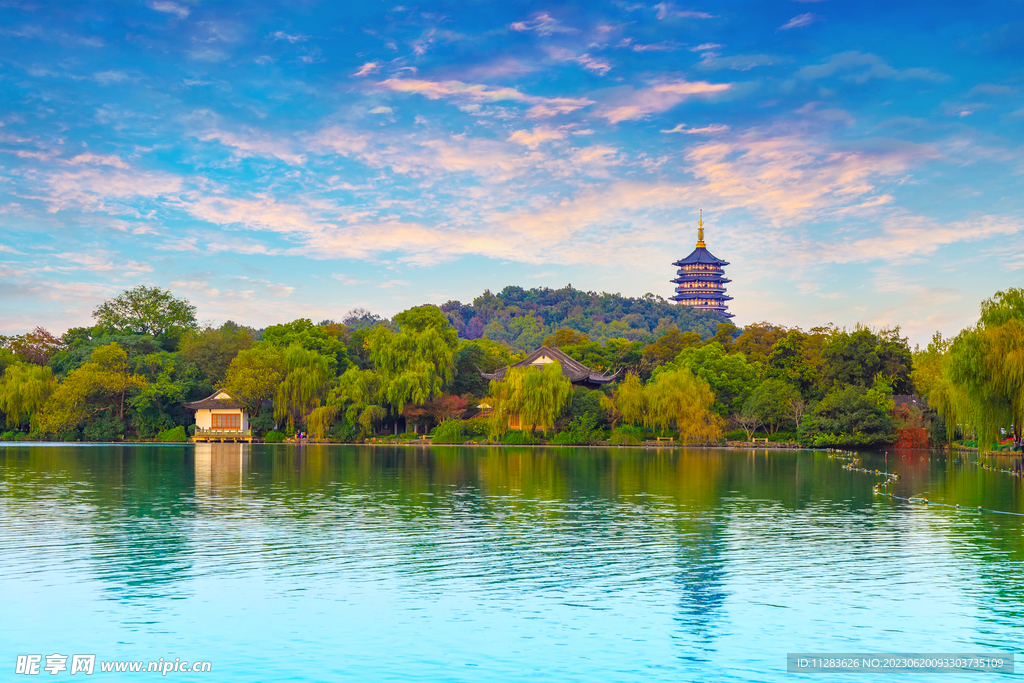
The fifth-floor gallery offers the highest public viewpoint on the lake, with the full sweep from Bai Causeway to Solitary Hill in one frame. Sunset turns the water gold here.
Ancient Pagoda Ruins
The glass-enclosed base preserves the crumbling brick core of the 977 original, exposed during the 2000-2002 rebuild. Visitors toss coins onto the thousand-year-old masonry as a wishing custom.
White Snake Murals
The ground floor displays large Dongyang wood-carving panels telling the Legend of the White Snake. It is the artistic heart of the tower's 'Bai Suzhen was imprisoned here' mythology.
Underground Palace Relics
Artifacts from the pagoda's excavated crypt include the gilt silver Asoka stupa that once held the Buddha hair relic. These treasures anchor the site's Wuyue-kingdom history.
Leifeng Evening Glow
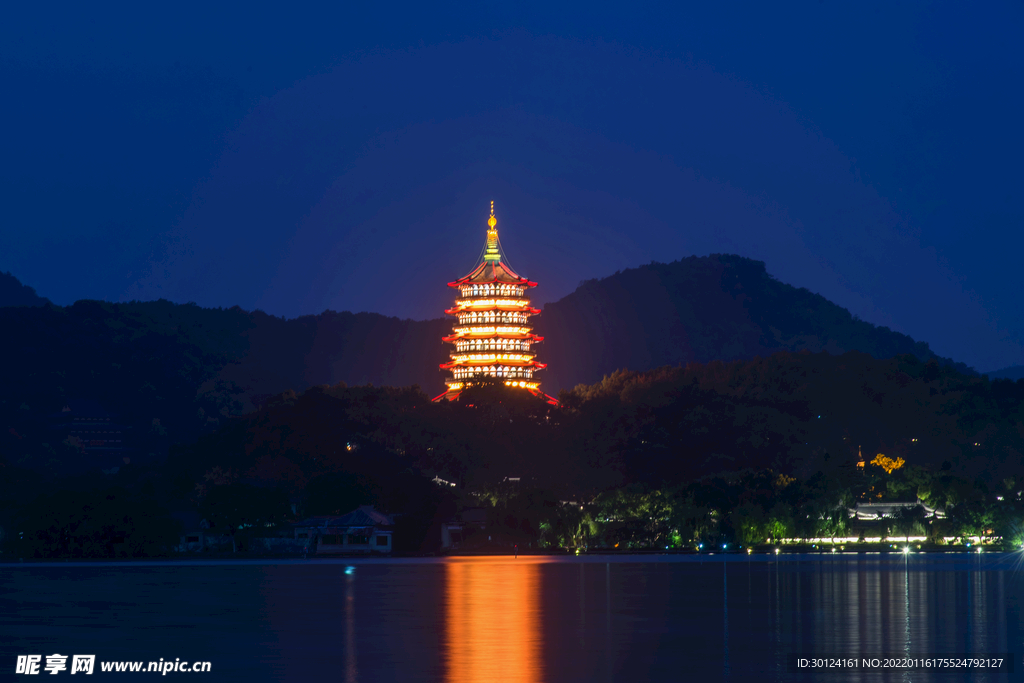
Named a Ten Scene of West Lake in the Southern Song, the pagoda silhouette against sunset water is the classic lakeside image. The tower is illuminated nightly after dark.
Jingci Temple Next Door
The 'Evening Bell of Nanping' temple sits across the road, pairing its own Ten Scene with the pagoda's. The two sites share one bus stop and combine into a half-day circuit.
Photo Gallery
Comments