 Travel in China
Jiuxiang Caves — one of China's largest karst cave systems 90 km east of Kunming: boat drift down an underground river, a cavern vast enough for orchestras, twin 30-metre waterfalls, and a chairlift return over the ravine.
Dive deeper: full travel guide · transport & map · where to stay & book
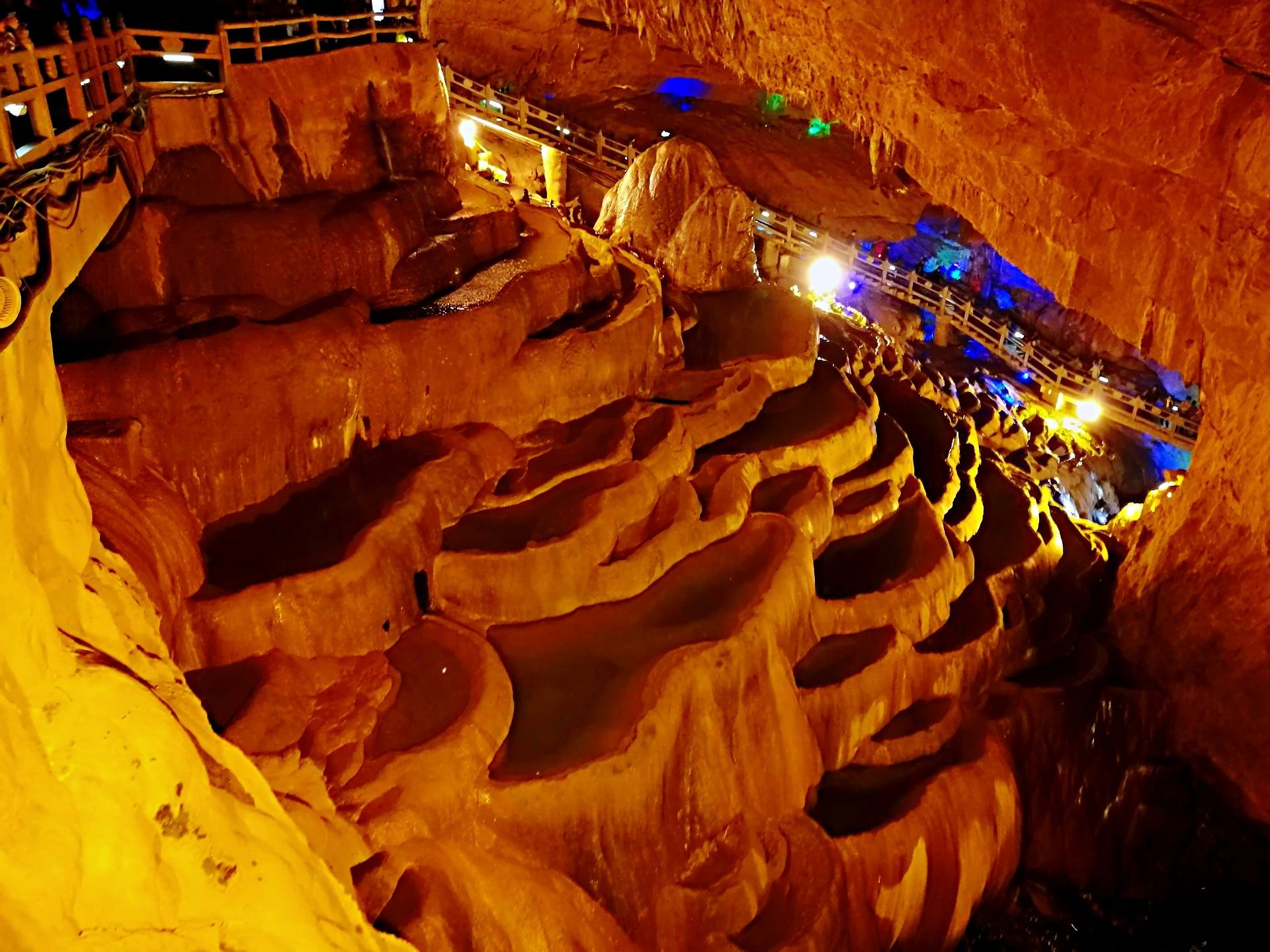
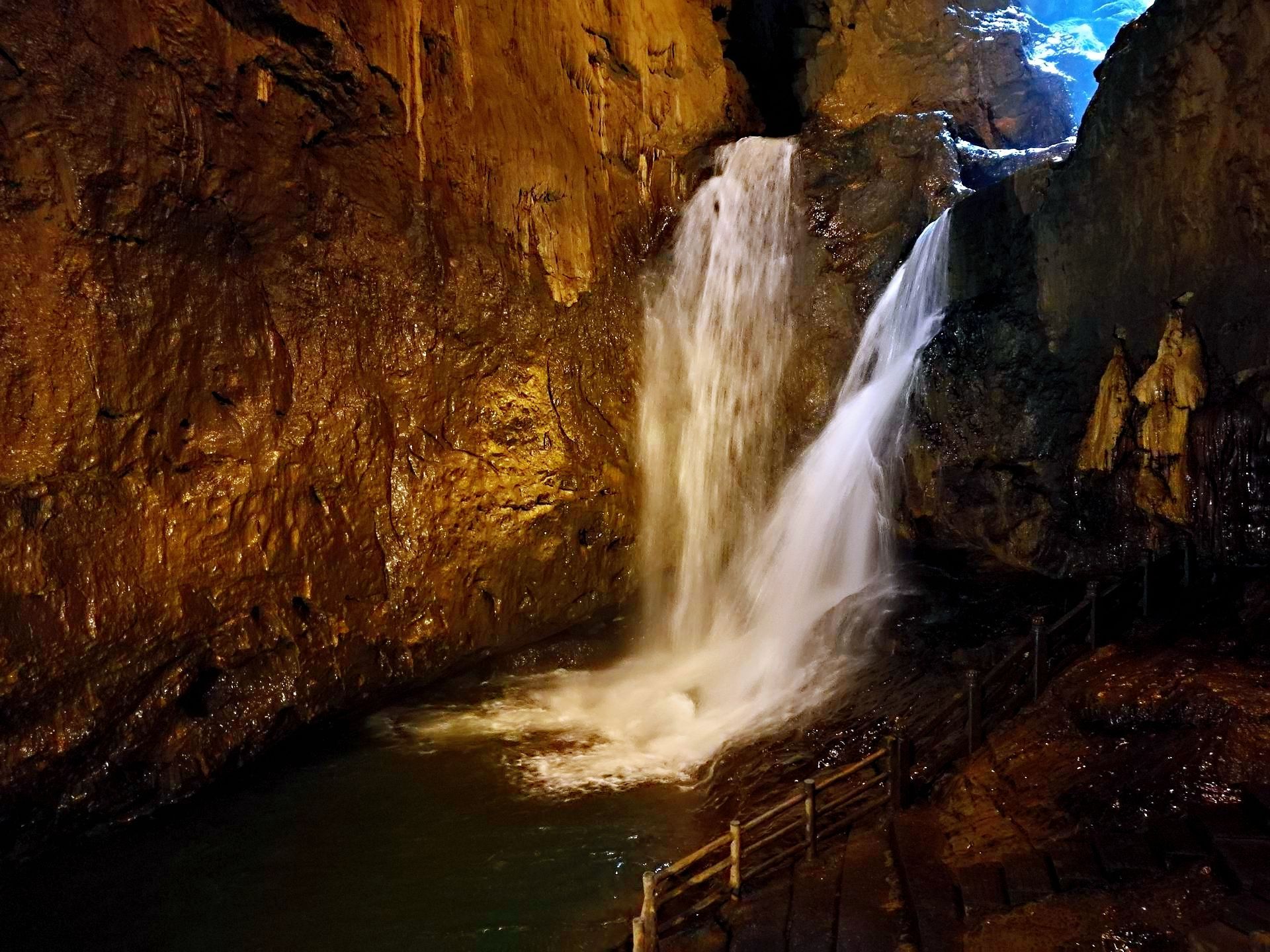
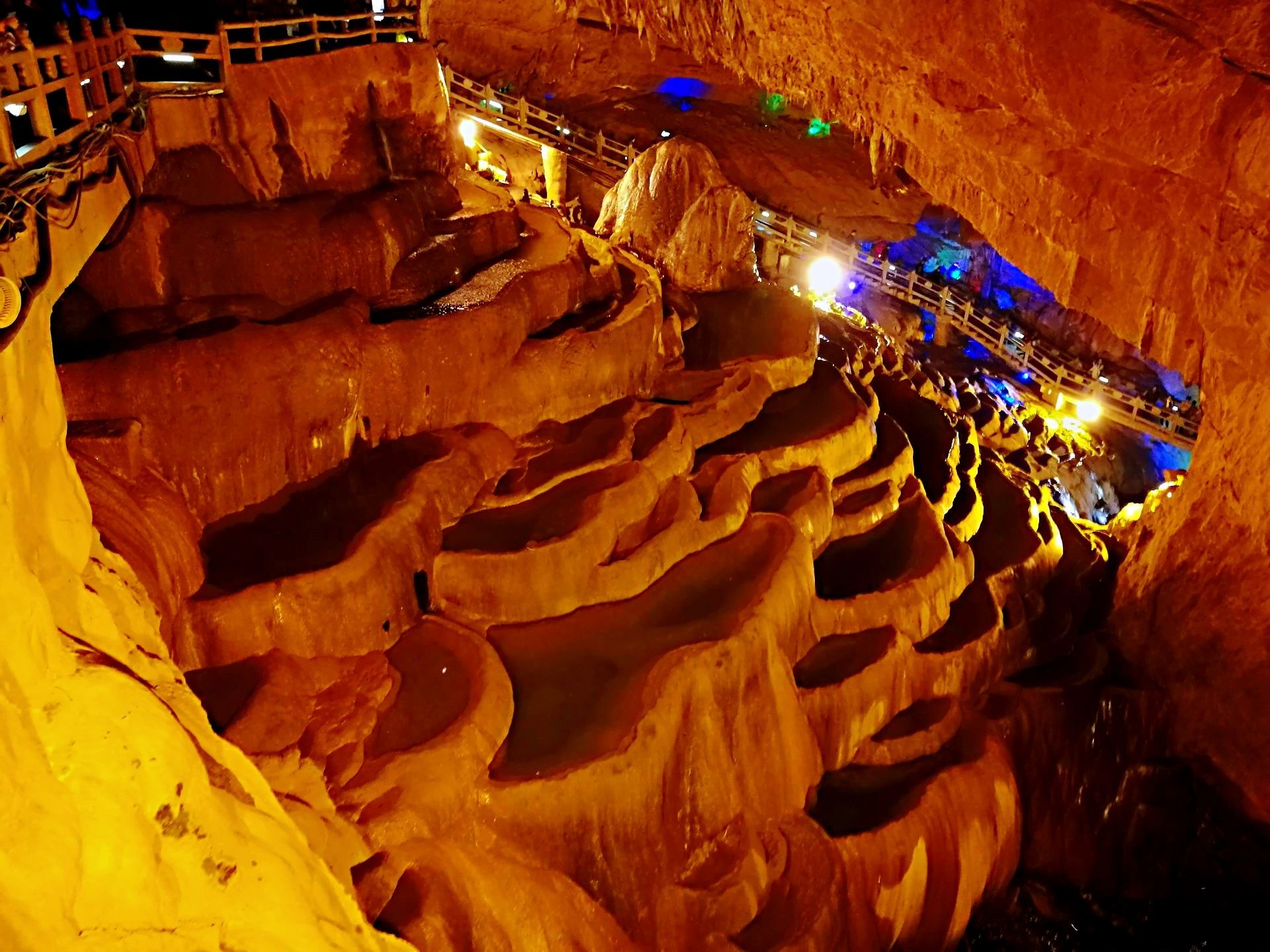
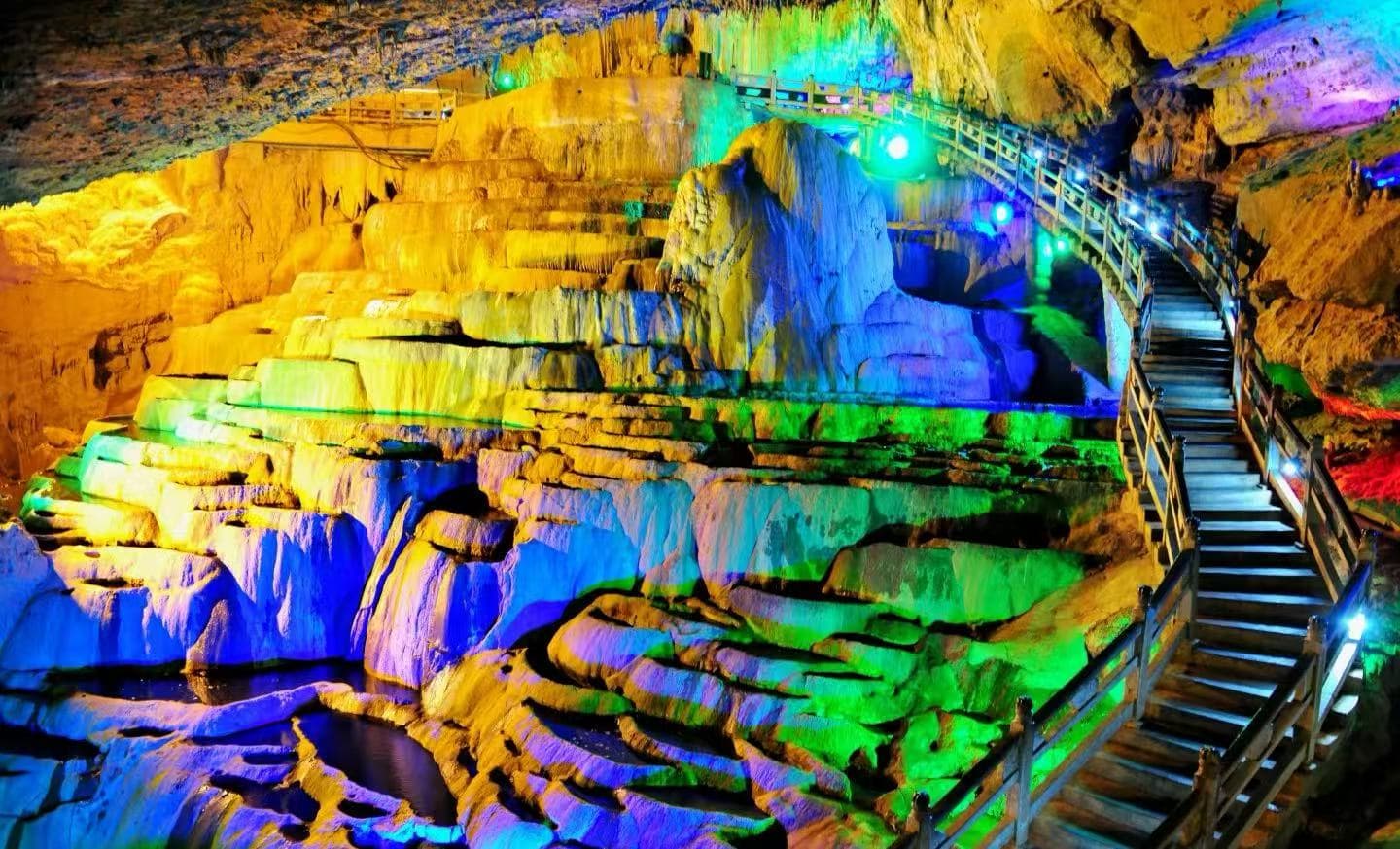
Jiuxiang, 90 km east of Kunming in Yiliang County, is a 4A national scenic area built around one of China's largest karst cave systems — over a hundred caves of every size hollowed from billion-year-old dolomite. The developed Diehongqiao (Overlapping Rainbow Bridge) route threads a dramatic sequence: descend by sightseeing elevator into the Yincui Gorge, drift by boat down the underground river, and emerge into the vast Lion Hall — a natural vault so enormous it once hosted concerts, with live orchestras playing beneath its stalactites. Deeper in, twin waterfalls plunge side by side down a 30-metre cliff face, the 'male and female' cataracts, followed by Shen Tian, terraced rimstone pools glowing under cave lights, and the inverted stone forest of Bat Cave.
The route is engineered as a painless one-way loop. A 53-metre sightseeing elevator drops you into the gorge, sparing the descent on foot; the cave walkways that follow are damp but gentle, threading canyon, chamber and waterfall in a sequence that feels choreographed. At the end a chairlift (¥30) glides back over forested ravines to the exit — a ten-minute ride above the canopy that eliminates nearly all uphill walking, which is why the ¥90 entrance-plus-chairlift combo is the default choice for families and seniors. The caves hold a constant ~18°C year-round, making Jiuxiang a genuine all-season destination: cool in summer, warm in winter.
Jiuxiang pairs naturally with Shilin (the Stone Forest), an hour away by road — the two form the classic Kunming–Yiliang cave-and-karst day loop, and dozens of operators run it as a combined day trip from the city. Independent travelers can self-drive or charter via the Kunming–Shilin expressway (about 1.5 hours from downtown), take the coach to Yiliang and a connecting minibus, or ride the bullet train to Shilin West station and transfer the last ~30 km. The rainy season from June to September puts the waterfalls at full power; the rest of the year trades a little thunder for thinner crowds and easier photographs.
Highlights
Male & Female Twin Waterfalls
Two underground waterfalls — one tall and slender, one broad and powerful — plunge side by side over a 30-metre cliff inside the cave, a spectacle unknown above ground; most dramatic in the rainy season (June–September).
Lion Hall
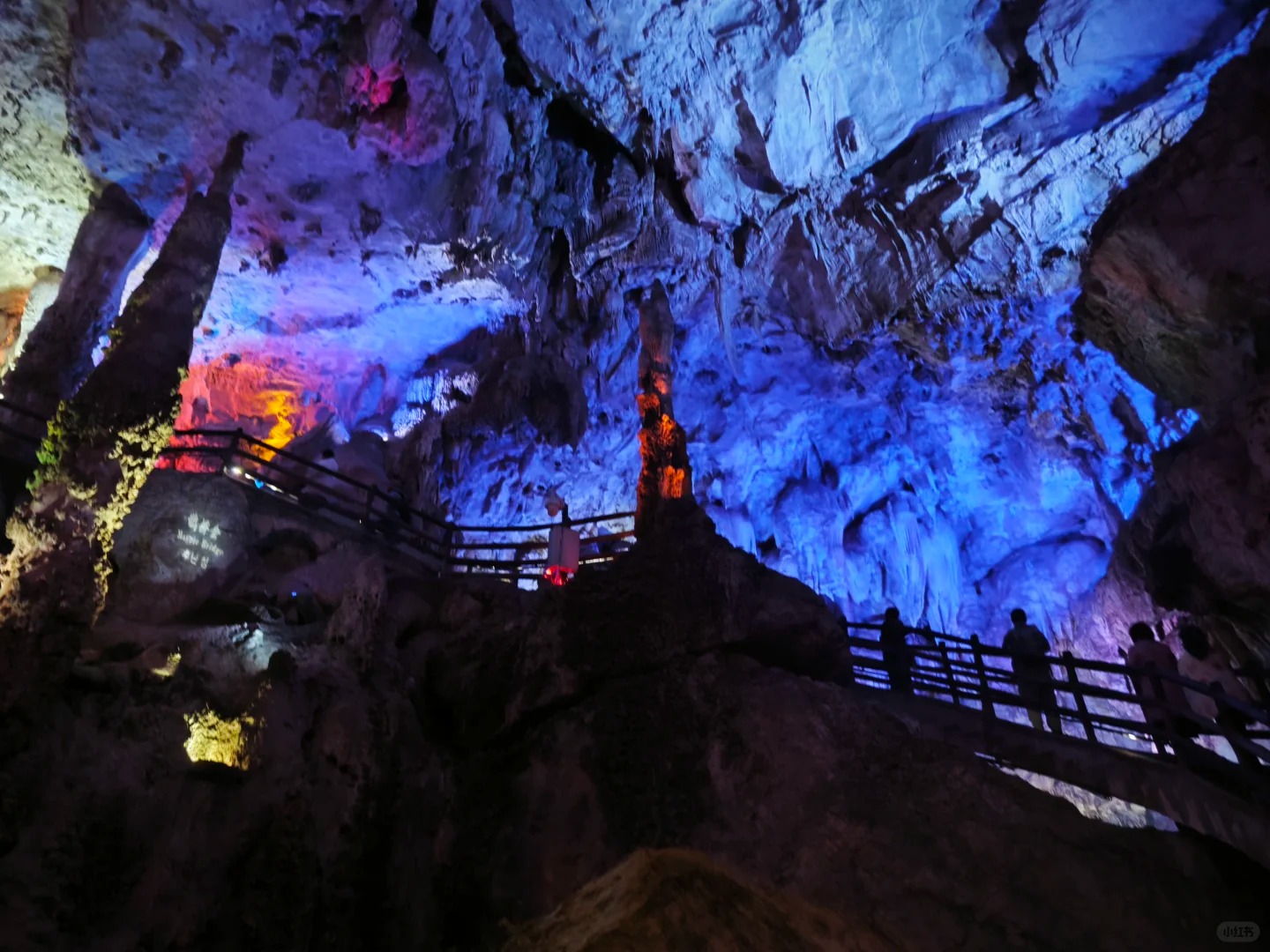
One of Asia's largest underground caverns, a vaulted chamber big enough to have hosted live orchestras, opening directly off the gorge trail.
Yincui Gorge Boat Drift
A short boat ride down the jade-green underground river between 30-metre canyon walls — the gentle, photographic start of the cave circuit.
Shen Tian 'Terraced Fields of the Gods'
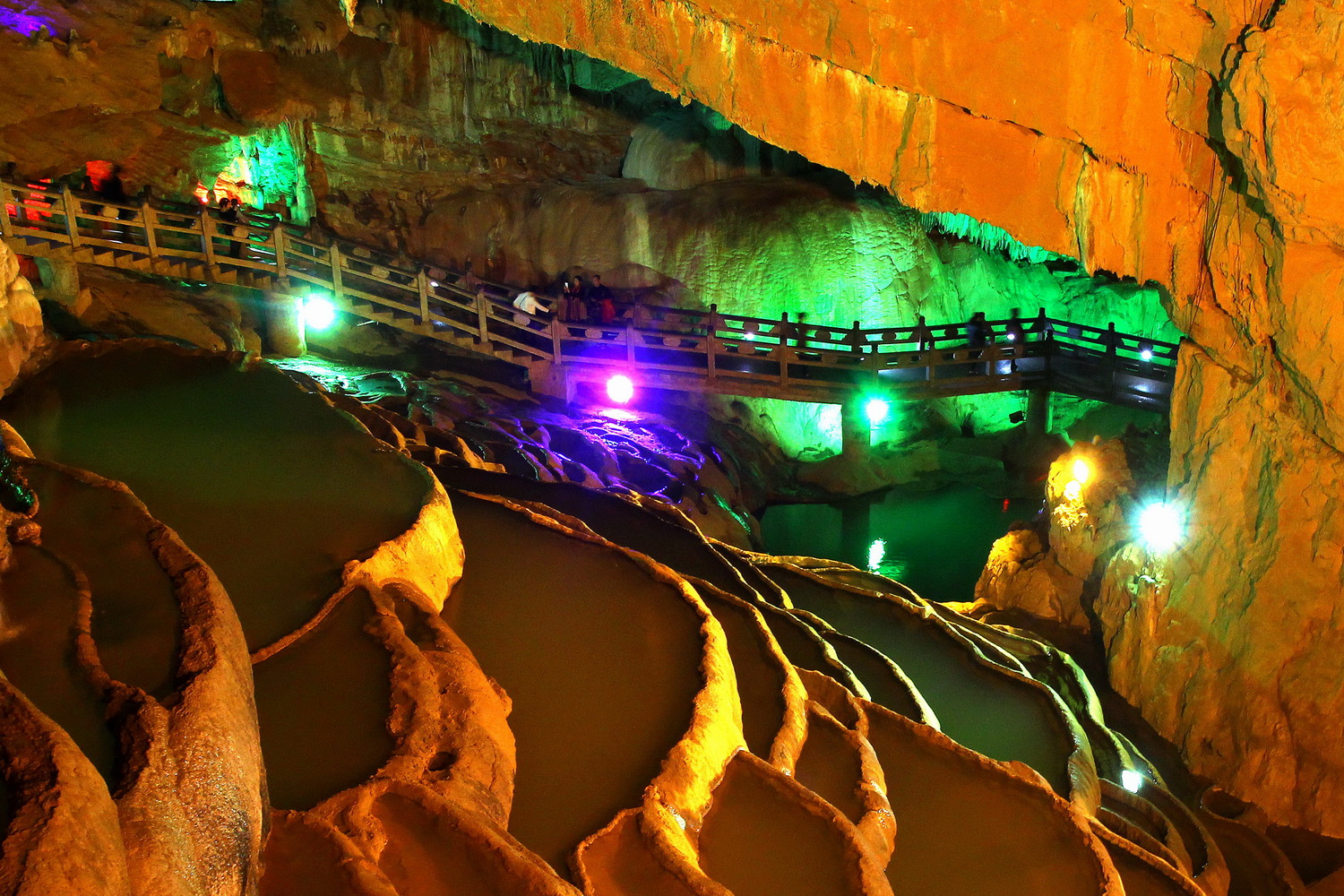
Flowing rimstone pools stacked like rice terraces, sculpted by mineral-rich water over millennia and lit in shifting colors.
Sightseeing Elevator & Chairlift
The route is engineered as a one-way loop: a 53-metre elevator drops you into the gorge, and a 10-minute chairlift glides back above the forest canopy at the end — sparing nearly all uphill walking.
Underground Inverted Stone Forest
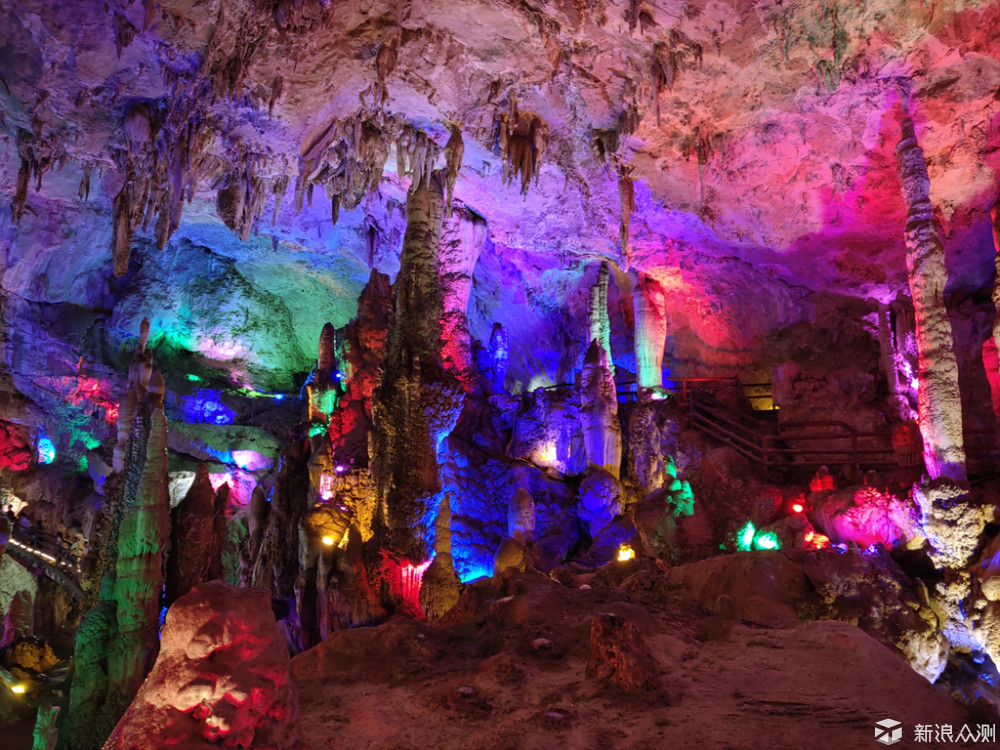
In Bat Cave, stalactites hang like an upside-down forest around the trail's final chambers before the cable car station.
Photo Gallery
Comments