 Travel in China
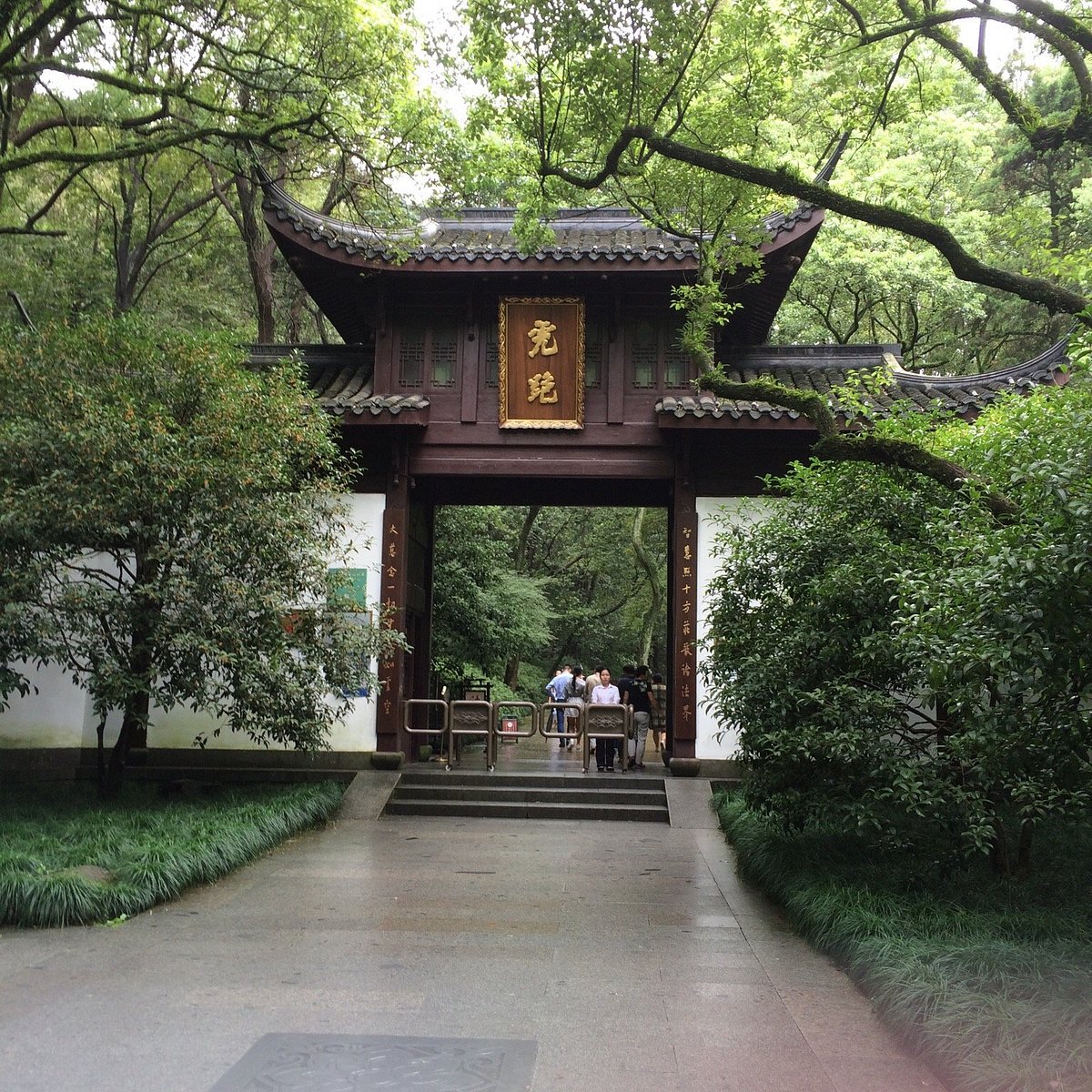
Hupao Park wraps a spring ranked 'Third Under Heaven' in a wooded fold of Daci Hill south of West Lake — legend says two tigers clawed the ground open here in 819 so a temple could be built. The pure, low-mineral water pairs canonically with Longjing tea as 'the Twin Beauties of West Lake' and still floats coins on a brimming bowl; Jigong the 'Crazy Monk' and the artist-monk Hongyi are both commemorated on the grounds. Late November and December turn the ravine into one of Hangzhou's best maple walks.
Dive deeper: full travel guide · transport & map · where to stay & book
The spring has kept its name for twelve hundred years. In 819 the monk Xingkong, founding a temple in this fold of Daci Hill, dreamed of two tigers clawing at the ground — and a spring gushed from the spot, hence Hupao, 'the tiger running'. The temple grew around it, and the water earned its rank among China's celebrated springs, 'Third Under Heaven', prized for unusual purity and low mineral content. The park that wraps it today is layered with cultural memory: the eccentric folk-hero monk Jigong is honoured with a relics pagoda here, and Li Shutong — the master artist who took his vows as monk Hongyi in 1918 — lived and later rested at the temple, his calligraphy and austere final years displayed in a small memorial.
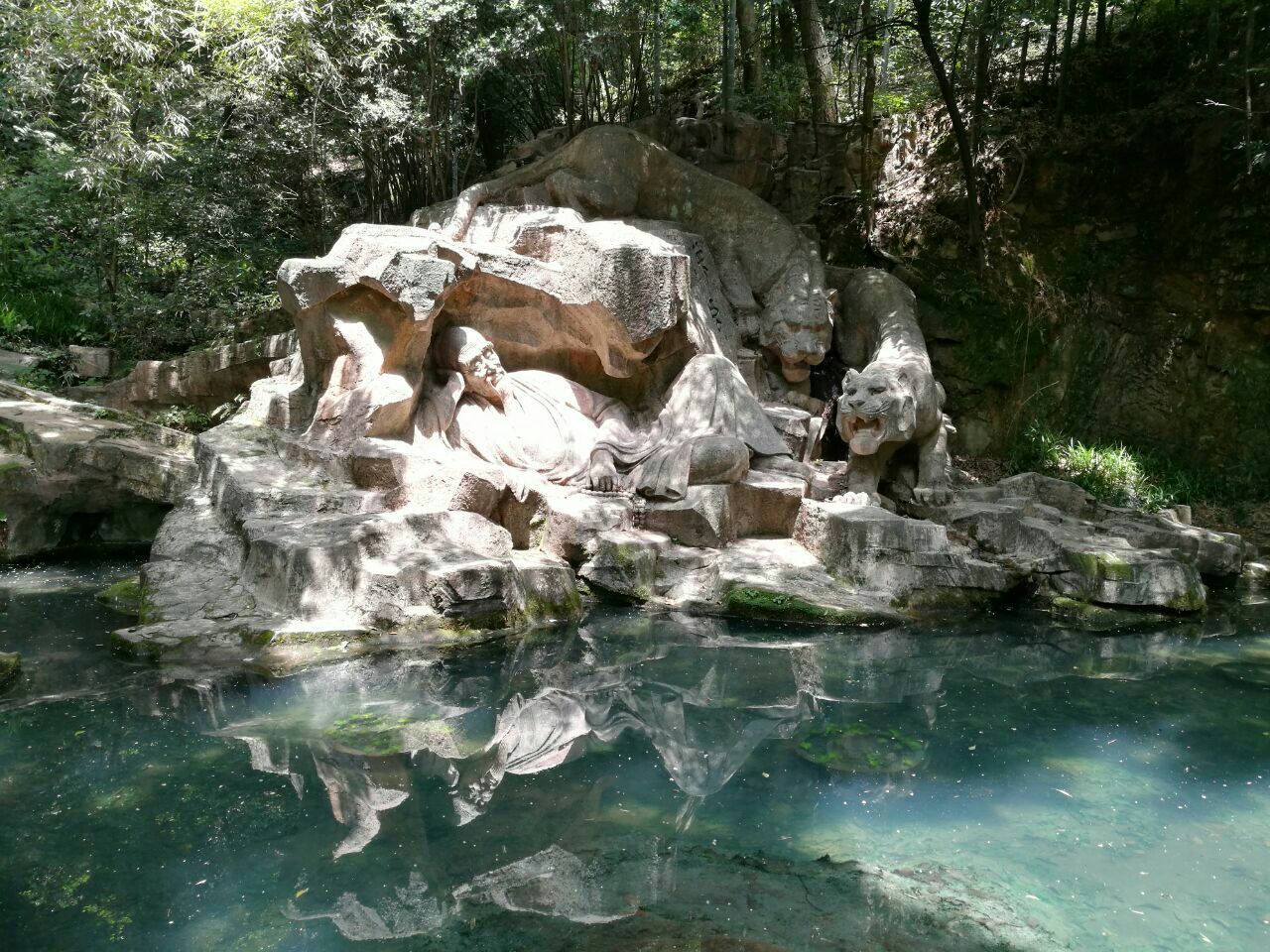
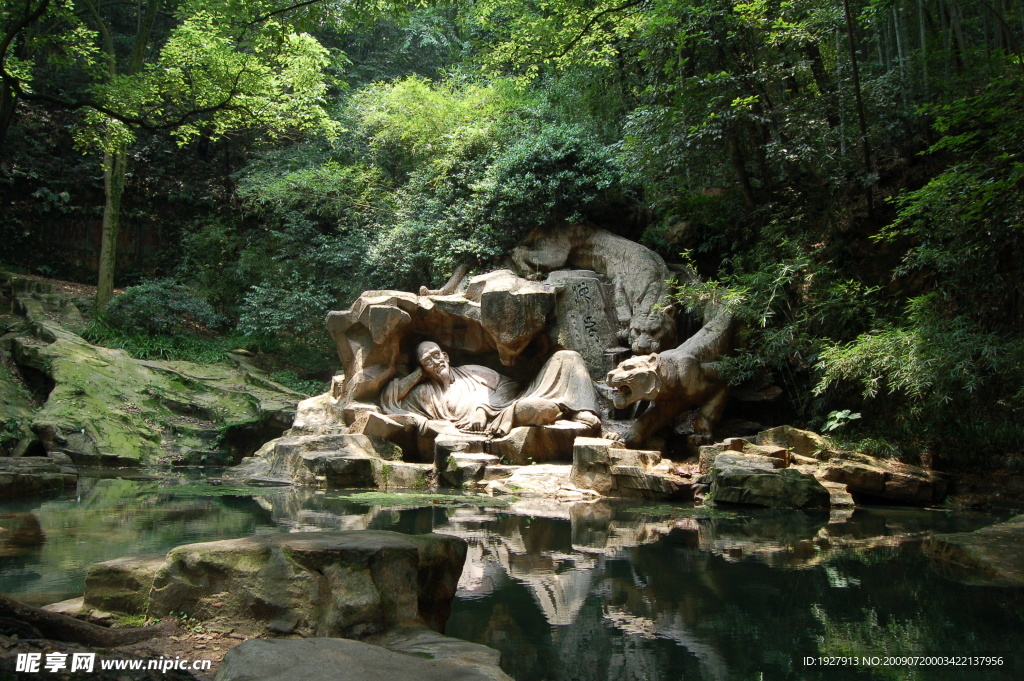
The water is still the show. Unusually pure even by spring standards, its high surface tension lets a brimming bowl float a coin — a trick visitors and locals test at the stone basin beneath the stele pavilion — and its chemistry made it the canonical partner for Longjing tea, the pairing known as 'the Twin Beauties of West Lake'. The spring fills a stone basin below the temple terrace; behind it a stone relief dramatises the two-tiger legend, the park's signature photo stop. Locals queue with bottles daily to carry water home for brewing, a living tradition that is itself a piece of Hangzhou life — and above the spring, Dream Spring Pavilion and Yu Pool sit amid the maples that make the ravine famous in autumn.
Visiting in 2026 is a modest, rewarding outing: entry ¥15 (concessions ¥7.5, Hangzhou park annual pass valid), open 07:00-17:30 in summer and to 16:55 in winter, with timed tickets online or at the gate and limited-capacity entry during peak periods such as maple season. Allow ninety minutes to two hours for the spring, Jigong pagoda and Li Shutong memorial, served at the teahouse with spring-brewed tea at roughly ¥20-38 a cup. The classic pairing is Liuhe Pagoda along the river or the Nine Creeks trail for a half day, and late November into December brings the maple-red weeks that locals rate among Hangzhou's best autumn walks.
Highlights
Tiger-Running Spring
The 'Third Spring Under Heaven' fills a stone basin beneath a stele pavilion. Water so pure it pairs canonically with Longjing tea and floats coins on a full bowl.
Two Tigers Legend Sculpture
A stone relief behind the spring pool dramatises the dream of two tigers clawing the ground open. It is the park's signature photo stop.
Jigong Pagoda & Relics
The 'Crazy Monk' Jigong, folk hero and temple eccentric, is memorialised with a pagoda and shrine on the temple grounds. His statue in the drum tower greets visitors at the gate.
Li Shutong (Hongyi) Memorial
A museum honours the master artist who became monk Hongyi at Hupao in 1918. Calligraphy, photographs and his austere final years are displayed.
Maple & Ginkgo Autumn Colours
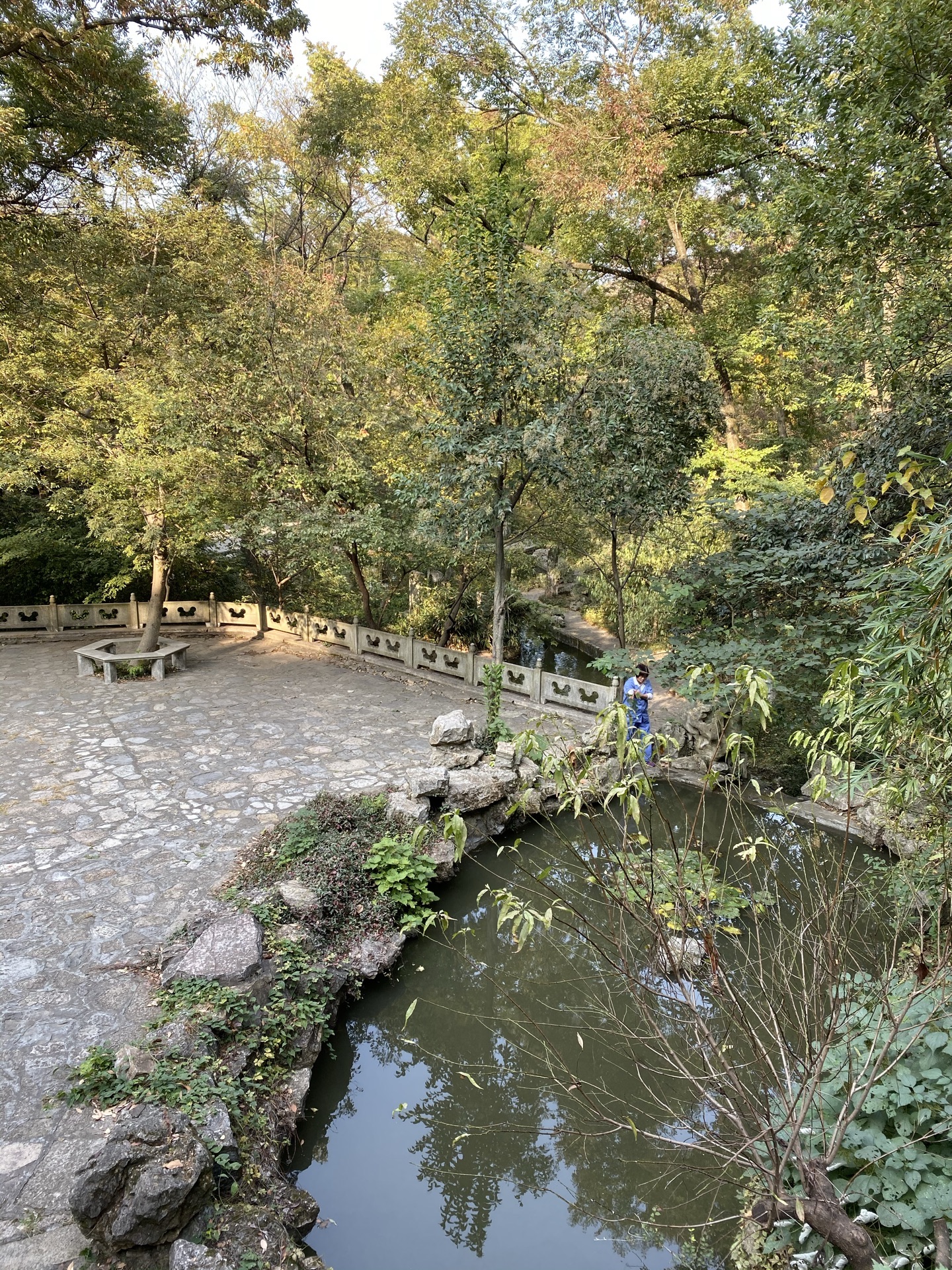
Late November to December sets the ravine and pools ablaze with red maples, most famously around Dream Spring Pavilion and Yu Pool. It is a top local autumn show.
Locals Filling Tea Water
Residents haul bottles up daily to collect spring water for home brewing, a living tradition. Watching the queue is itself a piece of Hangzhou life.
Photo Gallery
Comments