 Travel in China
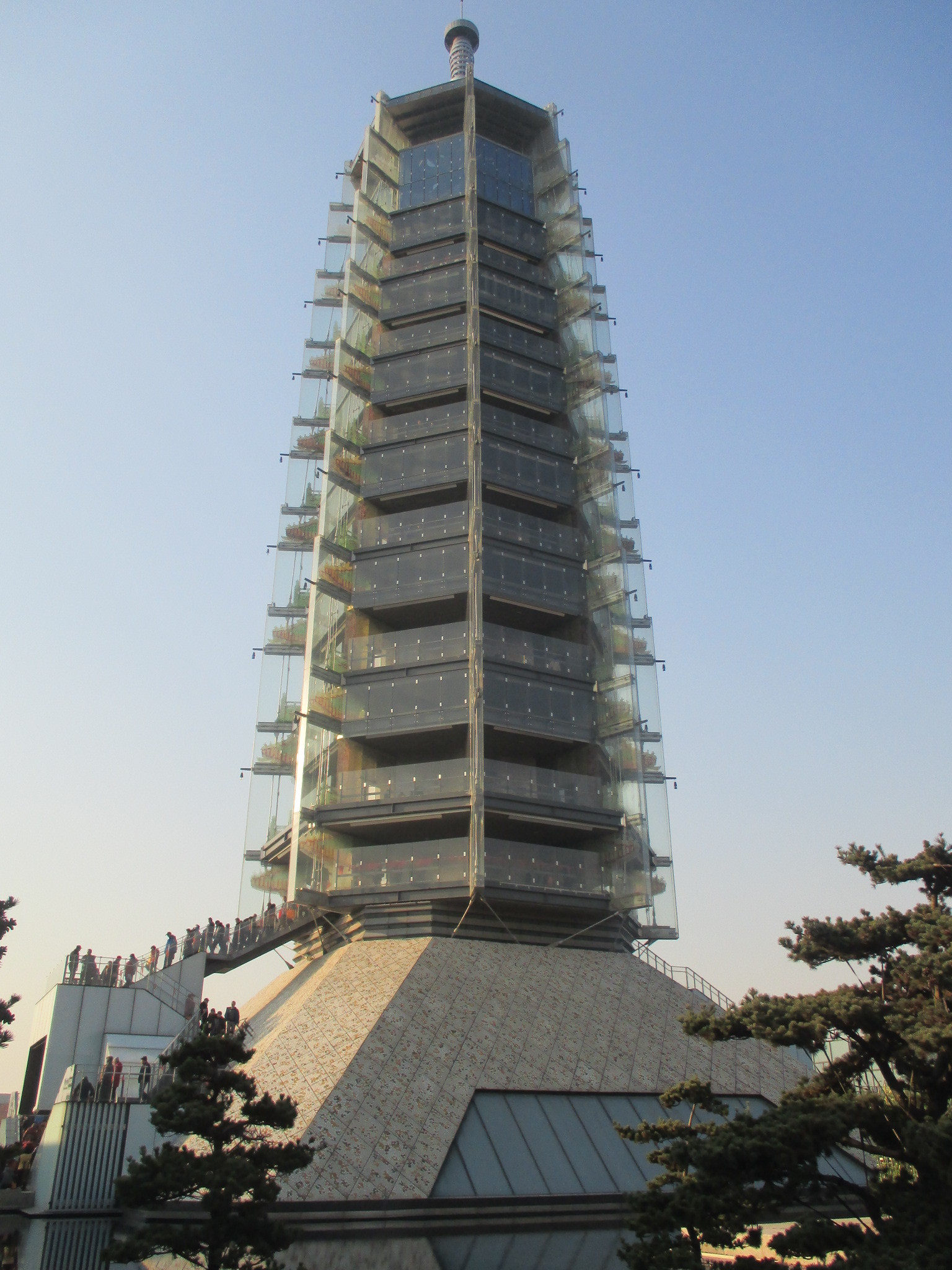
Grand Baoen Temple Heritage Park — where the Yongle Emperor's legendary Porcelain Tower, a medieval 'world wonder' destroyed in 1856, rises again as light: a glass tower over excavated Song-dynasty crypts that yielded a Buddha relic.
Dive deeper: full travel guide · transport & map · where to stay & book
Outside Zhonghua Gate, on the Changganli bank of the outer Qinhuai River, the Yongle Emperor built the Grand Baoen Temple in 1412–1428 to honour his parents, and crowned it with the legendary Porcelain Tower (Bao'ensi Ta) — nine storeys and about 78 metres of glazed, lamp-lit brick. Early European visitors called it one of the wonders of the medieval world, and Hans Christian Andersen wrote of 'dancing around the porcelain tower of China'. Destroyed in the Taiping civil war of 1856, the tower left behind one of China's most remarkable archaeological sites: excavations from 2007 uncovered the Song-dynasty (1011) Changgan Temple crypt beneath the Ming foundations, yielding the Seven-Treasure Ashoka Pagoda, golden and silver reliquaries and, most famously, a parietal-bone relic of the Buddha.
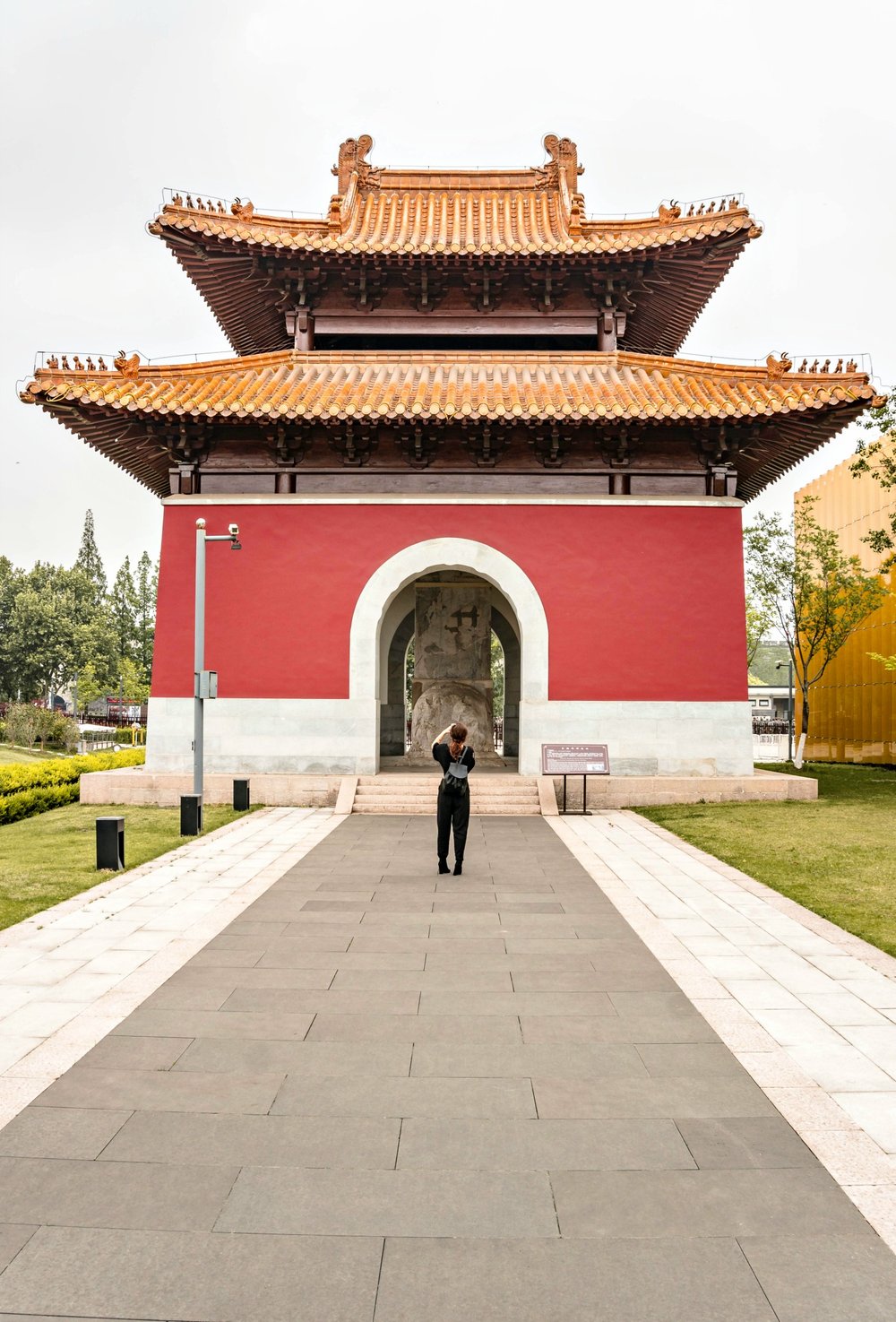
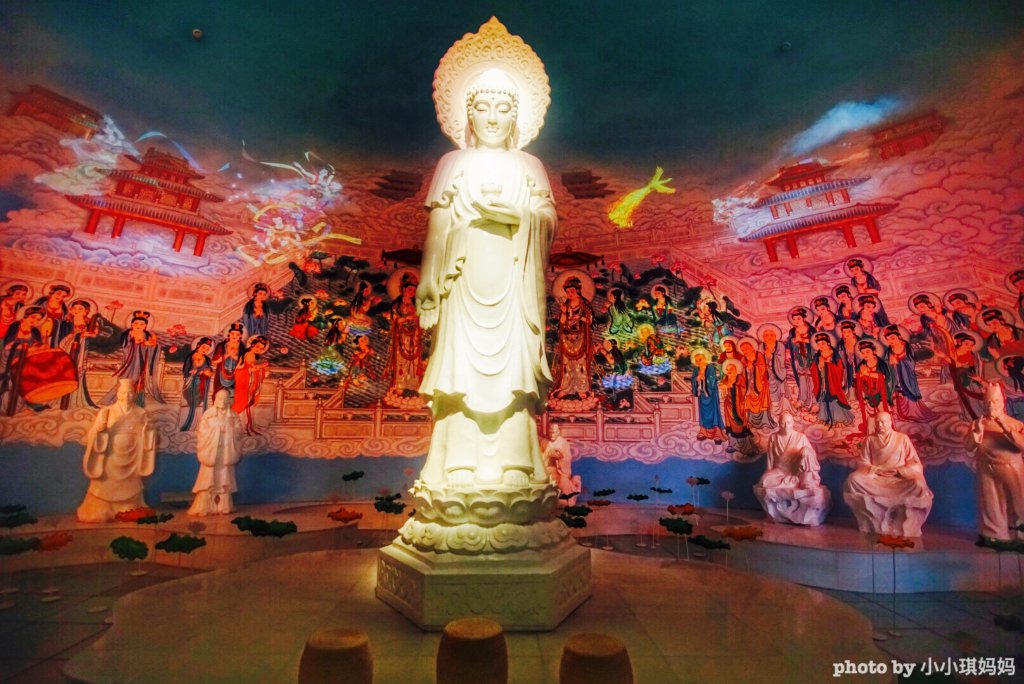
The site ranks among China's largest and highest-grade temple ruins — a 2010 Top-10 archaeological discovery and a national key protected site, now protected under glass as a heritage park. Exposed column bases of the Ming cloister, once 'the grandest under heaven', are outlined by glowing light-poles that reconstruct each bay's rhythm after dark; the intact stone banks of the Perfume River bridge and two Yongle-era stele tortoises still line the axial entry. The relic hall displays the 1.1-metre gilded Seven-Treasure Ashoka Pagoda with its golden coffin and silver reliquary, while immersive galleries — the seven-colour 'Relic Radiance' meditation room, the nine-colour deer mural corridor and a scripture hall honouring Nanjing's printing heritage — carry the story into the present.
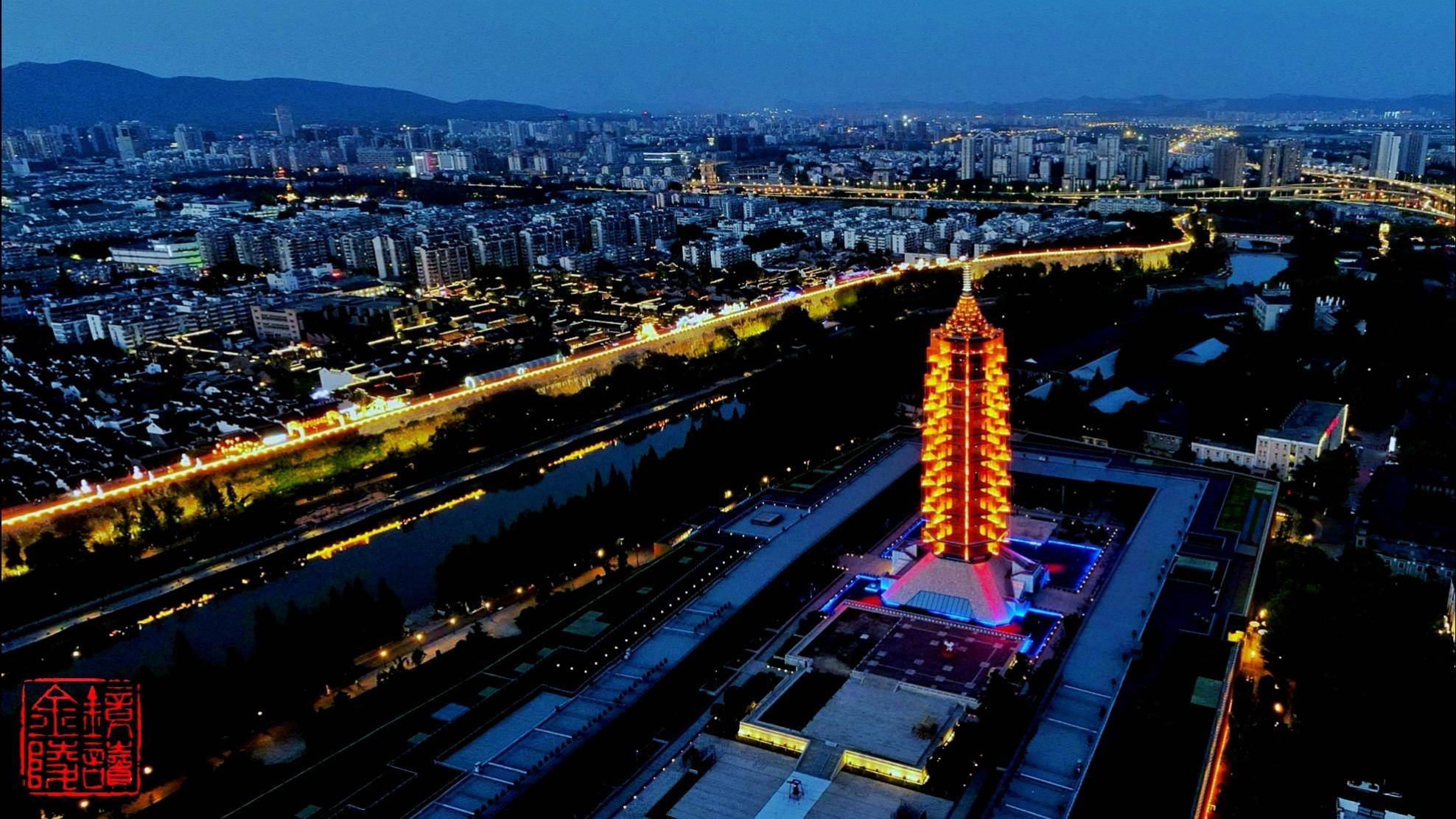
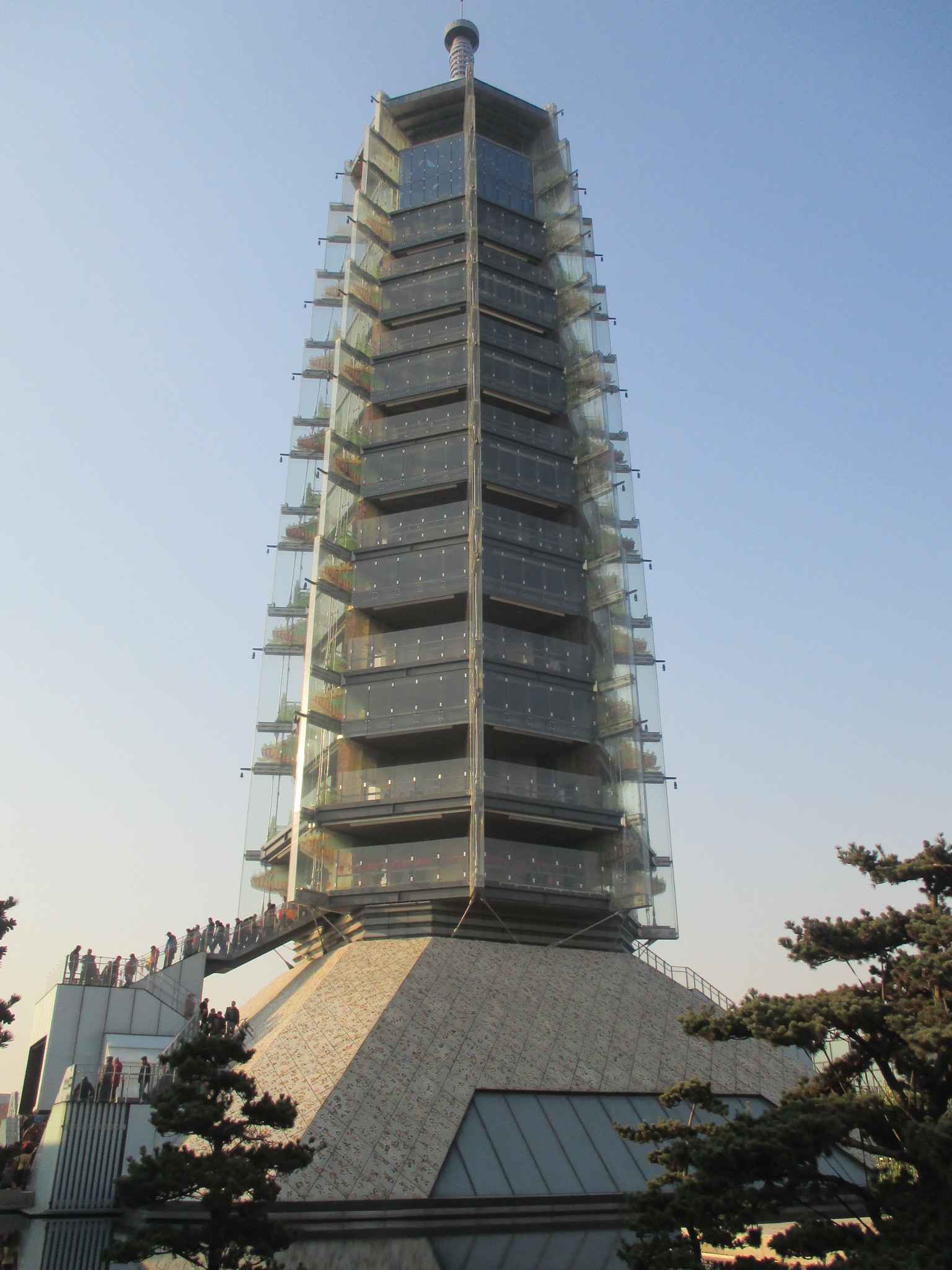
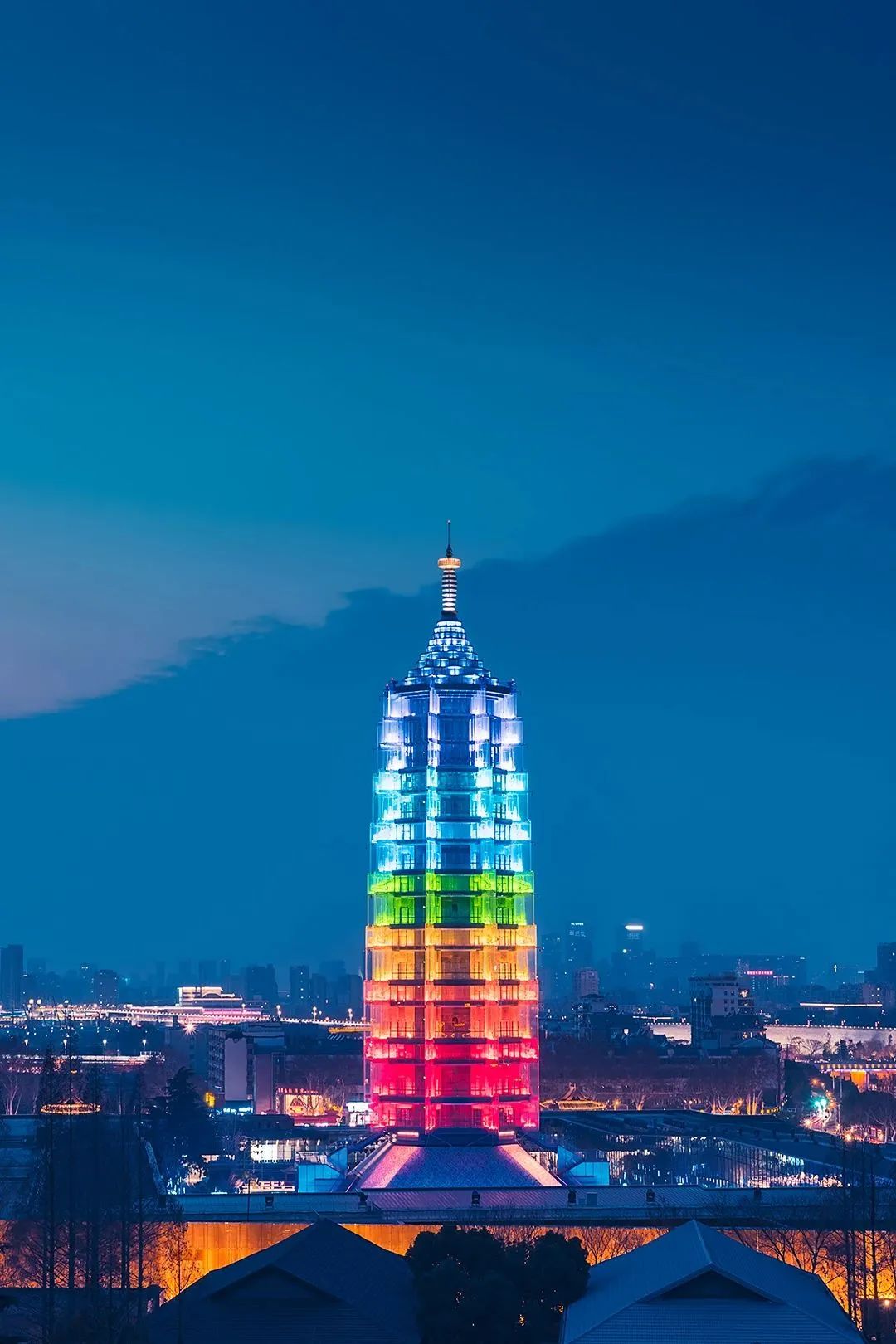
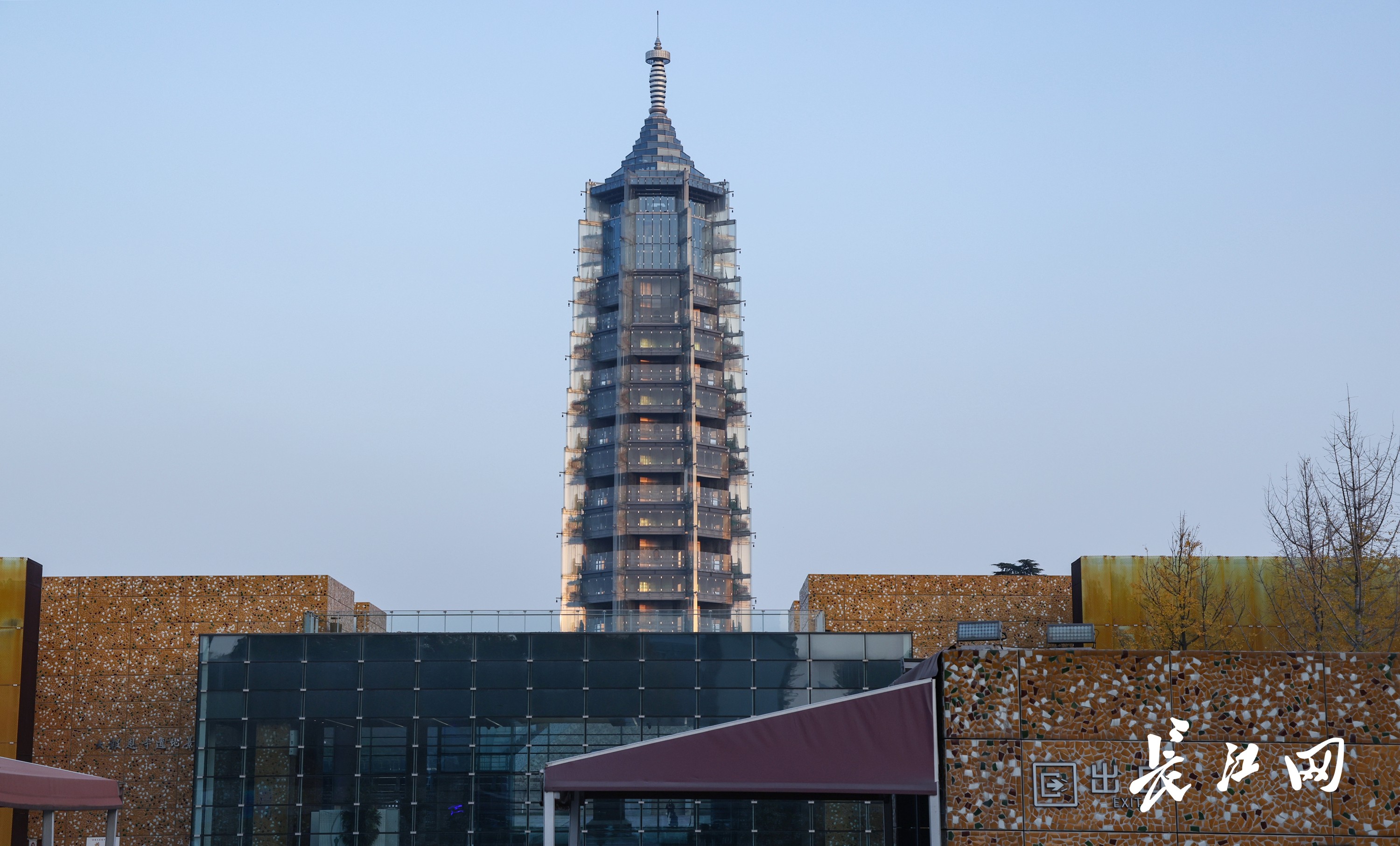
Deliberately not a reconstruction, a 93-metre steel-and-glass tower now commemorates the lost original on its footprint, its lift running to a ninth-floor cloud hall for rooftop views, and its LED-lit evenings have made the Yuhua Road riverbank one of Nanjing's most-photographed night spots. Entry costs CNY 90 (about CNY 80–81 online or after 17:00); late afternoon into dusk is the perfect arc — ruins indoors in daylight, then the tower igniting at night. Metro Line 1 reaches Zhonghuamen Station a 12-minute walk north, and the park chains naturally with Zhonghua Gate 500 metres away and Laomendong for a full old-city evening.
Highlights
The Glass Porcelain Tower
A 93-metre steel-and-glass commemorative tower on the original footprint, its outline echoing the 78-metre glazed original; lift to the 9th-floor cloud hall for rooftop views and stay for the LED-lit evenings.
The Song-Dynasty Underground Crypt
Walk over the excavated 1011 stone chamber of Changgan Temple where the Buddha's parietal-bone relic was found sealed in iron within stone — one of China's greatest Buddhist archaeology finds.
Seven-Treasure Ashoka Pagoda
The 1.1-metre gilded king of pagodas recovered from the crypt, displayed with the golden coffin and silver reliquary in the site museum's relic hall.
North Gallery Ruins & Light Columns
Exposed column bases of the Ming cloister, once 'the grandest under heaven', now outlined by glowing white light-poles that reconstruct each bay's rhythm after dark.
Perfume River & Imperial Stele
The intact stone banks of the temple's Perfume River bridge and two Yongle-era stele tortoises at the axial entry — 600-year-old water engineering you can still walk across.
Sarira Light & Sutra Galleries
Immersive halls: the seven-colour 'Relic Radiance' meditation room, the nine-colour deer mural corridor and a scripture hall honouring Nanjing's printing heritage.
Photo Gallery
Comments