 Travel in China
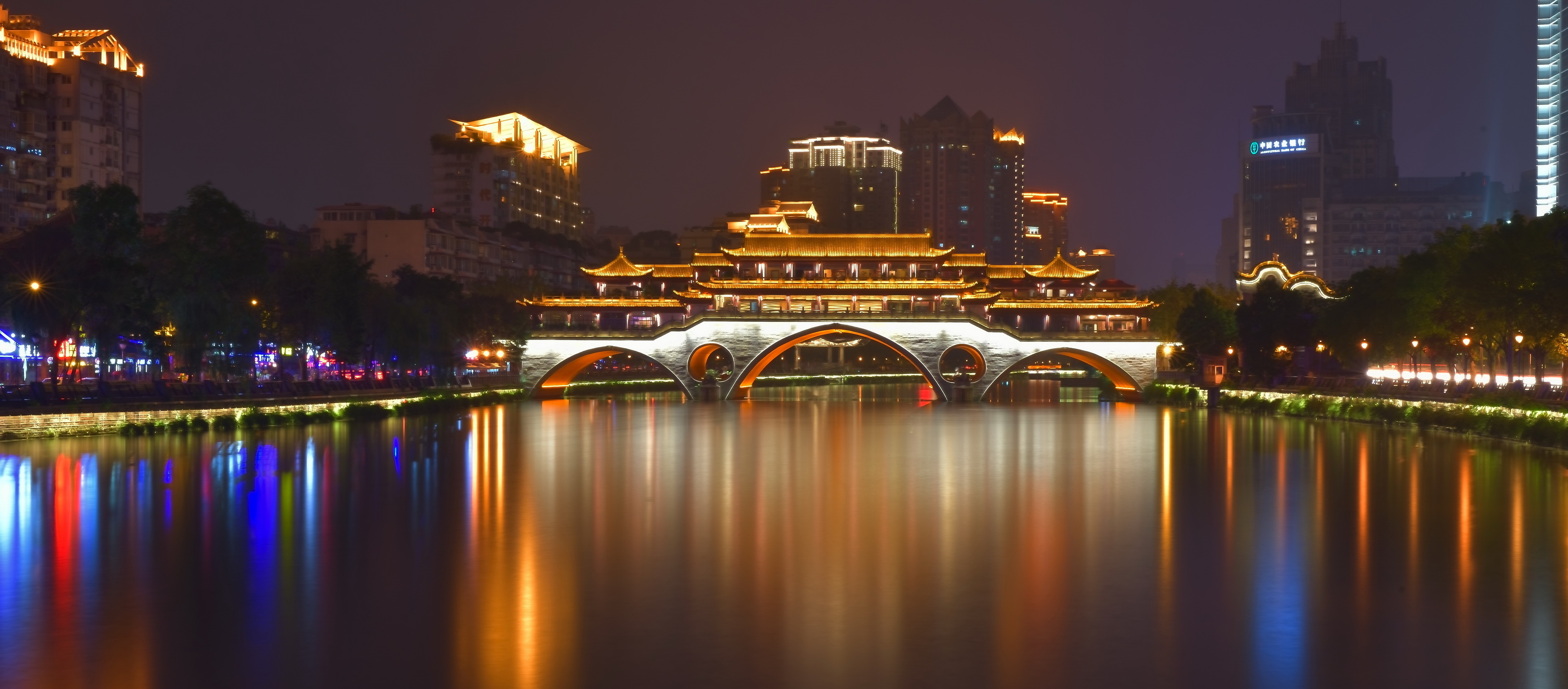
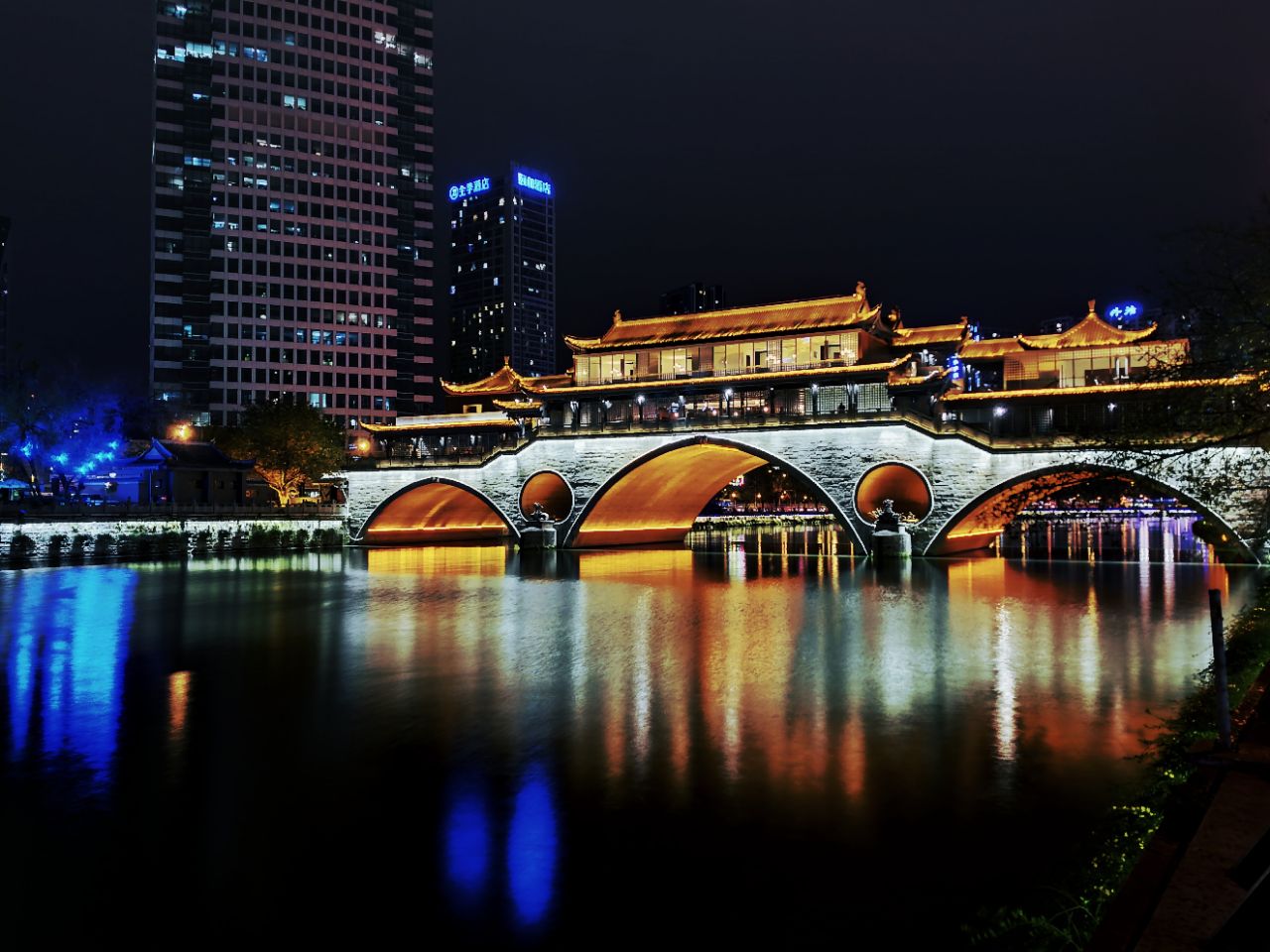
Anshun Covered Bridge arches over the Jin River where two waterways meet, its red columns, upturned eaves and triple stone spans glowing gold after dark. First recorded in the Yuan dynasty — Marco Polo described it in his Travels — today's 81-metre Qing-style rebuild carries a fine Sichuan restaurant beneath its tiled corridor. Beside Hejiang Pavilion, the illuminated arches and their river reflection form Chengdu's most photographed night scene — free, 24 hours, best from 19:30.
Dive deeper: full travel guide · transport & map · where to stay & book
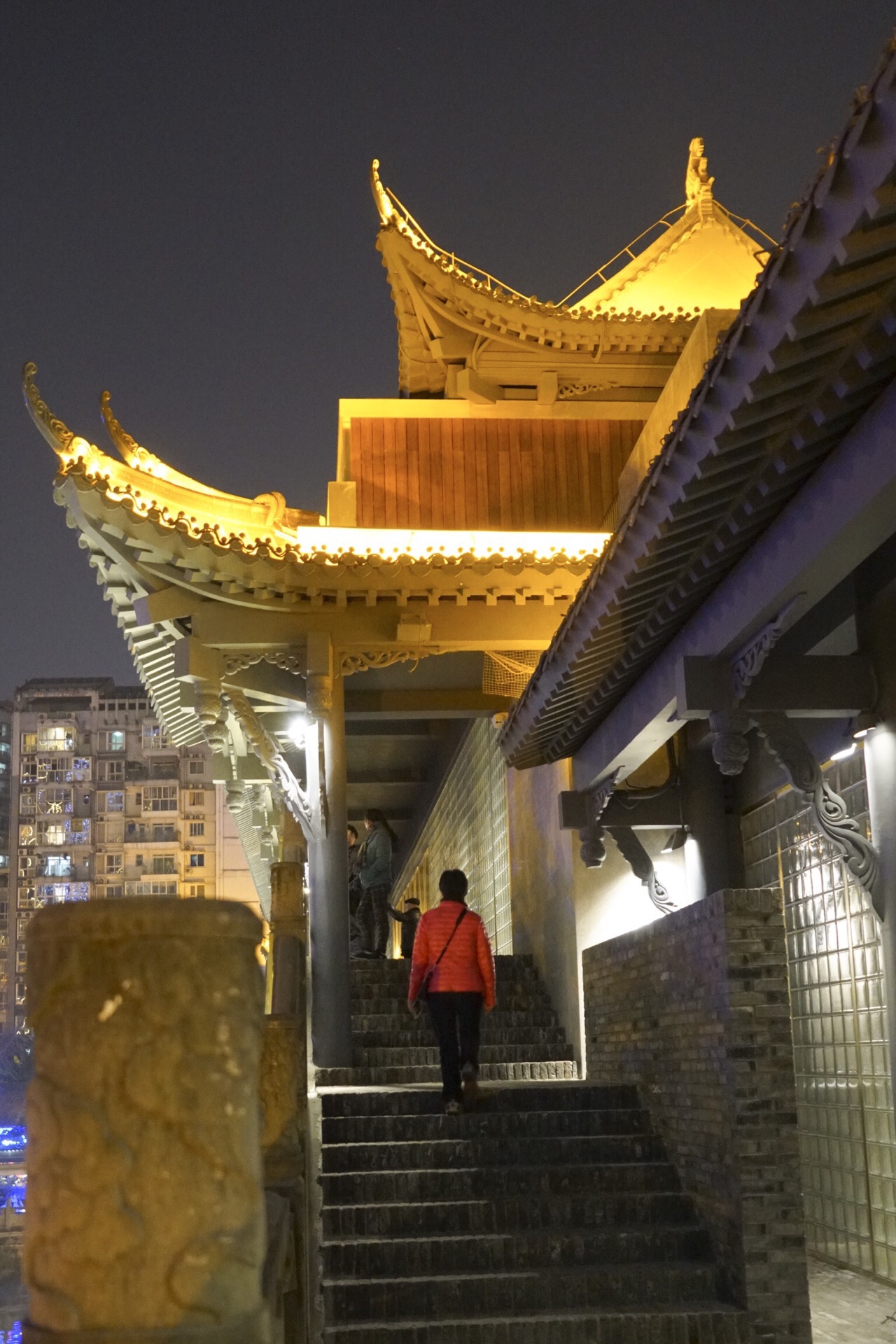
The Anshun Covered Bridge (Anshun Langqiao) spans the Jin River at the confluence of two waterways in Chengdu, Sichuan Province, and stands among China's most storied river crossings. First recorded in the Yuan dynasty, the bridge earned a remarkable place in world history when Marco Polo described it in his Travels during the 13th century, introducing this Chengdu landmark to European readers centuries before modern tourism existed. Though the original structure did not survive the centuries, the bridge was rebuilt in elegant Qing-dynasty style, today measuring 81 metres across three stone arches. Its distinctive architecture — vermilion columns, upturned eaves and a roofed tiled corridor — preserves the classical langqiao (covered bridge) tradition of Sichuan, making it both a functioning crossing and a living monument to the city's Yuan-era mercantile past.
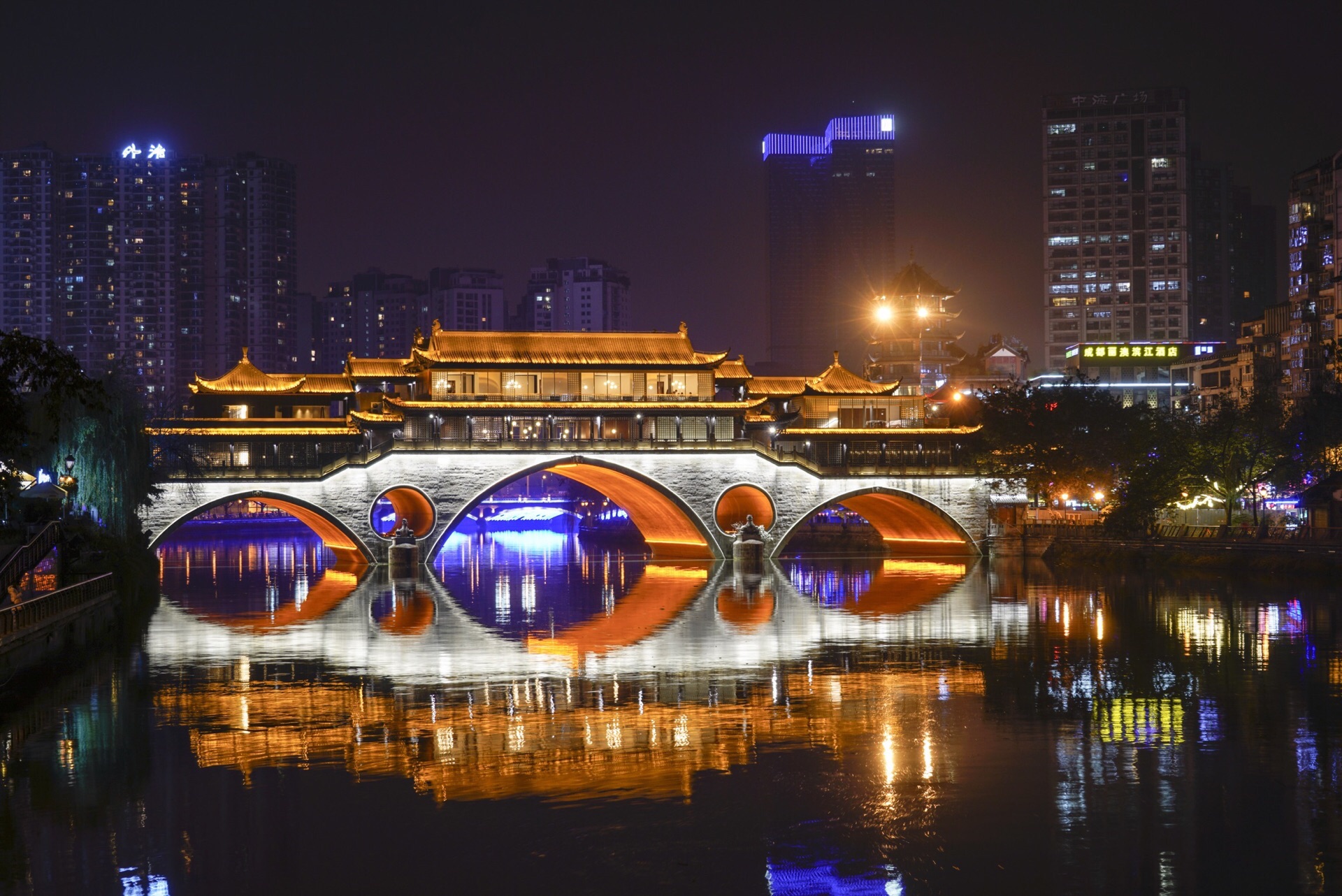
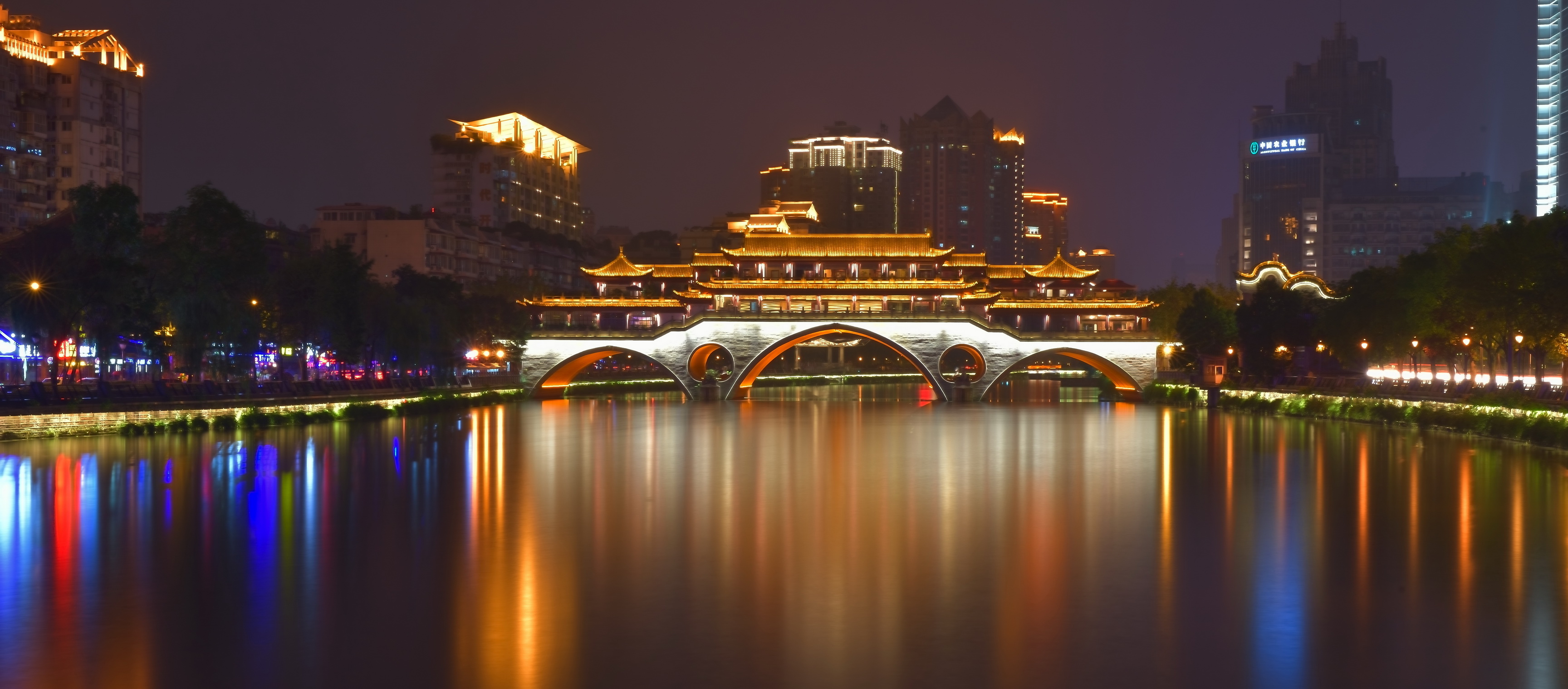
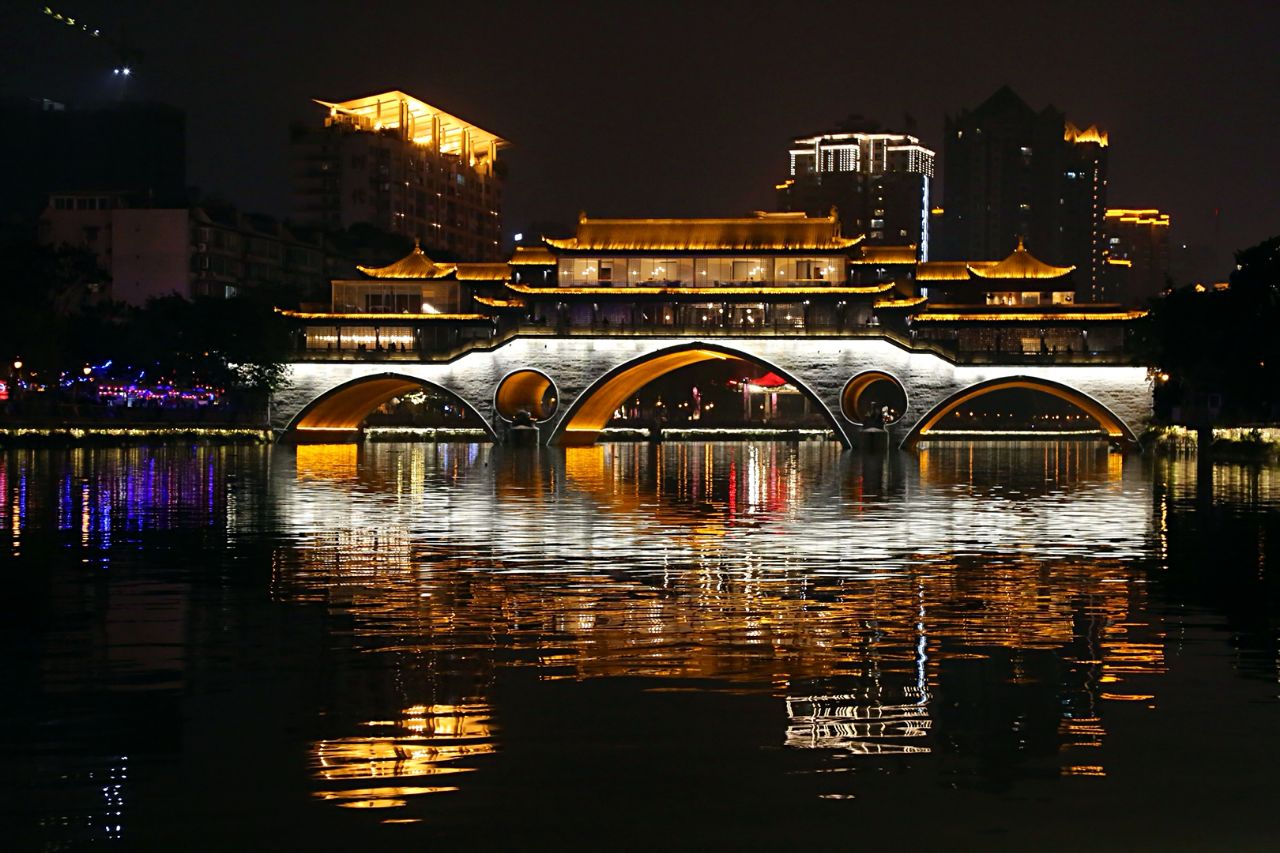
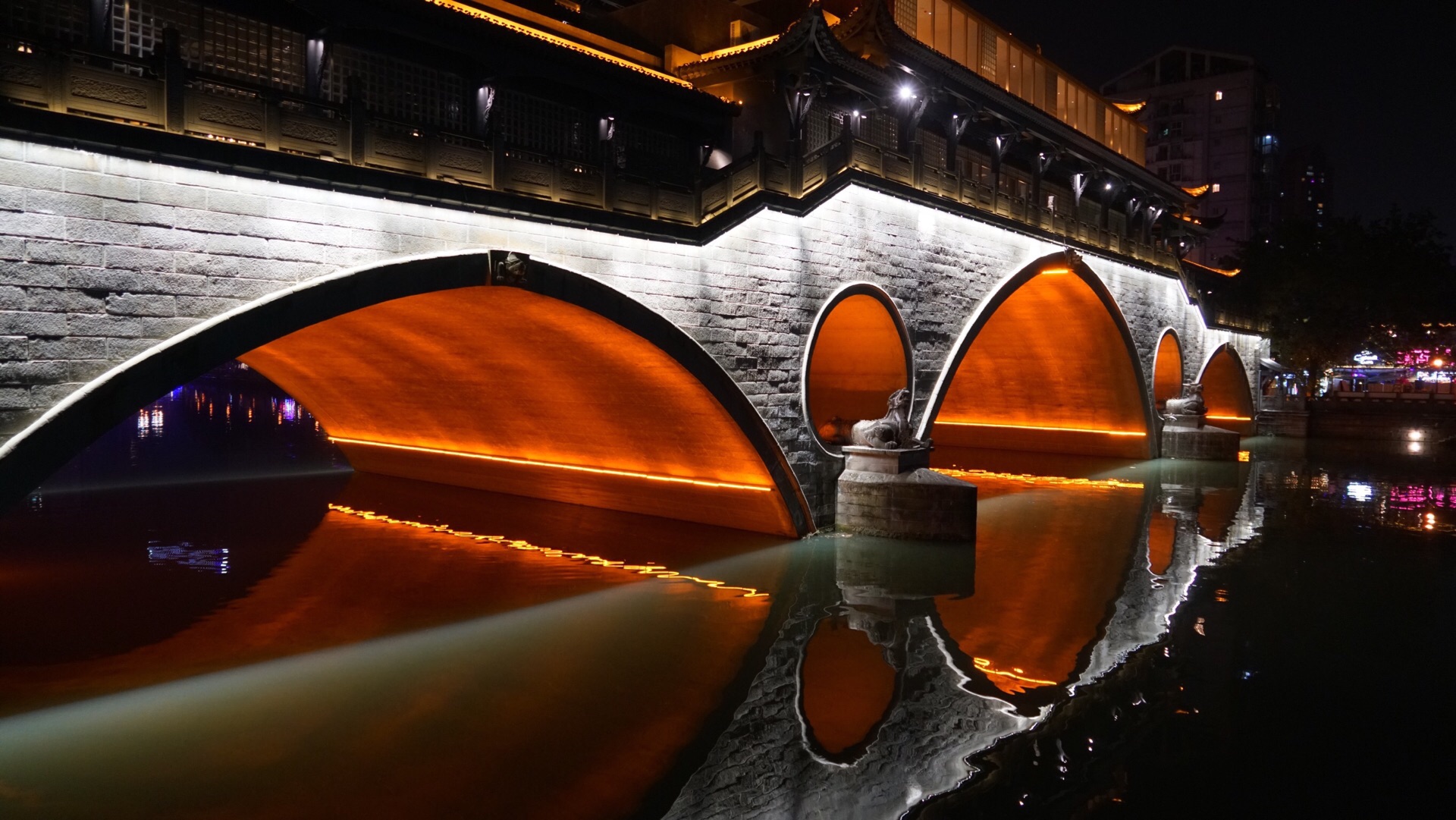
Visitors approach the bridge along riverside promenades and immediately notice the three semicircular stone arches reflected in the Jin River, forming perfect circles that have become the definitive image of the site. The roofed corridor offers sheltered strolling with carved railings, ornamental water-beasts perched on the piers, and the celebrated Langqiao Fu inscription commemorating the structure in classical prose. On the south approach, a carved portrait and route map of Marco Polo mark his historic account. For the finest composition, walk 300 metres upstream to Hejiang Pavilion, where bridge, pavilion and converging rivers align in a single frame. After dark, the arches glow gold in illumination, both banks fill with lanterns, buskers and tea stalls, and night-cruise boats slide beneath the spans.
In 2026, the Anshun Covered Bridge remains one of Chengdu's most visited and photographed attractions, drawing locals and tourists nightly to its banks — entirely free to enjoy, open 24 hours, with illumination beginning around 19:00 and the riverfront at its liveliest after 19:30. A fine Sichuan restaurant beneath the tiled corridor keeps its own hours, allowing diners to eat within the bridge itself. The site anchors a vibrant riverside district that flows naturally into Chengdu's broader Jin River scenery, connecting historic charm with the teahouses, nightlife and culinary culture of the surrounding old city. For any visitor to Chengdu, an evening stroll along these lantern-lit banks, camera in hand, ranks among the city's essential experiences.
Highlights
Triple Stone Arches & Reflections
The three semicircular arches and their mirror image in the Jin River, especially under blue-hour light.
Marco Polo Plaque & Relief
The carved portrait and route map of Marco Polo on the south approach, marking his 13th-century account of the bridge.
Corridor Detail
Roofed walkway with carved railings, water-beasts on the piers and the Langqiao Fu inscription.
Hejiang Pavilion view
From the pavilion plaza 300 m upstream, frame bridge, pavilion and converging rivers in one shot.
Night Riverbank
Both banks of lanterns, buskers, tea stalls and night-cruise boats sliding beneath the arches.
Photo Gallery
Comments